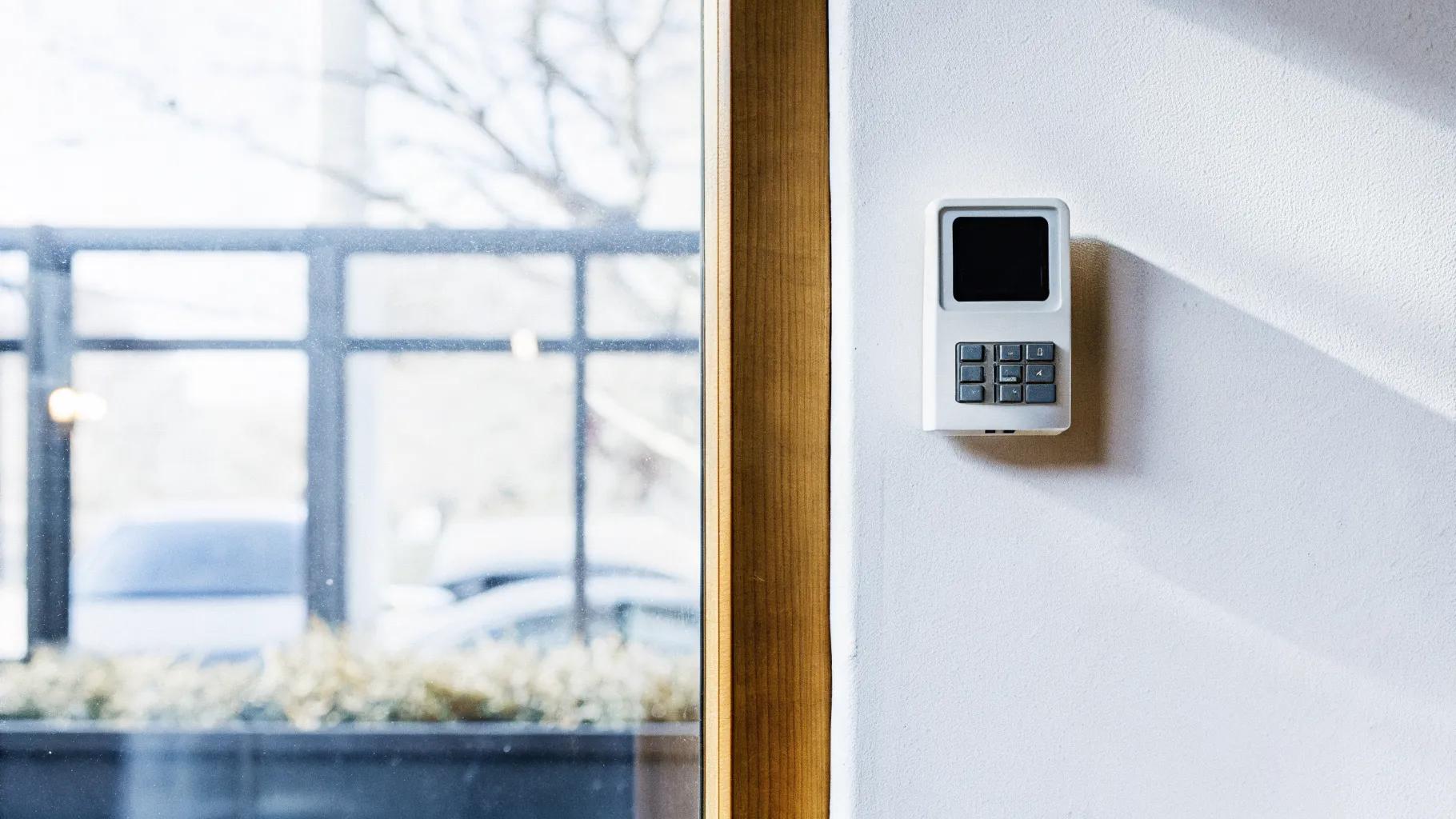
A monitored alarm system for a small commercial building in the Carolinas or Georgia typically costs $1,800 to $4,000 installed and $35 to $60 a month to monitor. Those are the two numbers people search for, and they are right for a shop, an office suite, a clinic or a restaurant with one or two entrances and a back door. What they do not tell you is what is inside each number, which is where quotes from different companies stop being comparable.
Here is the breakdown, including the three things that raise the price and the one that is worth paying for.
What the install price buys
A small-business alarm system is a control panel, a keypad, door contacts on every exterior door, motion sensors covering the interior, a siren, and a communicator that sends signals to a monitoring station. Glass-break sensors are added where there is a storefront. A panic button goes at the counter or the reception desk. Installation includes the wiring or the wireless sensor setup, programming the zones and user codes, and a walk-through test with the monitoring station on the line.
For a 2,000 square foot shop with two doors and an open floor, that lands near the bottom of the range. For a 6,000 square foot clinic with six exterior doors, a dozen rooms and a pharmacy, it lands near the top. The number is driven by door and room count, not square footage. Business alarm systems covers the system types, and panic alarms covers the counter button that most quotes include.
What the monthly fee buys
Monitoring at $35 to $60 a month pays for a UL-listed central station to receive the signal, verify it, and dispatch police. It also pays for the cellular or internet communicator's service, which is why the fee is higher than it was when panels used a phone line. The spread in the range comes from the communication path, with dual-path cellular plus internet at the top, and from whether video verification is included.
The fee does not include service calls, battery replacement or false alarm fines. Central station monitoring explains how the station handles a signal, and alarm monitoring vs. fire alarm monitoring explains why a building with both gets two line items.
Video verification: the one upgrade worth paying for
Charlotte, Raleigh, Columbia, Atlanta and most other cities in our area have false alarm ordinances. Repeat false alarms draw fines, and some police departments put unverified burglar alarms behind other calls. A verified alarm, where the monitoring operator has seen a clip or heard audio confirming a real intrusion before dispatching, is treated as a crime in progress.
Video verification adds a per-month charge, typically $10 to $25 on top of base monitoring, and it needs cameras covering the protected areas, which many businesses already have. For a business that has had police respond to a false alarm, or a business holding inventory that moves on the resale market, it is the difference between a response time measured in minutes and one measured in whenever. Security cameras vs. live video monitoring covers the related option of having an operator watch the cameras overnight.
The three things that raise the quote
A monitored business alarm quote climbs for three reasons, and none of them is the salesperson.
Doors. Every exterior door gets a contact, and overhead doors and roll-up doors need heavier contacts. A warehouse with eight dock doors and four personnel doors is a different install from a storefront with two.
Construction. Wireless sensors go in quickly in a finished building. Hardwired sensors are more reliable and cheaper to maintain but take longer to install in a building with hard ceilings. A new shell gets wired during construction for a fraction of the cost of fishing cable later. General contractor subcontracting covers the new-construction case.
Interfaces. Tying the alarm to the access control so arming locks the doors, to the cameras for verification, or to a temperature sensor on a walk-in cooler each adds a little labor and often a lot of value. The cooler sensor alone has saved more than one restaurant a weekend of inventory.
What a "free system" costs
Some national providers offer the equipment at no charge in exchange for a three- or five-year monitoring contract at a higher monthly rate. Over the term, the building pays for the system and then some, and usually does not own it at the end. The arithmetic is simple: multiply the monthly difference by the term. If the number is larger than the install price above, the free system is the expensive one. Switching commercial security providers covers the contract clauses that make those systems hard to leave, and the CPI Security alternative page compares the regional version of that model.
Systems you already have
Most of our alarm calls in existing buildings are on systems another company installed. Door contacts, motion sensors and wiring almost always carry over; the panel and the communicator sometimes do. A takeover that keeps the sensors and replaces the panel typically runs $600 to $1,500, with monitoring at the normal rate afterward. If the old panel is on a retired cellular network or a cancelled phone line, the building has been unmonitored without knowing it, and the takeover is the fix. System takeovers explains what is reused.
Where the numbers land by building type
A small retail shop or office suite, $1,800 to $2,800 installed. A restaurant with a back door, a cooler sensor and a panic button, $2,500 to $4,000. A medical or dental office with several treatment rooms and a drug storage area, $3,000 to $4,500. A church or small school, which is more doors and more zones, $4,000 to $8,000. A warehouse with dock doors, priced per door and usually in five figures. Monitoring in every case is $35 to $60 a month, plus video verification where it makes sense. Those are typical ranges, the site walk sets the real number, and the quote is firm before work starts. What a commercial security system costs puts alarms next to cameras and access control for the full picture.
How to compare two quotes
Count the doors covered. Ask whether the communicator is single- or dual-path. Ask whether video verification is included or available. Ask who owns the equipment at the end of the term and what the term is. Ask what a service call costs after the first year. Two quotes that answer those five questions the same way can be compared on price. Two that do not cannot. Businesses in Charlotte, Raleigh, Greensboro, Columbia and Atlanta can request a site walk and get the quote with those five answers written on it.