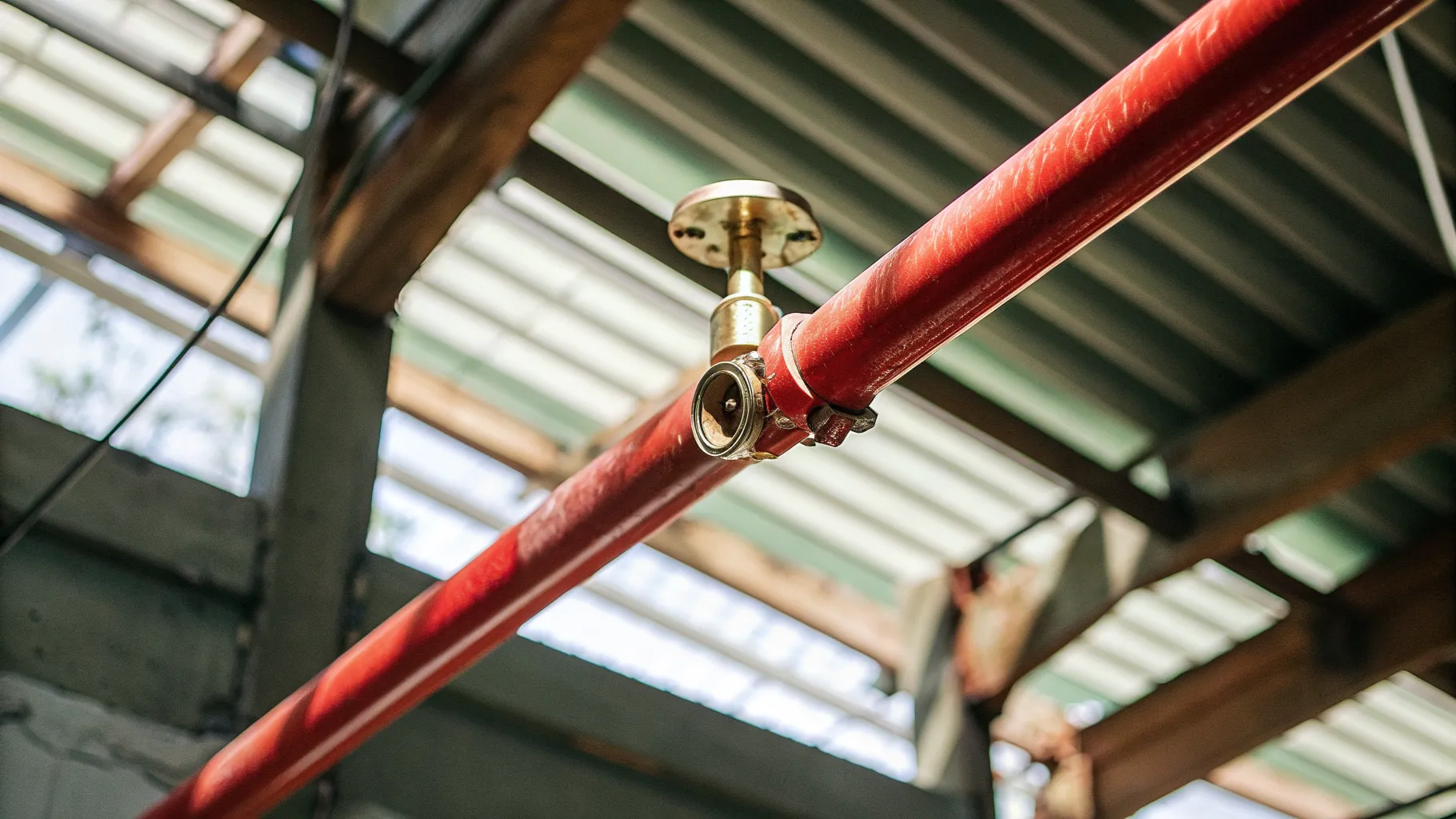
A single sprinkler head replaced on an emergency call usually runs $250 to $900 with parts and labor. A section of burst pipe in an accessible ceiling, $1,000 to $4,000. A dry pipe valve rebuild, $1,500 to $6,000. Those are the numbers most building managers are looking for when they search this, and they are typical for commercial buildings across the Carolinas and Georgia. The rest of this post is about what moves them, because the range on each is wide and the reasons are specific.
One thing first. If water is coming out of a sprinkler right now, the repair cost is the small number. The water damage is the large one, and it grows by the minute. Find the riser room, close the main control valve, and call. The repair can wait twenty minutes. The ceiling below cannot.
A single head: $250 to $900
Heads fail for four reasons. They get hit, by a forklift mast, a ladder, a pallet. They corrode, especially in parking decks, loading docks and anywhere near a pool. They are the wrong temperature rating for the location, so a kitchen hood or a skylight sets one off on a hot day. Or they are old enough that the fusible element has weakened; standard heads are tested on a sample basis at fifty years and quick-response heads at twenty, and buildings often find out which they have the hard way.
The replacement itself is quick. The price range comes from access and timing. A head at nine feet over an open floor during business hours is the bottom of the range. A head at twenty-eight feet over racking in a warehouse, at 2 a.m. on a Saturday, is the top. Specialty heads, such as concealed, extended-coverage or high-temperature models, cost more as parts. After-hours calls carry an emergency rate, which is why the single most cost-effective thing a building can do is keep a box of spare heads of the right type in the riser room, as NFPA 25 requires, so the technician is not sourcing one at midnight.
A leaking fitting or a pinhole: $400 to $2,500
Slow leaks come from corroded threads, a failed gasket on a grooved coupling, or a pinhole in old steel pipe. These are usually found on inspection rather than in an emergency, which keeps them in the lower part of the range. A fitting replaced during a scheduled impairment, with the system drained to that section, is a few hours of work. A pinhole in a long run of pipe sometimes means replacing more pipe than the hole, because the pipe around it is in the same condition. Internal corrosion that shows up as repeated pinholes is a sign the system needs an internal assessment, which is part of the five-year sprinkler inspection.
A burst section of pipe: $1,000 to $4,000 and up
Pipe bursts for two reasons in our market: freezing, and mechanical damage. A section in an accessible area, above a lay-in ceiling or exposed in a warehouse, falls in the range above. A section above a hard ceiling, inside a chase, or over finished space where the ceiling has to be opened and closed by another trade goes above it. The sprinkler repair is often the smaller invoice; the drywall, paint and flooring are the larger. Fire sprinkler repair describes how an impairment is managed while the section is out of service.
Freeze events: the Carolina special
Every few winters the Piedmont and the Upstate get a hard freeze that lasts long enough to reach pipe that has never frozen before. The pattern is predictable. A wet pipe runs through an unheated attic, a stairwell with a broken heater, a dock vestibule or a soffit. The pipe freezes overnight, and the break shows up the next afternoon when it thaws, often as a sprinkler head that appears to have activated on its own. Three or four buildings call the same morning.
Freeze repairs are priced like any burst pipe, with two additions. The emergency rate applies, because they happen at once and after hours. And the right fix is usually more than the repair: heat tracing, insulation, a dry pipe conversion for the exposed section, or relocating the run. We quote the repair and the prevention together so the building does not make the same call next winter. Freeze events and cold snaps on the repair page covers the pre-season check.
Dry pipe valves: $1,500 to $6,000
Dry systems protect unheated spaces by holding air in the pipe and water behind a valve. The valve is a mechanical device with gaskets, a clapper and an air supply, and it needs attention more than anything else on a sprinkler system. Trip tests find the problems; the repairs range from a gasket and reset at the bottom of the range to a full valve replacement, with a new air compressor, at the top. Low-point drains that were not drained before winter, and air leaks that make the compressor run constantly, are the common precursors. Buildings with dry systems in parking decks and attics should expect this line item roughly once a decade.
What the emergency rate covers
After-hours and weekend calls bill at a higher labor rate, which is standard across the trade. What it buys is a technician with the common parts on the truck, a stop to the discharge within the first visit, and the impairment handled correctly: fire department and monitoring station notified, a tag on the valve, a fire watch recommendation if the system will be down overnight, and the restoration test when the repair is done. Impairments: what NFPA 25 expects while the water is off is the longer version. Skipping the impairment steps to save an hour is how a building ends up explaining itself to the fire marshal.
The repairs that come from an inspection report
Most sprinkler repairs are not emergencies. They are deficiencies on a quarterly or annual inspection: a gauge out of date, a painted head, a missing escutcheon, a control valve that will not fully close, a tamper switch that no longer reports. These are priced individually and are usually small; the risk is in letting them accumulate until the fire marshal or the insurer reads the report. Fire sprinkler inspection explains the schedule, and fire alarm inspection requirements in NC, SC and GA covers who is looking.
When repair stops making sense
A system with repeated pinholes, obsolete heads throughout, or a dry valve that has been rebuilt twice is telling you something. At that point we quote the repair beside the replacement of the affected section or the whole system, with fire sprinkler installation pricing, so the decision is made on real numbers rather than on the next emergency. Backflow preventers, which sit upstream of the riser and have their own failure modes, are covered in backflow preventer testing.
Where the calls come from
Apartment communities, with breezeway and attic pipe, during freezes. Warehouses, with forklift strikes and corroded dock heads. Restaurants, with heads near hoods. Hotels, with concealed heads damaged during renovations. Parking decks, with dry systems and corrosion. The city pages for Raleigh and Charlotte fire alarm and sprinkler services have local response detail, and Raleigh fire alarm repair covers the fire panel side of a waterflow alarm. If the leak is happening now, call rather than reading further; if it is on a report, send the report and we will price the list.