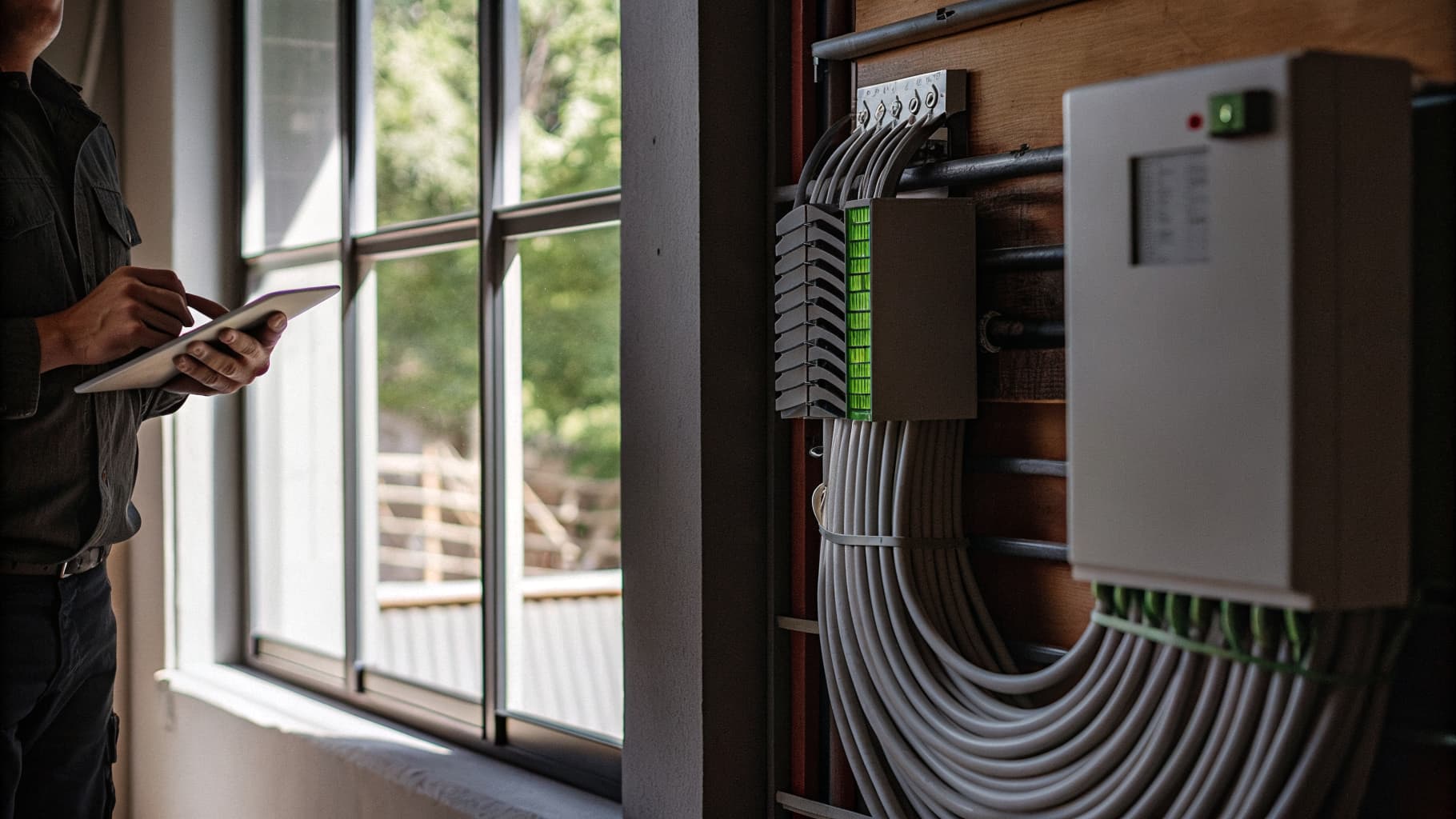
A fire marshal walks in for a routine re-occupancy check, asks for your last inspection report, and you're not sure where it is or whether it's current. That's the moment most property owners realize a commercial fire alarm inspection requirement isn't a formality they can catch up on later. It's a standing obligation, and the building doesn't get to operate as if it were optional.
What the inspection actually checks
NFPA 72 sets the testing schedule that North Carolina, South Carolina, and Georgia fire codes all adopt, and it's more granular than most owners expect. It's not one annual walkthrough where someone glances at the panel and signs a form. Smoke detectors, heat detectors, pull stations, and the control panel itself get a full functional test, meaning each device is actually triggered and confirmed to signal correctly, not just visually inspected. Devices tied to your sprinkler system, waterflow and tamper switches, run on a tighter schedule than the rest of the system, often semi-annual rather than annual. Battery backups get load-tested on their own timeline too, because a battery that reads full voltage sitting idle can still collapse the moment it's asked to carry the panel during a power outage. An inspection that skips the load test hasn't actually confirmed anything about your backup power.
What causes a building to fail
Failures rarely come from one dramatic problem. They come from the small stuff that accumulates between inspections: a detector nobody replaced after eight or ten years in service, a horn or strobe that's no longer audible or visible in a renovated space because the layout changed and the notification appliances didn't move with it, a monitoring connection that's gone quiet without anyone noticing because the alarm side of the system still looked fine. Documentation gaps fail buildings just as often as hardware does. If your last report doesn't tie back to a specific date, technician, and device list, that's not a system a fire marshal can verify was tested at all, whether or not the equipment itself is working.
What a failed inspection actually costs you
This is where the abstract fear of "failing the inspection" turns into a real number. A failed fire alarm inspection can trigger a mandatory fire watch, staffed personnel physically monitoring the building around the clock until the system is repaired and re-tested, and that coverage runs a real cost per day for as long as it's required. In more serious cases, part of the building can be closed until you're back in compliance, which is a direct hit to a property that depends on that space being occupied or operating. Insurance carriers pay attention too. A lapsed or failed inspection is exactly the kind of gap an adjuster looks for after a claim, and a policy that required current fire alarm testing can end up contested or denied over it. None of these are edge cases. They're the ordinary ways a missed inspection window turns into a bill.
Walking into the inspection already knowing you'll pass
The properties that never sweat an inspection aren't the ones with newer equipment. They're the ones with a schedule they actually track and documentation they can hand over without digging through email. That means knowing which devices are due when, since the control panel and initiating devices run on a different clock than the sprinkler-side switches, and keeping a report on file that names the date, the technician, and the specific results for every device tested. When something does fail during a test, whether it gets fixed on the spot or flagged with a clear repair quote also matters. A property that treats testing as routine maintenance instead of a once-a-year scramble is the one that walks in already knowing the outcome.
Get your inspection schedule under control
If you're not sure when your system was last fully tested, or you've never seen the report it should have generated, that's worth resolving before a fire marshal or an insurance adjuster asks the question for you. Our fire alarm inspection and testing page covers the NFPA 72 schedule device by device for properties across North Carolina, South Carolina, and Georgia. If you'd rather just get on the calendar, contact our team and we'll tell you exactly where your system stands.