Every sprinklered building in the Carolinas and Georgia has a device on the fire line that most building owners have never looked at. It sits in the riser room, in a green box on a pad outside, or in a vault under the parking lot, and once a year somebody from the water utility sends a letter about it. That is the backflow preventer, and the letter is the test notice.
This is what the device does, what the test involves, and what to do when it fails.
What the backflow preventer protects
The water in a fire sprinkler system sits still for years. It picks up rust, scale, and biological growth, and in some systems antifreeze or other additives. The backflow preventer keeps that water from flowing backward into the public water supply when pressure in the street drops, which happens during a main break or heavy hydrant use. The utility requires it because the water on the other side of the valve is what people drink. The fire marshal cares because a stuck or failed assembly can also restrict flow to the sprinklers.
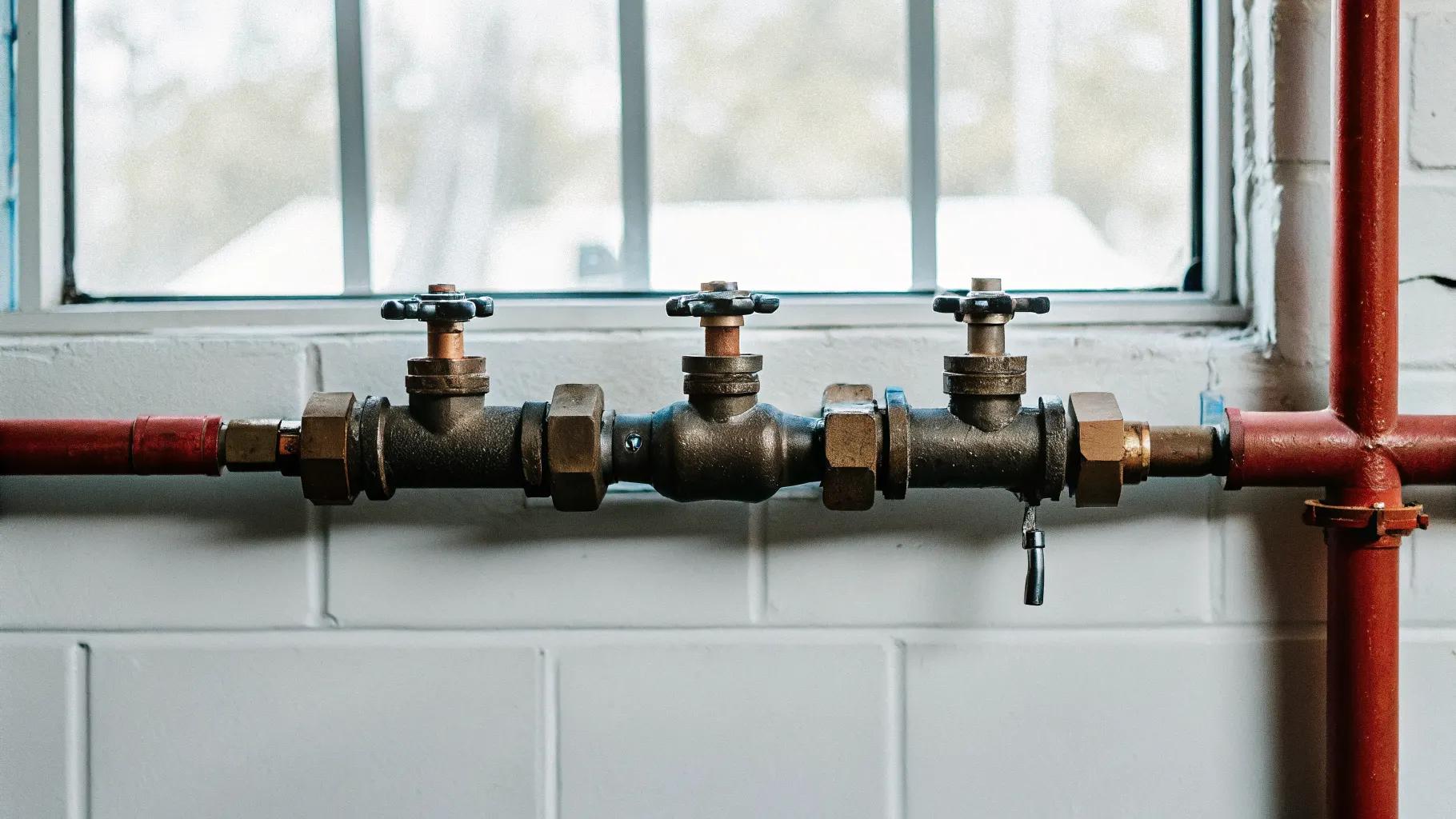
Fire lines typically carry a double check assembly, or a reduced pressure assembly where the hazard is higher. Both have two check valves in series, test cocks for measuring, and shutoff valves at each end. The backflow preventer testing page covers the hardware in more depth.
What the annual test checks
A certified tester connects a gauge kit to the test cocks and measures the pressure differential across each check valve, confirms each check holds, and on a reduced pressure assembly confirms the relief valve opens at the right point. The shutoff valves are exercised. The whole thing takes twenty to forty minutes when the assembly is accessible and the valves move. The results go on the utility's form, which the tester files, and a copy goes in the building's fire protection records next to the sprinkler inspection report.
The second test people miss is the forward flow test under NFPA 25, which confirms the assembly passes enough water to supply the sprinkler system at demand. That is a fire protection test rather than a utility test, and it belongs on the same visit.
Who requires it, and what happens if you skip it
The water utility requires the annual test as a condition of service. In Charlotte, Raleigh, Greensboro, Columbia, Charleston, and Atlanta, a missed test generates a notice, then a second notice, then a shutoff threat that most utilities will follow through on. The fire marshal expects the backflow record in the sprinkler file at the annual inspection. Insurers ask for it after a loss. A missed test is cheap to avoid and expensive to explain. What happens during a fire marshal inspection covers where the record fits in the visit.
When the test fails
Assemblies fail for predictable reasons. Sediment holds a check valve open. A spring weakens. A relief valve on a reduced pressure assembly weeps because debris is on the seat. Outdoor assemblies freeze when the enclosure heater fails during a cold snap. Vault assemblies sit underwater after a storm and cannot be tested at all, which the utility treats as a missed test.
Most failures are rebuilt on the spot with a kit for that assembly size, and the test is repeated the same visit. Full replacement happens when the body is cracked, the assembly is obsolete, or a utility has changed its requirement for that hazard class. The fire sprinkler repair team handles rebuilds and replacements on the same trip when the tester finds the problem.
Where the assembly lives matters
Riser room assemblies are easiest to test and most often fail on sediment. Outdoor enclosures need the heater and insulation checked every fall. Vaults need a pump-out plan before the tester arrives. A building with more than one meter, or more than one fire line, has more than one assembly, and buildings routinely lose track of one. The first visit should produce a map and photos of every assembly on the property, which is the only reliable way to stop the utility letters.
What backflow testing typically costs
An annual test on a fire line assembly, including the utility filing, typically runs $95 to $185 per assembly with a visit minimum around $125, and less when it rides along with the sprinkler inspection. A rebuild kit installed is typically $250 to $650 depending on size. Replacing a 4-inch or 6-inch assembly runs into the thousands and is quoted after the test. Those are typical figures and the quote is firm before any repair. Property managers in the Carolinas and Georgia can get on the backflow calendar and have every assembly on the property mapped on the first visit.
One calendar for the whole fire system
The backflow test belongs on the same visit as the quarterly and annual sprinkler inspection, the fire pump test where there is one, and the fire alarm inspection. One contractor, one calendar, one set of records, and the fire marshal sees consistent dates across the file. Buildings with separate vendors for each are the ones where the backflow test falls through. Fire alarm inspection requirements across NC, SC, and Georgia covers how the state schedules line up.