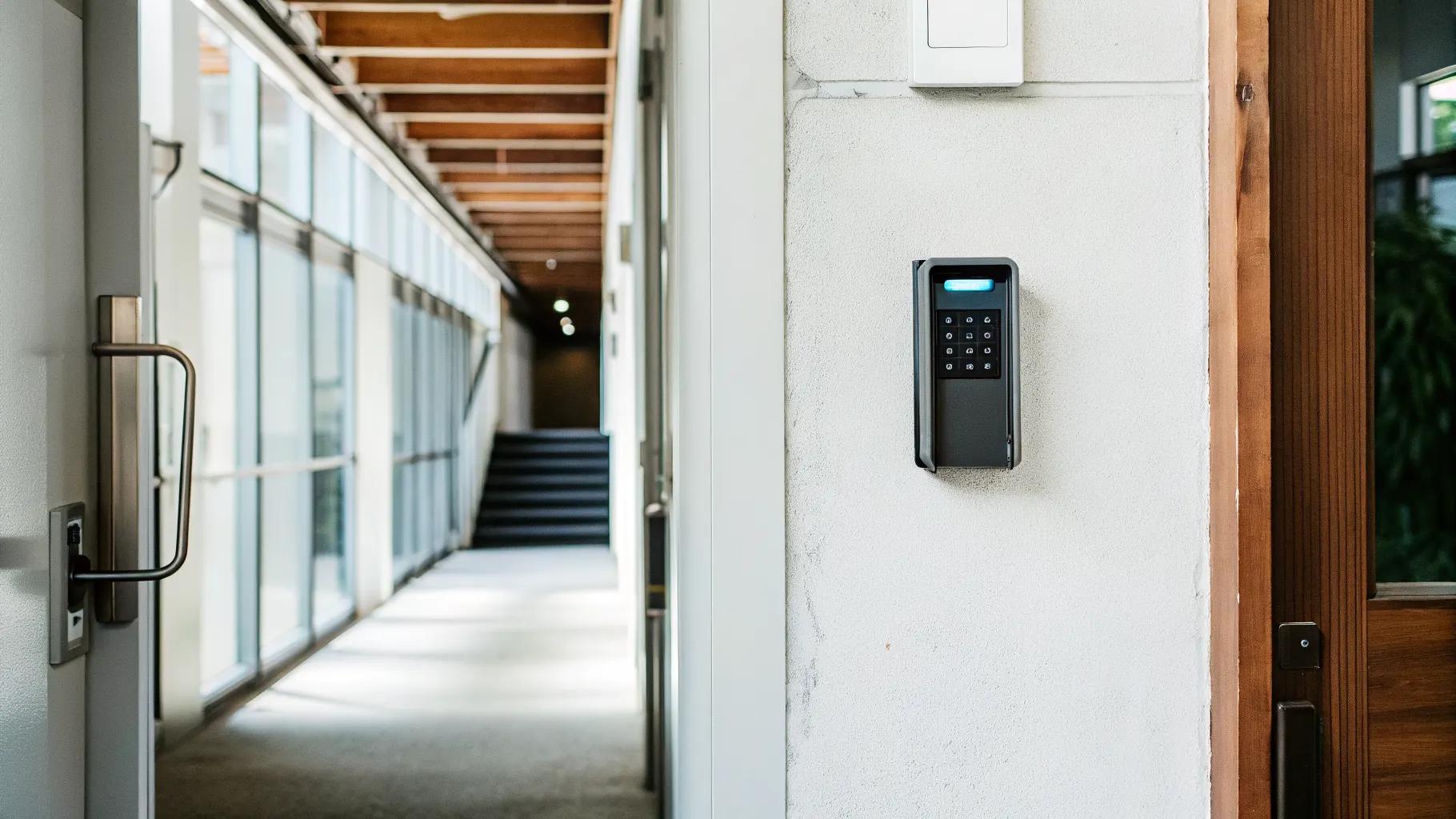
The access control system on a commercial building fails in slow motion. A strike wears, a battery dies, a door closer drifts out of adjustment, and for months the building looks locked while one door rests on the latch. Nobody calls because nothing is obviously broken. Then a laptop walks out of a server room, or a surveyor asks for the medication room log, and the slow failure becomes a fast one.
A service agreement is the fix for slow failure. It puts a technician at every door on a schedule and makes the small repairs between visits somebody else's job to track. The trouble is that "service agreement" means anything a salesperson wants it to mean. This is what a useful one contains.
The preventive visit, door by door
The agreement is worth exactly what the preventive visit checks. At each controlled door the technician should present a credential and confirm the unlock, time the relock against the schedule, force the door to confirm the forced-door alarm reports, test the request-to-exit so nobody can get trapped, measure maglock bond or strike alignment, and adjust the door closer. At the panel: load-test the backup batteries, check the power supply under load, review the event log for doors that alarm more than they should, and verify the time sync.
A visit that walks past the readers and glances at the panel is not a preventive visit. Ask for the checklist before signing. Our access control service agreement page lists the one we use.
Two visits a year, not one
Annual inspection catches a failing battery once every twelve months, which is roughly the battery's margin for error. Semi-annual catches it with time to spare and catches the door closer drift that an annual visit misses entirely. Buildings with gates, turnstiles, or memory care doors sometimes justify quarterly. Fewer than two visits a year is not maintenance; it is an annual inspection with a different name.
What should be included in the price
Batteries, because they are the most common failure and the cheapest to prevent. Firmware and software updates, because an unpatched access controller is a network risk as much as a door risk. A credential audit report twice a year, so the administrator can remove the people who no longer work there. Priority scheduling for repairs between visits. A discounted labor rate on those repairs, with parts quoted before the work. Those five items separate a maintenance agreement from an extended warranty.
What should not be in the contract
Multi-year auto-renewal. A one-year term that renews annually keeps the vendor honest. Equipment the building does not own at the end, which is a lease wearing a maintenance badge. Dealer-locked admin access, where the vendor holds the only credentials to your own doors. Exclusivity clauses that prevent another contractor from touching the system. Switching commercial security providers describes how buildings get stuck, and the pattern is almost always a contract clause nobody read.
Typical pricing in the Carolinas and Georgia
For a building with ten to forty controlled doors, a semi-annual agreement typically runs $15 to $25 per door per month, billed alongside monitoring. Gates and turnstiles are priced as separate line items because they take longer to test. Portfolios with several buildings are priced on a schedule. Those are typical figures and the site walk sets the real number. For comparison, two unscheduled service calls on a door that failed on a Friday usually cost more than the year's agreement on that door, which is the arithmetic that makes agreements sensible above about eight doors. What access control costs per door covers the install side.
Systems you did not install
Most agreements start on a system another company put in. The first visit is an inventory: every door, controller, power supply, and credential format documented, admin access confirmed or recovered, and anything already failing quoted separately. After that the building is on the same schedule as a system we installed. The access control brands we service page lists the platforms, and the access control repair page covers what happens between visits.
Bundling with cameras and fire
The same visit can cover the camera maintenance plan and align with the fire alarm inspection calendar, so the building sees one truck twice a year instead of three trucks on three schedules. For care facilities and schools, where a failed door is a compliance issue, that single report is what gets handed to the surveyor or the district safety office. The assisted living access control and school access control pages cover the specifics for each.
How to evaluate a quote
Ask for the checklist. Ask how many visits. Ask what is included versus billed. Ask who holds admin credentials. Ask for the term and the renewal language. A vendor who answers all five without hedging is offering a maintenance agreement. A vendor who steers the conversation back to the monthly price is offering something else. Buildings in Charlotte, Raleigh, Greensboro, Columbia, and Atlanta can request a site walk and get an agreement quote with the checklist attached.