Carbon monoxide requirements for commercial buildings arrived quietly. Residential rules got the headlines, and most building owners assumed the hotel, the apartment building, or the school was covered by whatever was already on the fire alarm. Often it is not. Section 915 of the International Fire Code, adopted with amendments in North Carolina, South Carolina, and Georgia, now requires carbon monoxide detection in a specific list of occupancies, and renovations trigger it in buildings that were grandfathered.
This is who the requirement applies to, what satisfies an inspector, and what it costs to add.
Which buildings need it
The requirement attaches to three occupancy groups when they have a fuel-burning appliance, a fireplace, or an attached private garage: Group E, which is schools and childcare; Group I, which covers care facilities and hospitals; and Group R, which covers hotels, apartments, and dormitories. Detection goes in rooms with the appliance, in sleeping rooms served by it, and on levels with an attached garage. All-electric buildings without garages or fireplaces generally fall outside the rule, with local amendments occasionally reaching further.
The practical trigger is usually a renovation. A hotel that replaces its boiler, an apartment community that adds a gas-fired amenity, or a school that installs a commercial kitchen with gas equipment will have the requirement raised at plan review. The commercial carbon monoxide detection page breaks the groups down and covers the local differences.
Plug-in alarms versus system-connected detection
A plug-in carbon monoxide alarm protects the room it sits in and tells nobody else. In a commercial building, and especially a building where people sleep, that is rarely enough. System-connected detection ties addressable detectors into the fire alarm control panel, so an activation identifies the device, notifies the right zone, and transmits to the monitoring center. The detectors are supervised, so a failed sensor reports as a trouble instead of quietly aging out.
The code allows listed 120-volt interconnected alarms in some situations, and for a small building without a fire alarm that can be the honest answer. For anything with an addressable panel already on the wall, system-connected detection is cleaner, cheaper to maintain, and what the fire marshal expects to see.
NFPA 72 now carries the rules
The carbon monoxide detection standard that used to live in NFPA 720 was folded into NFPA 72, which means the same installation, testing, and documentation schedule as the rest of the fire alarm applies. Detectors are tested on the annual inspection with functional gas testing rather than a button push, and the sensor life, typically five to ten years depending on the model, has to be tracked so the replacement lands on the calendar. NFPA 72 in plain English is the background read.
Parking garages are a different requirement
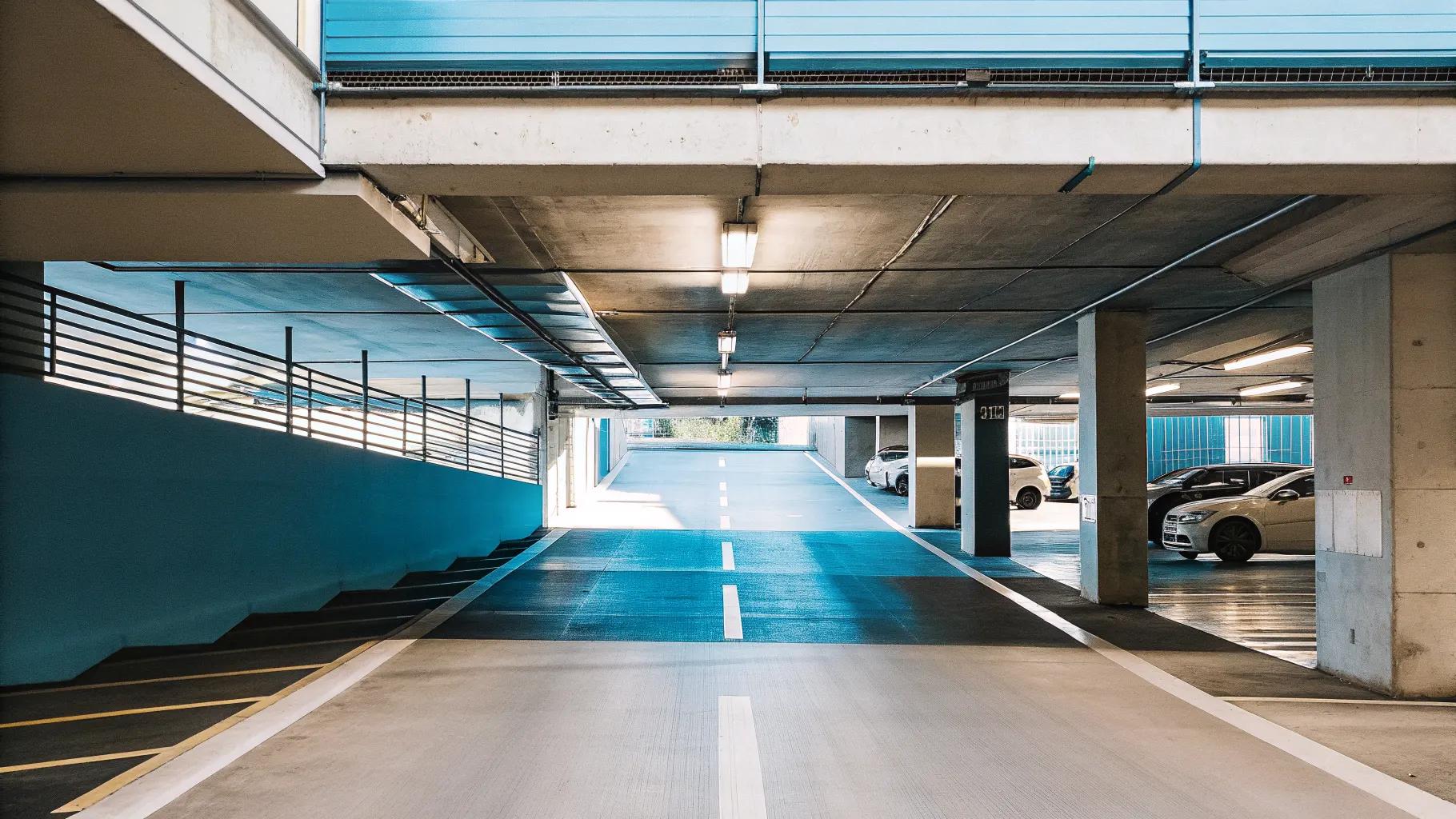
Enclosed parking structures have their own carbon monoxide rule, and it comes from the mechanical code rather than the fire code. Sensors in the garage control the exhaust fans, so ventilation runs when exhaust builds up and stays off when it does not. The sensors, the setpoints, and the wiring are all different from life safety detection, and they report to the building automation or fan controls rather than the fire alarm. Garages under hotels and apartments end up with both requirements on one set of drawings: ventilation control in the garage and life safety detection on the floors above. Keeping them separate on the inspection record avoids the common confusion where an inspector asks why a ventilation sensor is not on the fire alarm.
Where detectors go
Placement follows the manufacturer's listing and NFPA 72. In the appliance room, on the wall or ceiling where the listing specifies. Outside sleeping areas in hotels and apartments. Away from dead air near corners and supply registers, and away from the appliance's own exhaust path where a nuisance activation is likely. Hotel corridors with guest rooms served by a central boiler, apartment units adjacent to a mechanical room, and school classrooms over a gas-fired kitchen are the three layouts we see most. The hotel fire protection and multi-tenant housing pages cover the building-specific side.
How the signal is handled
The fire marshal decides whether a carbon monoxide activation is an alarm or a supervisory signal and what the notification pattern sounds like. Many jurisdictions in the Carolinas and Georgia treat it as a distinct signal so occupants know to leave the affected area and staff know it is not a fire. We program it to the AHJ's direction and document the basis in the acceptance test record. What should happen when your fire alarm actually goes off covers the response planning that pairs with this.
What it typically costs
Adding addressable carbon monoxide detectors to an existing panel typically runs $250 to $450 per detector installed, including programming and the acceptance test, with a project minimum around $1,500 for permit and testing time. Combination smoke and carbon monoxide detectors, where the layout allows, run $300 to $500 each and save a device. Listed 120-volt interconnected alarms, where code accepts them, are $120 to $200 each installed. Monitoring of the signal is usually included in existing fire alarm monitoring at no added monthly cost. Those are typical figures; the site walk and the conversation with the fire marshal set the real number. Owners in Raleigh, Charlotte, the Triad, Columbia, and Atlanta can request a carbon monoxide site walk before the next plan review raises it.