"The alarm went off and nobody called. What am I even paying for?" We hear some version of that line more than any other, usually from a property manager who found out the hard way that a signal fired and nothing happened after it. Not a fire department dispatch. Not a call to the on-site contact. Nothing, until someone walked past a panel showing a fault that had been sitting there for days. Most owners assume monitoring is monitoring, one flat service that does what the name implies. It isn't, and the gap between assuming and knowing is exactly where that fear lives.
What's supposed to happen
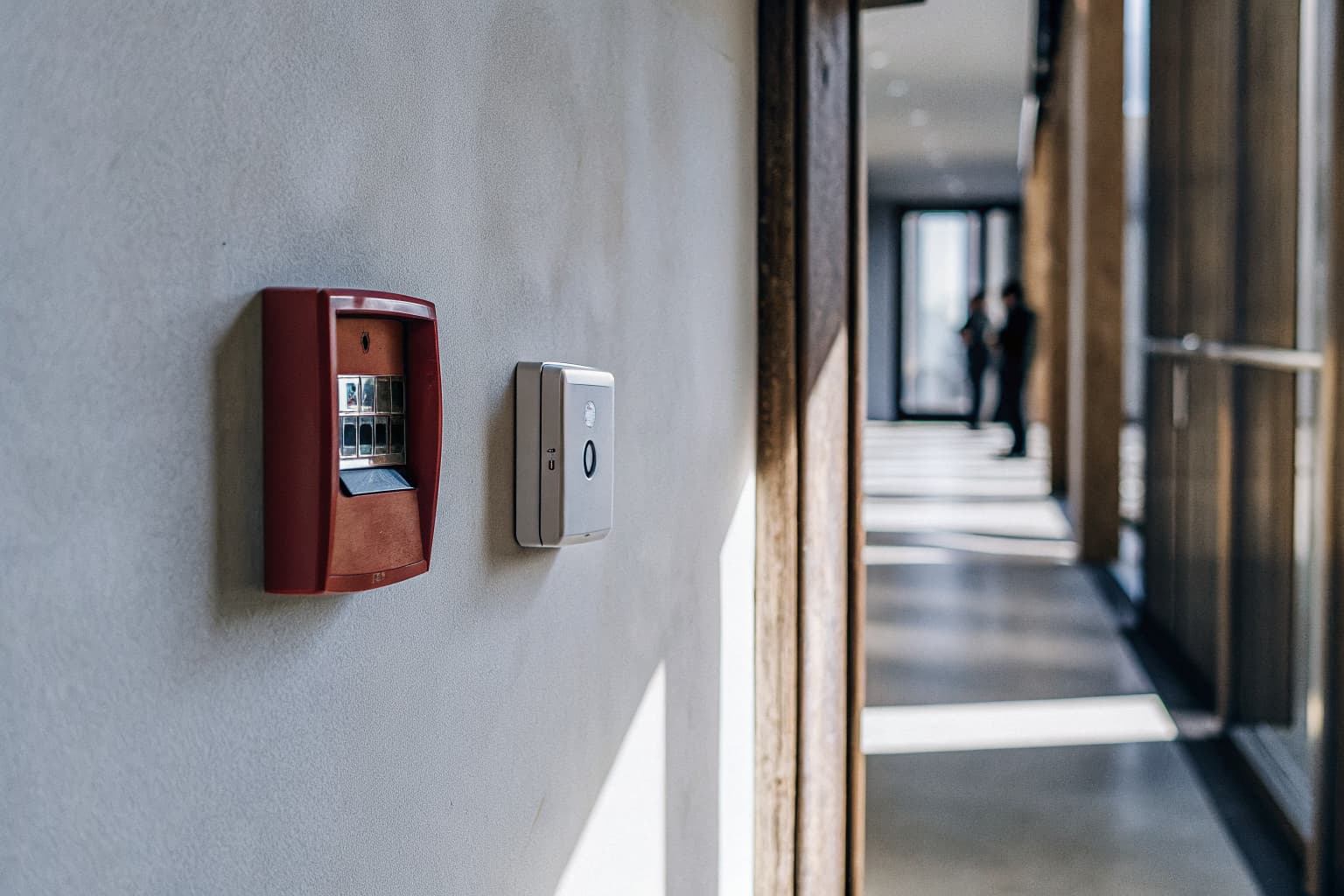
A working monitored fire alarm sends a signal from your panel to a staffed central station the instant a device trips. From there the sequence is fast and specific. An alarm signal, meaning a smoke detector or pull station actually activated, gets the fire department dispatched immediately, no callback, no waiting on someone to pick up. A trouble or supervisory signal, like a low battery or a sprinkler valve that got closed and forgotten, gets a call to your facility contact so it gets fixed before it becomes the reason an alarm didn't work when it needed to. Every one of those signals gets a timestamp in a record you can pull later, for an inspector, an insurer, or your own peace of mind. That's the whole point of paying for monitoring instead of just owning a panel that makes noise.
The silent failure looks nothing like an alarm
Here's what should worry a property manager more than a false alarm: a system that fails quietly. A communication path that's been down for weeks because a copper phone line got disconnected somewhere upstream. A central station that logs a trouble signal as a report instead of a phone call. A panel that's technically "monitored" on paper but hasn't actually transmitted a test signal in longer than anyone can remember. None of that looks broken from where you stand. The panel still has power. The lights still blink. The building looks fine right up until the moment it isn't, and that's the scenario behind nearly every complaint we hear about a provider that stopped monitoring and never told anyone.
Why three vendors makes this worse
If your cameras, your door access, and your fire alarm all come from different companies, a silent failure like that turns into a finger-pointing exercise. The camera vendor says it's not their system. The access control company says talk to whoever installed the panel. The fire alarm outfit says the phone line issue is on the carrier's end. Meanwhile nobody owns the problem, and you're the one standing in front of the fire marshal explaining why the monitored connection wasn't actually connected. One provider covering video surveillance, access control, and fire monitoring under one contract means there's exactly one company to call, and exactly one company that can't blame someone else for a gap in coverage they're responsible for closing.
How to actually check yours
You don't have to take a provider's word for it. Ask when your panel last sent a test signal, supervised connections check in on a schedule, and if nobody can answer that question fast, nobody's actually watching. Ask what happens to a supervisory signal at two in the morning. If the honest answer is "it shows up on a report in the morning," that's not monitoring, that's a mailbox. A real central station monitoring setup should have a clear, immediate answer for both questions, and your NFPA 72 inspection and testing record should back it up in writing.
One team, one bill
If you're searching for a fire alarm monitoring company near me because your last one went quiet, the fix isn't just swapping vendors, it's stopping the vendor-juggling altogether. We monitor fire, video, and access under one contract across North Carolina, South Carolina, and Georgia, so when something needs an answer, you get one from the team that installed it, not a runaround between three companies that each own a third of your building's safety. One team, one bill, and a record you can actually hand to an inspector without hunting down three separate invoices to prove it.
Ready to find out what your current setup actually does when a signal fires? Get in touch with our team and we'll walk through it with you.