A tenant slips on a wet stairwell landing at 9 p.m. and says the fall was hard. Their attorney writes to you a week later and asks for the camera footage. You pull up the recorder and find the stairwell camera hasn't saved anything in three weeks.
That's the nightmare, and it's not really about the fall. It's about the cameras that weren't working when you needed them. If you manage a property, you've probably thought some version of this: if someone gets hurt and the cameras were down, that lands on me. Here's how to think about what you record and how long you keep it, so that sentence stops keeping you up.
Common areas versus private units
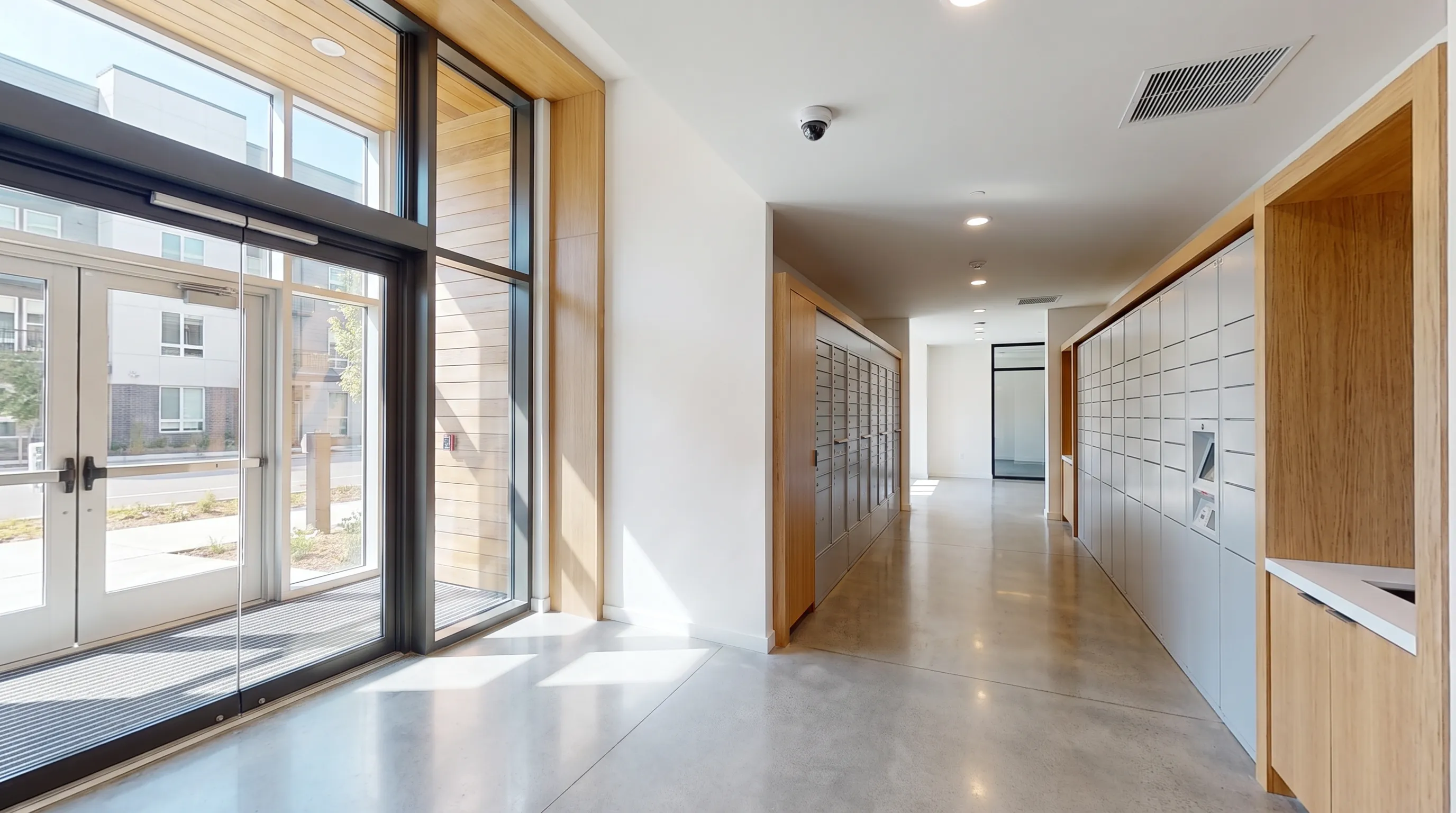
The simplest way to frame apartment building security camera laws is by location. Shared spaces, where residents and visitors have little expectation of privacy, are where cameras belong: entrances, lobbies, parking areas, mail rooms, package rooms, stairwells, elevators, hallways, the pool gate, the dumpster pad. Those are the places incidents actually happen, and they're the places you'll be asked about.
Inside a unit is different. A tenant's apartment is their home, and cameras pointed into it, or aimed so they catch a window or a doorway into a private space, are a bad idea. Don't do it, and don't let a well-meaning maintenance crew do it either. The same goes for any space where people reasonably expect to be unobserved, like restrooms and changing areas at an amenity. Audio is its own category too, and recording conversations is treated more strictly than recording video in many places.
The exact rules vary by state and sometimes by city, so this is a question for your property's attorney, not for a camera vendor or a blog post, including ours. What we can tell you is how good video surveillance design handles it: cover the doors, corridors, and gathering points, leave private space alone, and aim every lens with a reason you could explain out loud.
Tell people the cameras are there
Quiet cameras create arguments. Posted notices at entrances, a line in the lease or house rules, and a written policy on who can view footage all help. They also keep you consistent. If one leasing agent shows footage to a tenant because they asked nicely and another says no, you've got a problem that has nothing to do with the cameras.
Decide ahead of time who can pull video, who they have to ask, and what gets logged when they do. A short written policy beats a good memory every time. Have your attorney read it before it goes into the lease.
How long to keep footage
Here's the straight answer: there's no single number that fits every building. Most properties land somewhere between a few weeks and a few months, and the real limit is storage. Retention is a math problem. More cameras, higher resolution, and more days all mean more drives. A recorder sized for 14 days at a lower resolution is a very different box than one keeping 90 days from twenty cameras.
What matters more than the number is that you know yours. If a resident reports a package theft or a car break-in, how many days do they have before the footage is gone? Claims, complaints, and incident reports tend to show up late. A tenant doesn't always tell the office right away, and a letter from an attorney can take weeks. If your system overwrites at 14 days and the claim arrives on day 30, you have nothing to show.
Two habits close most of that gap. First, set retention to match how long things realistically take to surface at your property, and ask your attorney or insurance carrier whether there's a longer window you should be working to. Second, when an incident happens, export and save that clip right away instead of leaving it to the overwrite schedule. A clip you saved in the first hour is a clip you still have in month three.
Footage is only useful if the cameras were working
This is the part people miss. Retention policy doesn't matter if a camera has been offline since March. A dead lens, a full drive, a recorder with the wrong date and time, a camera that got bumped and now points at the ceiling: all of those look fine until somebody needs the video.
The fix is boring and it works. Have someone check that every camera is recording, that the retention period is what you think it is, and that the clock is correct. Our camera maintenance service does exactly that, and it's the cheapest part of the whole system. Add a short log of the checks and you've got something that shows you were paying attention, which is a lot of what protecting yourself actually means.
Start with a walk of the property
If you'd like to know whether your cameras cover the right places, whether they're recording the way you think, and how many days of footage you really have, talk to our team. We'll walk the property with you. For more on what we install in these buildings, see our page on security cameras for multi-tenant housing, and pair it with access control so you know who came through the door, not just that someone did.