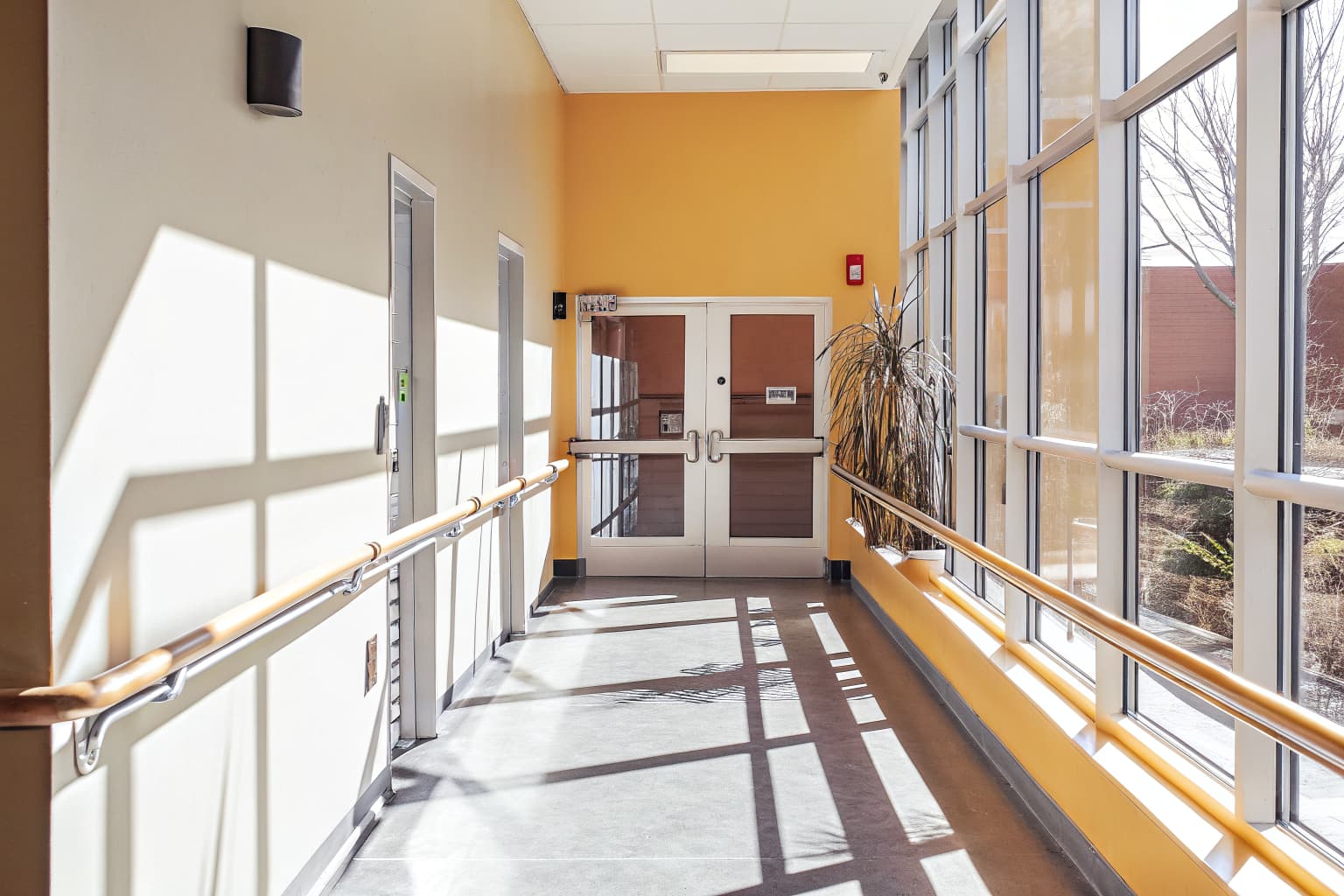
An administrator at an assisted living community outside Charlotte once told us her biggest fear wasn't a break-in. It was a resident who wandered out a side exit at 3 a.m. and nobody on the overnight shift knew until a neighbor called it in. The building had cameras. Good ones, even, with clear footage of the door opening. What it didn't have was anything that would have told staff, in real time, that the door had opened at all. That gap between "we can see what happened" and "we knew it was happening" is the entire problem with treating cameras as the whole security plan for a facility like this.
Assisted living sits in a different category than an office building or a retail store, and it should be secured like one. Residents range from fully independent to living with dementia, and a building has to protect all of them without feeling like a facility nobody would want to live in. That means the security plan has to do more than record incidents after they happen. It has to catch a fall, a wander, a propped fire door, or a kitchen fire before it becomes a call to a family member explaining what went wrong.
Cameras tell you what happened. They don't tell you what's happening right now.
Video surveillance still matters in a community setting. It documents visitor traffic, backs up incident reports, and gives families a level of assurance they're paying for. But a camera watching an exit door doesn't stop a resident from walking through it, and it doesn't get anyone to a resident who's fallen in a hallway at 2 a.m. and can't reach a phone. Cameras are a record. They're not a response. A security camera system built for a medical or assisted care facility still belongs in the plan, but it's one layer, not the whole plan.
Emergency communication has to reach a real person, fast
A nurse call button that just plays a chime down a hallway isn't much different from a resident shouting and hoping someone's close enough to hear. On an overnight shift, one aide is often covering fifteen or twenty residents across a wing, and a call that takes six or seven minutes to get answered is a long time when someone's on the floor. A real emergency communication system routes a call directly to a staff member's pager or handheld, logs the response time, and escalates automatically if nobody acknowledges it within a set window. That response-time record isn't just for internal quality control. It's exactly what a state licensing surveyor asks to see during an inspection, and it's exactly what a family wants answered honestly if they ever ask how fast staff actually respond. Our nurse call systems for medical and assisted care facilities are built around that response chain, not just the button on the wall.
Access control for a building where "keep people out" isn't the only goal
In an office, access control is about keeping the wrong people out. In assisted living, especially in a memory care wing, it's just as often about keeping the right people safely in. A resident with dementia can walk toward an exterior door with no sense that they're leaving a supervised environment, and a standard door that unlocks with a push bar doesn't distinguish between a staff member heading outside for a break and a resident who shouldn't be unsupervised past that threshold. Access control designed for medical and assisted care facilities can restrict specific doors by credential, delay an exit long enough for staff to respond, and pair with door prop monitoring so a fire door someone wedged open for a delivery doesn't sit open and unmonitored for the rest of the shift.
Hazard detection for residents who may not be able to call for help
A working smoke detector is table stakes. What matters more in a building with residents who have limited mobility or cognitive impairment is how fast that alert reaches staff and how clearly it tells them where to go. A fire alarm that only sounds a horn assumes every resident can hear it, understand it, and get themselves to an exit unassisted, and in assisted living that assumption doesn't hold for everyone in the building. Fire protection built for medical and assisted care facilities integrates detection with staff notification and a documented response plan, because in this occupancy type the alarm going off is the start of the response, not the whole response.
The systems have to talk to each other, not just sit next to each other
The real failure point in most facilities isn't a missing device. It's four separate systems, cameras, door access, nurse call, fire alarm, that were installed by four different vendors over the years and never wired to work together. A door prop alarm that doesn't route to the same notification system as the nurse call panel means staff are watching two screens instead of one, and a busy overnight shift misses things when attention is split that way. When access control, hazard detection, and emergency communication share one notification path, a propped door, a wander alert, and a smoke detector all reach the same staff member the same way, and nobody's relying on someone happening to glance at the right monitor.
Get a plan built around your residents, not a generic install
If your community is running on cameras plus whatever nurse call system came with the building, that's worth a second look before an incident forces the question. You can see the full range of what we build for this occupancy type on our security solutions for medical and assisted living facilities page.