A property manager in Charlotte once told us the first she heard about a lapsed fire alarm inspection was from the fire marshal, standing in her lobby, holding a clipboard, on the day of a re-occupancy walkthrough for a new tenant. The lease-up stopped cold. No inspection record, no move-in date. That's usually how this comes up: not as a compliance memo somebody reads ahead of time, but as a stranger with a badge asking for a document that doesn't exist.
Fire alarm inspections aren't optional paperwork you get to when things slow down. They're a legal requirement tied to NFPA 72, the code that governs how often every part of your fire alarm system gets tested, and North Carolina, South Carolina, and Georgia all enforce it through their local fire marshals. The rules are largely consistent across all three states because they share the same underlying code, but enforcement is local. That means the inspector who shows up at your building in Raleigh, Greenville, or Savannah is checking your specific paperwork against your specific building, not applying some statewide average.
What NFPA 72 actually requires, device by device
The mistake a lot of building owners make is assuming "annual inspection" covers everything. It doesn't. NFPA 72 sets different testing intervals for different components, because they fail in different ways. Smoke detectors, heat detectors, pull stations, and the control panel itself generally get a full functional test once a year. Components tied to a sprinkler system, waterflow switches, tamper switches, pressure switches, often need testing more frequently than that, quarterly or semi-annually depending on the device and your occupancy classification. Battery backups get load-tested separately, because a battery can show full voltage on a meter and still collapse the moment it's asked to actually carry the panel during a power outage.
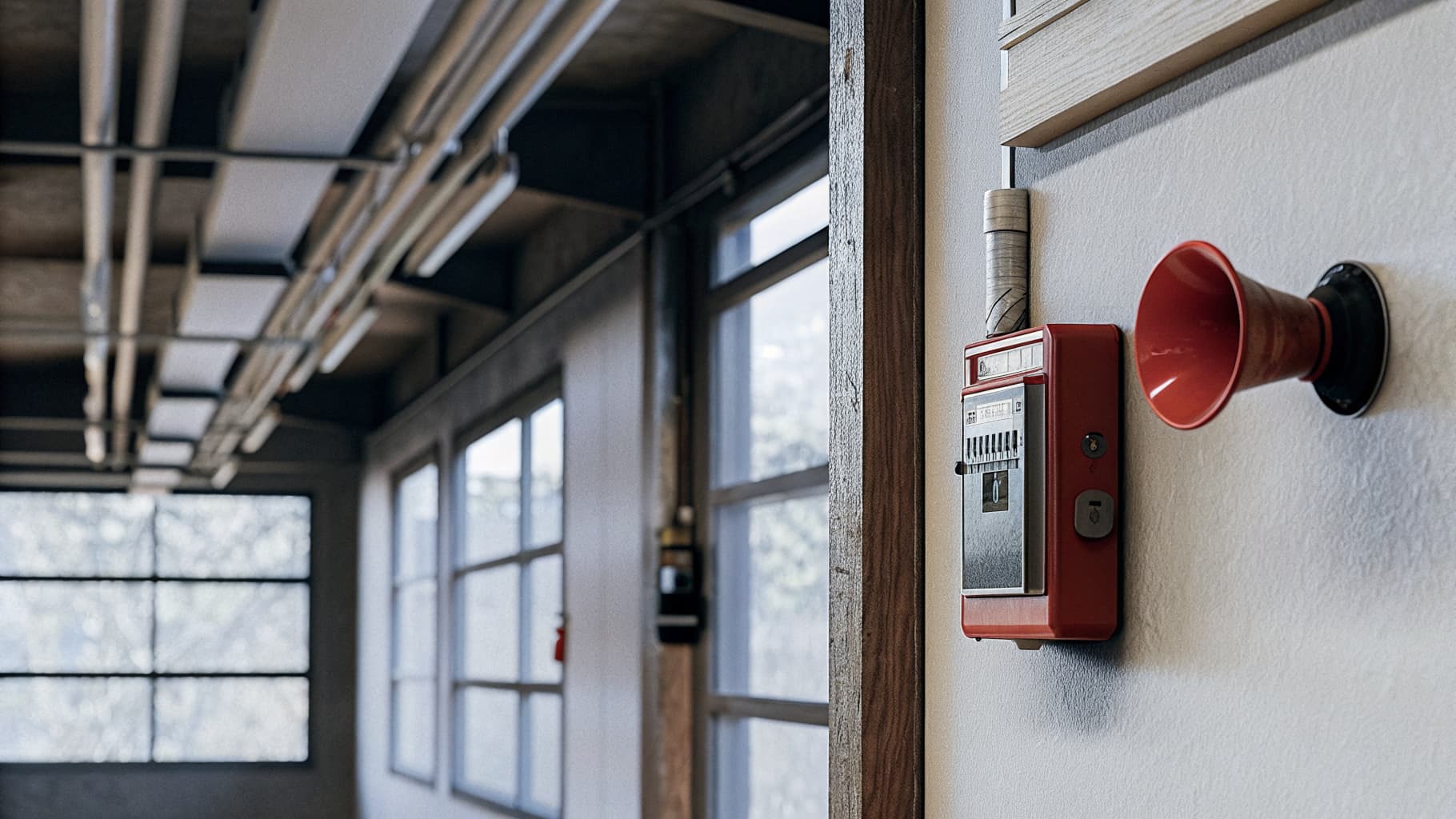
This is why a real inspection means someone individually testing every initiating device and confirming every horn and strobe is both audible and visible from occupied space, not a technician glancing at the panel to confirm the lights are green. A panel that isn't throwing a trouble signal tells you the panel is fine. It tells you nothing about whether the detector in the back stockroom actually trips.
Where the three states line up, and where you still need to check locally
North Carolina, South Carolina, and Georgia have all adopted versions of the International Building Code, which sets the underlying thresholds for when a fire alarm system is required and how it's classified by occupancy type. That shared foundation is why the testing schedule looks similar no matter which of the three states your property sits in. What differs, sometimes building to building within the same city, is how a renovation, a change of use, or an addition can trigger a code requirement your original building didn't have. A warehouse that gets converted to office space, or a retail unit that becomes a daycare, can suddenly owe a level of fire protection nobody planned for when the lease was signed. Your local fire marshal is the final word on what your specific building owes. If you're not sure, that's a conversation to have before you sign a lease or start a renovation, not after an inspector flags it.
What happens when an inspection lapses
A missed inspection almost never announces itself as a single dramatic failure. It shows up sideways, usually at a moment you didn't pick. A re-occupancy inspection stalls because there's no record on file, which delays a new tenant's move-in date and the rent that comes with it. A routine fire marshal visit turns into a violation notice that has to get resolved before the property can move forward with anything else on the to-do list. Or, in the scenario nobody wants to think about, there's an actual fire and the insurance claim gets contested because the policy required documented maintenance on a schedule that wasn't being met. None of these are rare edge cases. They're the three most common ways property owners in our service areas find out an inspection lapsed, and by definition they find out at the worst possible time to be finding out.
What good documentation actually looks like
The fire marshal isn't asking whether your system works. They're asking whether you can prove it, on paper, tied to a date and a technician's name. "It's been checked" doesn't hold up. A report that specifies which devices were tested, when, by whom, and what (if anything) failed and got corrected, does. That paper trail matters everywhere, but it gets checked the hardest in occupancies that already carry a heavier regulatory load, medical facilities, assisted living communities, schools, anywhere the building code assumes a slower or more vulnerable population in an emergency. If your inspection records live in a filing cabinet somewhere and nobody's sure how current they are, that's worth fixing before an inspector makes you find out the hard way.
Get your inspection schedule in order
If you manage a commercial property anywhere in North Carolina, South Carolina, or Georgia and you're not confident your fire alarm inspection records are current, don't wait for a fire marshal to be the one who tells you. Our fire alarm inspection and testing service covers every device on your system against the NFPA 72 schedule, with documentation you can hand over the moment someone asks for it. You can see the areas we cover on our service areas page, or contact our team to get a real inspection date on the calendar instead of a guess.