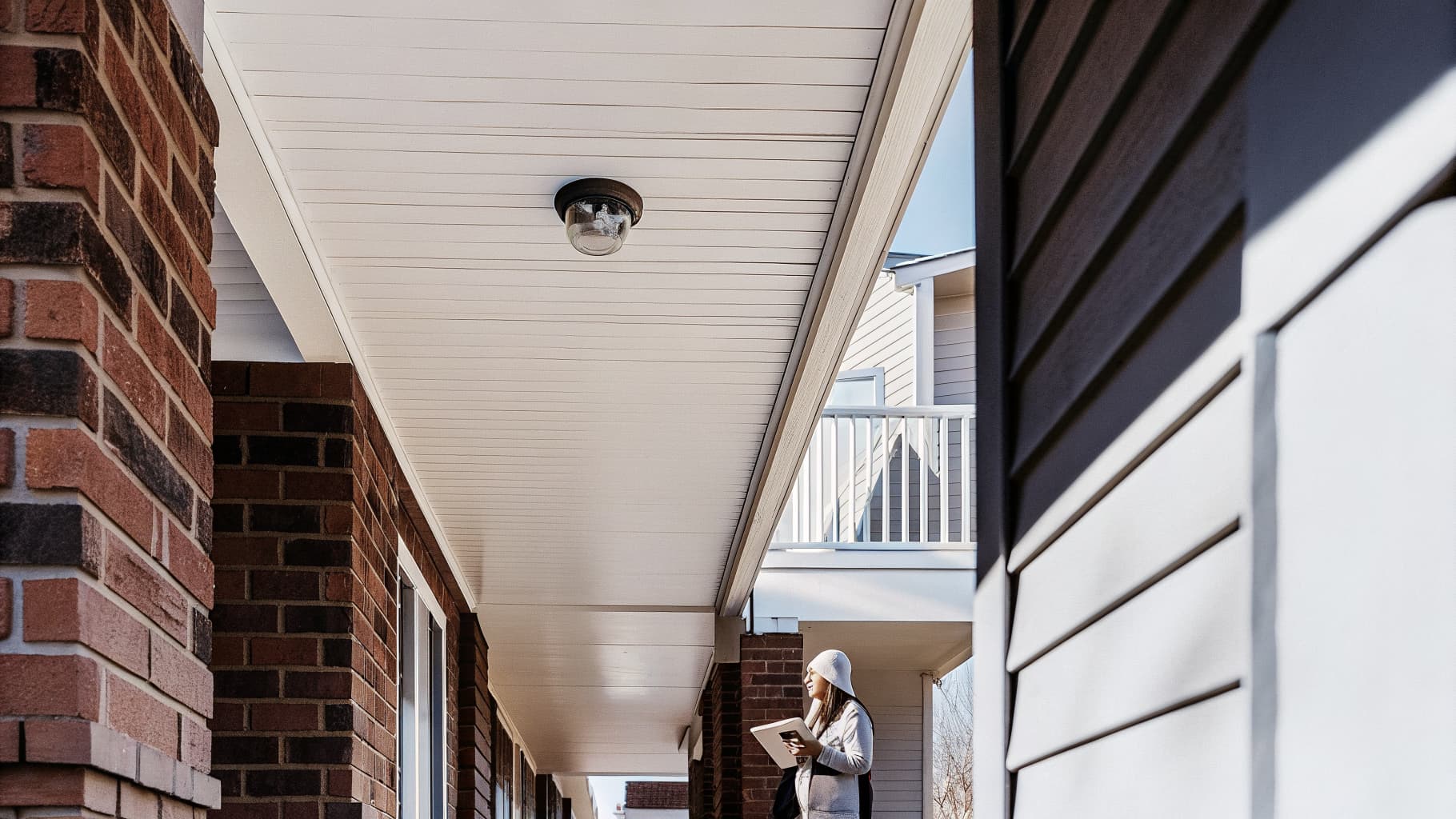
"Can they actually watch my door?" That's the question a resident asked one property manager after noticing a new camera above the mailroom pointed almost, but not quite, at her unit. It's a fair question, and it's one more residents are asking as more communities add cameras to breezeways, parking decks, and package rooms. Property managers usually think about camera placement in terms of coverage: what's the blind spot, what needs a light on it at night, where did the last incident happen. Residents think about it differently. They think about who's watching, what's being kept, and whether anyone asked them first. Both questions matter, and getting the second one wrong can cost you more than the camera did.
What you can legally record on a multifamily property
The baseline rule almost every property manager already knows: common areas are fair game, private spaces are not. Lobbies, hallways, parking lots, pool decks, laundry rooms, and leasing offices are shared spaces with no reasonable expectation of privacy, so cameras there are standard practice and rarely challenged. The line gets crossed at a unit's front door threshold, inside a private balcony, through a window, or anywhere someone would expect to undress, shower, or otherwise be unobserved. A camera angled to catch the inside of an apartment through a sliding door, even by accident because a pole moved or a lens got bumped, is the kind of thing that turns a security upgrade into a privacy complaint. North Carolina doesn't have a single statute that spells out apartment camera rules the way some states do, but general privacy law still applies: recording where someone has a reasonable expectation of privacy, or recording audio without consent in a two-party state, can expose an owner to liability regardless of intent. If your state has stricter rules on audio recording specifically, that's worth checking before any camera with a microphone goes up.
Why tenant notice matters more than the law strictly requires
Most leases already give property owners the right to install cameras in common areas, and most states don't require a resident's individual sign-off for that. But "legal" and "defensible" aren't the same thing. A community that adds cameras without telling anyone, then produces footage of a resident during a dispute, invites the obvious question: how long has this been running, and why didn't we know? Compare that to a community that updates its lease addendum, posts signage at entry points, and sends a notice when new cameras go in. Same legal footing, completely different tenant reaction. Notice isn't just about avoiding complaints. It's what makes footage usable without a fight later. If a resident can credibly claim they never knew they were being recorded in a space where recording wasn't obvious, that's a harder position to defend than "we told everyone in writing and posted signs at every entrance."
The ethical line goes past what's legal
Just because a camera can see something doesn't mean it should be positioned to see it. This is where a lot of well-intentioned systems get uncomfortable fast. A camera in a parking deck that happens to catch a wide swath of a ground-floor unit's windows. A doorbell-style camera at a shared entry that records audio of every conversation in the breezeway, not just the door. A system with months of retained footage and no policy on who can pull it or why. None of that is necessarily illegal, but all of it erodes the trust that makes residents comfortable living somewhere. The practical fix is the same discipline a good installer should already be applying: aim cameras at what needs coverage, not at everything within range. Mask out windows and private patios in the camera's software if the hardware angle can't avoid them. Write down who has access to footage, how long it's kept, and what triggers a pull, and be able to hand that policy to a resident who asks.
What this looks like in practice for a property manager
Start with an audit, not a purchase order. Walk the property and ask what each existing or planned camera is actually covering, and whether that coverage stays inside common areas. Update your lease language and resident handbook to name the general locations of surveillance, even in broad terms like "common area cameras are in use throughout the community." Post signage at main entrances, since it costs almost nothing and does real work if footage is ever challenged. Put a retention and access policy in writing, even if it's short, so "who can see this and for how long" has an answer before anyone asks. And when you're planning new camera placement, loop in whoever is doing the install early enough that camera angle and lens choice get decided with privacy in mind, not adjusted after a resident complains.
Get the coverage right the first time
Most of what turns a camera system into a legal or PR problem isn't malicious. It's a lens that was never re-aimed after a tree got trimmed, a system installed years ago before anyone thought through where the boundary of "common area" actually sits, or a retention setting nobody's looked at since the install. A system designed with privacy boundaries in mind from the start avoids most of this without sacrificing coverage where you actually need it. If you're planning cameras for a multi-tenant property or want a second look at what's already installed, our security cameras for multi-tenant housing page covers how we approach placement and coverage for apartment communities, or you can contact our team to walk through your specific layout.