
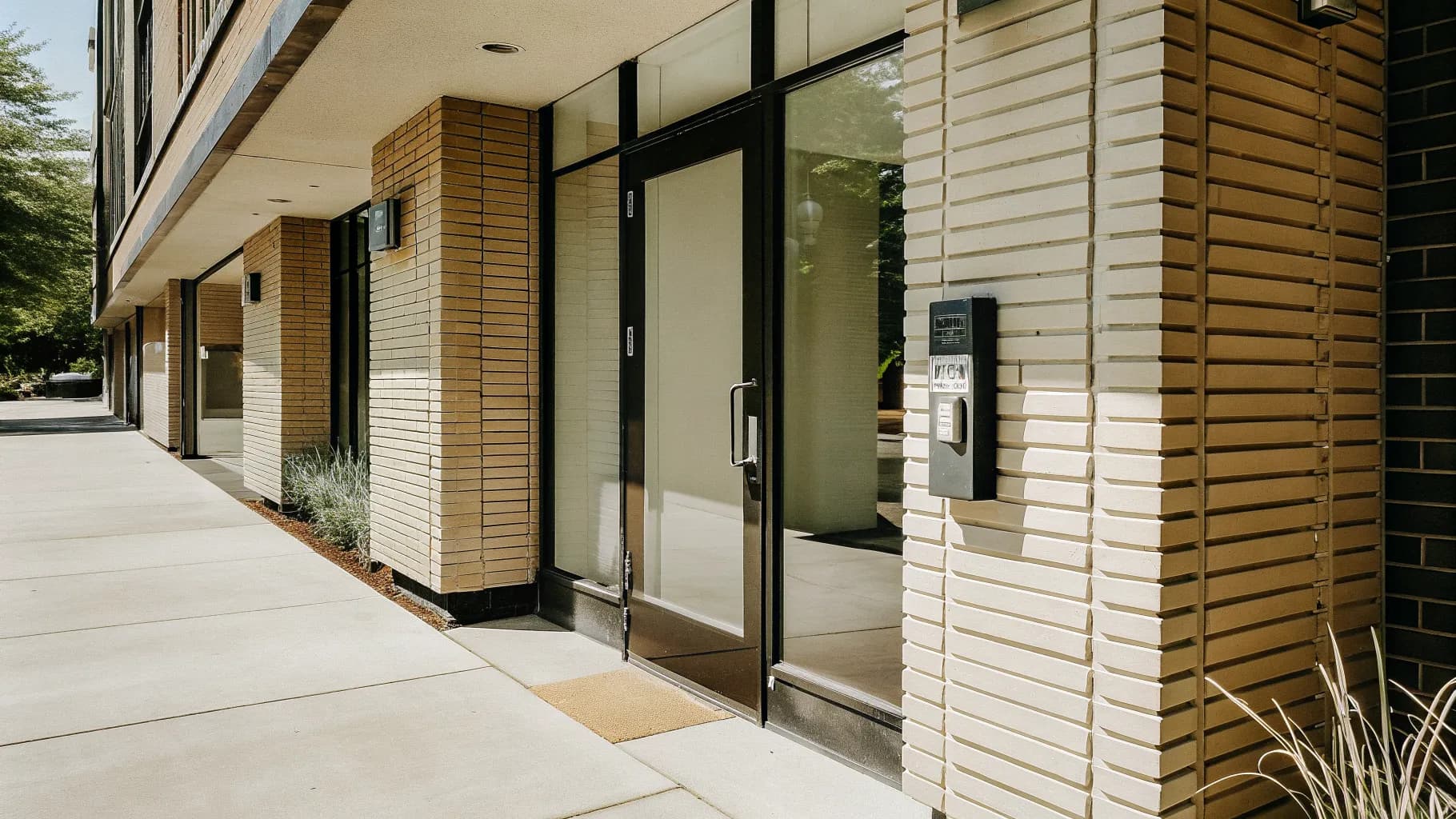
It's 4:45 on a Friday and a tenant who moved out on the 1st just got buzzed into the lobby by a neighbor. Did anyone ever collect her key? Nobody's sure. That's the moment most property managers start asking what the best access control system for apartment buildings actually looks like, and the spec sheets don't answer it. The better question is what your Monday morning looks like with each option.
Fobs and cards: fast to issue, only as good as your software
A fob system is the workhorse for most multifamily properties. Hand a tenant a fob at lease signing, and the reader on the front door, the mail room, and the fitness center all know who they are. The part that matters to you isn't the hardware. It's whether you can disable one fob from your desk the minute a lease ends or a fob goes missing. On a cloud-managed system you can. On an older standalone setup, someone may have to visit the panel or reprogram the door. Ask that question before you ask about price. We cover the trade-offs in our page on key fob entry and in the cloud vs. on-prem comparison.
Video and telephone entry: great for visitors, not a tenant credential
Video and telephone entry solve a different problem. A guest, a delivery driver, or a contractor presses a button, the tenant sees or hears them, and the tenant decides. That's useful. But it shifts the gatekeeping to your residents, and residents buzz in people they shouldn't, or the neighbor's friend, or the person who says they forgot their fob. It's also a poor stand-in for tenant credentials, because it doesn't tell you who's a resident and who isn't. Most buildings do best pairing video intercom systems or telephone entry with a fob or keypad system, so visitors have a path in and residents have their own.
Smart locks and keypads: no hardware to hand back
Keypads and mobile credentials take the physical object out of the equation. There's no fob to lose and nothing to chase down at move-out. A code can be changed or a phone credential revoked without a lockout or a rekey. The catch is that shared codes drift. If forty tenants have the same lobby code, it's not really access control, it's a code the whole building and half the neighborhood know. Look for individual codes or credentials per person, so a departure means one deletion, not a building-wide change. See keyless entry for how that works in practice.
Three questions that separate the options
Forget features for a minute and picture the calls you actually get. How long does it take to add a new tenant? How long to cut off a tenant who's moved out, a terminated maintenance worker, or a lost credential? And who gets into common areas like the pool, the gym, and the package room, and when? A good system answers all three from one screen. You should be able to add or shut off someone's access from your desk in two clicks, set a gym to close at 10 p.m. without touching a door, and see a log if something goes sideways. If any of those need a site visit, that's a cost you'll pay every turnover.
Match the system to your building
A garden-style community with a single front door and a mail room has different needs from a mid-rise with a garage, a rooftop deck, and 200 units. Multi-building properties benefit most from central management, so the leasing office isn't running back and forth. Older buildings may be able to keep existing wiring or readers, which cuts install cost. Our access control for multi-tenant housing page walks through how we approach those properties, and our door prop alarms help when a propped door quietly defeats everything else.
Talk it through with someone who does this every week
Every building has quirks that don't show up in a brochure. If you're weighing options for a property in North Carolina, South Carolina, or Georgia, contact our team and tell us how many units you have, how often you turn them over, and what's costing you the most time right now. Bring the Friday afternoon story. That's usually where we start.