It's 2:40 a.m. Someone fills a tank, pulls away, and never walks in to pay. The next morning your clerk shrugs, you pull up the footage, and all you can see is the back of a truck and a plate that's a smear of pixels. That's a camera problem, but not the kind most owners think. The camera worked. It just wasn't pointed at what mattered.
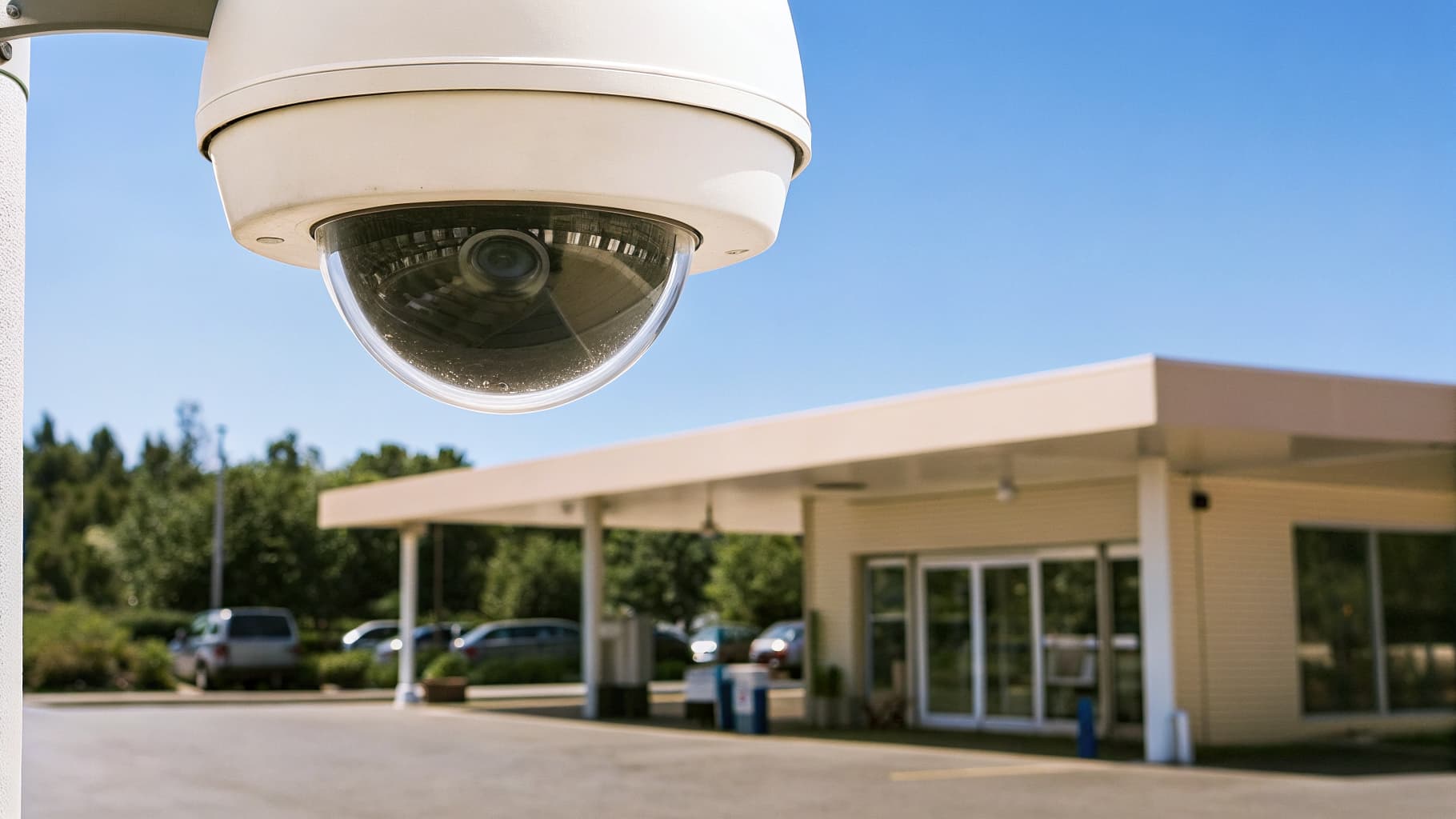
Gas station security cameras earn their keep when each lens has a job. A store with sixteen cameras and no plan loses to a store with ten that were placed on purpose. Here's how we'd think about the four zones that matter most, and what changes after you lock the door.
The pumps and the canopy
Pump cameras answer one question: who was this, and what were they driving? That means a clear view of each dispenser position and a separate angle on the vehicle at the pump, ideally one that can read a plate at the speed cars actually move. Drive-offs, card skimmers, and pump-side disputes all end up here. A wide view of the whole canopy is nice for context, but it won't win an argument with a pump you can't identify.
Mount height and glare matter more than megapixels. Canopy lighting at night can blow out a plate or wash out a face, so the camera needs to handle bright lights against a dark lot. It's worth testing at night before you call an install done. If your system does video surveillance well on a sunny afternoon and poorly at 3 a.m., it isn't doing the job you bought it for.
The register and the sales floor
This is where most of your loss prevention work happens. You want a clear, close view of the cashier and the customer at the counter, with enough detail to see the transaction, the lottery counter, and the cigarette wall behind it. Add a camera on the door so every person entering gets a face shot at eye level. A camera that only sees the tops of heads is the classic mistake.
Then cover the aisles, the cooler doors, and any blind corner a person could stand in without being seen from the counter. Shrink and shoplifting don't usually happen in front of the clerk. If you sell hot food, the prep area belongs on the list too. For the full picture of how we approach these stores, see our page on security cameras for gas stations and convenience stores.
The back office and the lot perimeter
The back office is where the safe, the cash drops, and the recorder usually live. A camera on that door and one on the safe gives you a record of who handled cash and when, which settles a lot of internal questions without anyone having to accuse anyone. Keep the recorder itself somewhere hard to reach and hard to tamper with.
The perimeter is the part owners skip, and it's the part that tells you how someone got in. Cover the dumpster pad, the side and rear doors, the air and vacuum area, and the lot edges where a car can idle unnoticed. Add the road entrances and exits, because that's where your best plate shot usually sits. A perimeter camera doesn't just record the break-in. It shows you the van that sat there for twenty minutes first.
Monitored or unmonitored after hours
Here's the honest difference. Unmonitored cameras tell you what happened. You find out in the morning, file a report, and hand over a clip. That has real value, especially for insurance and police follow-up. But the loss has already happened.
Monitored coverage changes the timing. With live video monitoring, trained agents can watch your lot while you sleep, speak to someone on site through the camera, and dispatch police when they see activity that shouldn't be there. We cover how that works in more detail on our video monitoring solutions page. Most stores don't need it at noon on a Saturday. The hours it earns its cost are the quiet ones, closing to open, when nobody's there to see it. Ask yourself which of your incidents happened after midnight. That answer usually settles the question.
Running more than one location
If you own two stores, you already know the problem. Each site has its own recorder, its own login, and its own idea of what "working" means. Nobody notices that the camera at store three has been offline since Tuesday until the day you need it.
Putting every site on one integrated system fixes most of that. You see every location's cameras in one place, you get an alert when a camera goes down, and your cameras, alarms, and monitoring come from one team that already knows your sites. That's one call when something breaks instead of three. If you're weighing this across a portfolio, our overview of security for gas stations and grocery stores shows what we put in these buildings.
Start with a walk of your lot
If you'd like a second set of eyes on where your cameras point, what they miss, and whether after-hours monitoring makes sense for your store or your stores, talk to our team. We'll walk the site with you and mark the blind spots on a plan. Bring your worst incident from last year. That's the zone to fix first.