A building owner gets two monitoring invoices, assumes they are duplicates, and cancels one. Three months later the fire marshal asks why the fire alarm panel has not reported a test signal since spring. This happens more often than it should, and the root of it is that burglar alarm monitoring and fire alarm monitoring look identical on a statement and are governed by completely different rules.
This is what each one does, where they overlap, and why cancelling the wrong one is a problem.
What burglar alarm monitoring does
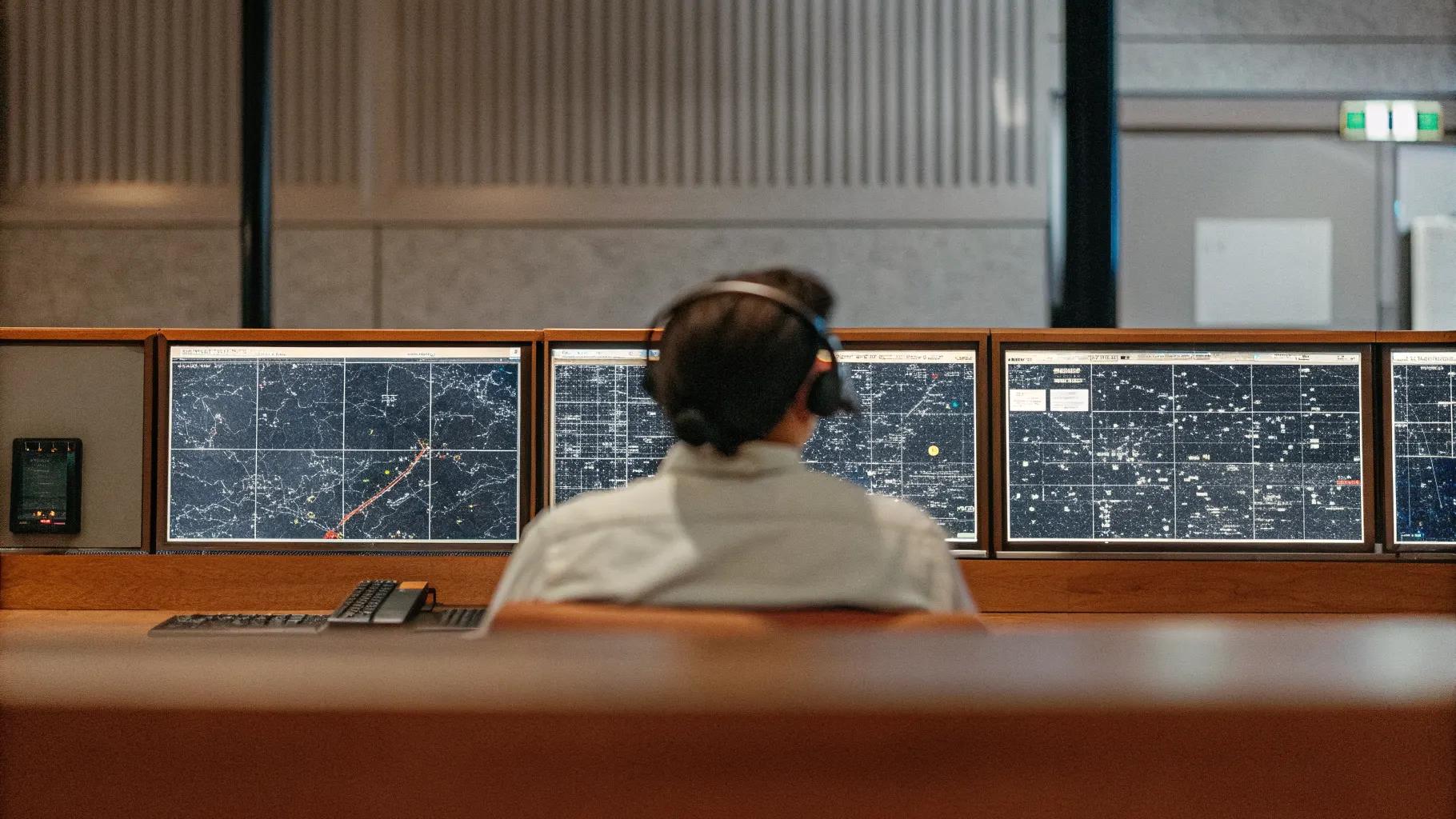
A monitored business alarm system sends intrusion, panic, and trouble signals to a central station. An operator receives the signal, follows a verification procedure, calls the premises and then the first contact on the list, and dispatches police on a verified or unverified intrusion depending on the jurisdiction's rules. The service is voluntary, in the sense that no code requires a business to have a burglar alarm. Its value is faster police response, insurance discounts, and the open and close reporting that lets a manager see which store armed late. Central station monitoring covers the operator side.
What fire alarm monitoring does
Fire alarm monitoring is required by code for most commercial fire alarm systems, and the requirement comes from NFPA 72 as adopted in the state fire code. The fire alarm panel transmits alarm, supervisory, and trouble signals over a supervised path to a listed central station, which dispatches the fire department on an alarm without the call-first verification that applies to burglar signals. The communicator has to be tested on a schedule, the path has to report a failure within a defined window, and the central station has to meet listing requirements for fire signals. None of that is optional, and the fire marshal checks it. What is fire alarm monitoring is the longer primer.
Where they overlap
Both services can run through the same central station, and in many buildings they do. Both can use the same type of dual-path cellular and internet communicator, although fire signals have stricter supervision requirements. Both show up on the same portal for the building owner. That is where the confusion comes from. On the statement they look like two lines for the same thing.
Where they differ
The differences matter when something goes wrong.
Verification. A burglar signal gets a call to the premises first. A fire alarm signal gets the fire department first. Programming a fire signal with burglar-style verification delays the response and violates the code.
Signal path. Fire alarm communicators must be supervised so a lost path reports as a trouble within the time NFPA 72 specifies. Burglar communicators are supervised too, but the standards and the timing differ.
Cancellation. Cancelling burglar monitoring means police will not be dispatched. Cancelling fire alarm monitoring means the building is out of code, the fire marshal will write it up, the insurer may deny a loss, and in some jurisdictions the occupancy permit is at risk.
Panel. Code requires the fire alarm to be on its own listed fire alarm control panel. Some combination panels are listed for both fire and burglary in small buildings, and those are the only case where the two legitimately share a box.
The shared communicator question
Owners sometimes ask whether one communicator can carry both. In some configurations, yes, if the communicator is listed for fire and the fire signals take priority. In practice we usually keep them separate: the fire alarm on its own supervised communicator and the burglar panel on its own, both reporting to the same central station and the same portal. It costs a little more per month and removes any argument about whether a fire signal was delayed by a burglar event. Fire alarm monitoring cost: what the monthly fee actually buys covers the pricing.
Moving monitoring to a new provider
Both services can be moved to a new company, and the sequence matters. For burglar monitoring, the new communicator is programmed and tested, the central station account is live, and the old account is cancelled, in that order. For fire monitoring, the same sequence applies with one addition: the fire marshal in many jurisdictions expects notice of the change, and the first test signal on the new account should be documented. A building switching providers should not have a night where neither account is active. Switching commercial security providers and leaving a monitoring contract cover what the old provider can and cannot hold.
Reading your own invoice
If there are two monitoring lines, find out which panel each one serves before touching either. The fire alarm line will reference the fire alarm panel, a supervised communicator, and often a test signal schedule. The burglar line will reference the intrusion panel and the call list. If a single line claims to cover both, ask which panel and which listing. Buildings in Charlotte, Raleigh, Greensboro, Columbia, and Atlanta that are not sure what they are paying for can ask us to read the accounts; the Raleigh fire alarm monitoring and Charlotte fire alarm monitoring pages cover the local process.