TL;DR:
- Fire alarm monitoring transmits system alerts to a staffed center that automatically contacts emergency responders, enhancing safety. It complies with NFPA 72 standards, requiring prompt response, regular inspections, and UL-listed providers to ensure reliability. Proper management of contacts, pathway testing, and documentation is essential to maintain system effectiveness and regulatory compliance.
Fire alarm monitoring is not the same as having a fire alarm. That distinction matters more than most property managers realize. A standard alarm makes noise when it detects smoke or heat. A fire alarm monitoring system does something different: it transmits that signal to a 24/7 staffed center that contacts the fire department on your behalf, even if no one is on the property. For business owners and facility operators managing multiple occupants or high-value assets, understanding this difference is the foundation of both safety planning and regulatory compliance.
Table of Contents
- Key takeaways
- What is fire alarm monitoring and how does it work
- NFPA 72 compliance and legal requirements
- Types of fire alarm monitoring compared
- Common pitfalls in managing fire alarm monitoring systems
- The real benefits of professional fire alarm monitoring
- My take on what most properties get wrong
- How Security & Life Integrations can help
- FAQ
Key takeaways
| Point | Details |
|---|---|
| Monitoring goes beyond local alarms | A monitored system alerts a 24/7 center that dispatches emergency responders automatically. |
| NFPA 72 sets the legal standard | Signals must reach the monitoring station within 90 seconds; inspections follow a defined schedule. |
| Central station dominates commercial use | About 90% of commercial buildings use third-party central station monitoring for maximum reliability. |
| Compliance protects more than occupants | UL-listed monitoring can reduce insurance premiums by 5 to 20% for qualifying properties. |
| Annual inspections are non-negotiable | Full-system tests, pathway confirmation, and documentation are required to stay code-compliant. |
What is fire alarm monitoring and how does it work
At its core, fire alarm monitoring is a service in which your fire alarm control panel communicates with an off-site monitoring station the moment a detector activates. The panel is the brain of the system. It collects data from initiating devices like smoke detectors, heat detectors, pull stations, and sprinkler flow switches. When one of those devices triggers, the panel processes the signal and immediately begins transmitting it off-site.
Communication paths include cellular, IP, and encrypted radio mesh networks, and most modern systems use dual-path transmission to prevent a single point of failure. If your internet drops, the cellular path takes over. If cellular fails, the radio mesh handles transmission. This redundancy is not optional for code-compliant systems. It is built into the requirements.
Once the signal arrives at the monitoring station, a trained dispatcher reads the exact device location and type. Monitoring dispatchers see precise sensor data such as “smoke detector, 2nd floor, server room,” which they relay directly to the fire department. That level of detail saves the response team critical minutes before they even walk through your door.
Here is what separates a monitored fire alarm from a local-only alarm:
- A local alarm sounds a horn or strobe inside the building. Nothing else happens automatically.
- A monitored alarm transmits the signal off-site within seconds, regardless of whether anyone is present.
- A monitored system dispatches emergency responders without requiring a call from an occupant.
- Monitoring stations operate 24 hours a day, every day of the year.
Pro Tip: Ask your fire alarm service provider to confirm you have a dual-path communication setup. Single-path systems are a common compliance gap in older commercial installations.
NFPA 72 compliance and legal requirements
NFPA 72, the National Fire Alarm and Signaling Code, governs how monitored fire alarm systems must be designed, installed, and maintained in the United States. If you manage a commercial building, multi-tenant housing, or any facility subject to local fire codes, NFPA 72 is the standard you will be held to during inspections and insurance reviews.
The timing requirements are specific. Alarm signals must reach the monitoring center within 90 seconds of activation, and the station must retransmit that signal to the local fire department without delay. This rule exists because every second between detection and dispatch increases property damage and the risk to occupants.
NFPA 72 also defines a mandatory inspection schedule that most facilities are not fully meeting:
- Monthly visual inspections of devices, panels, and indicators to catch obvious faults.
- Quarterly functional tests of select devices and notification appliances.
- Annual full-system inspections covering all device types, communication pathways, and power sources including backup batteries.
Beyond timing and inspections, UL 827-listed monitoring stations must annunciate communication path failures within 60 minutes and pass mandatory annual audits. This certification is not cosmetic. It signals that the monitoring operation meets a defined standard of reliability and staffing. Properties that use UL 827-listed providers can qualify for insurance premium reductions of 5 to 20%.
Compliance is not a one-time event. A fire alarm system that passes inspection today can fall out of compliance within months if communication pathways are not supervised, contacts are outdated, or panel software is not maintained.
Check with your local Authority Having Jurisdiction (AHJ) as well. State and municipal codes can layer additional requirements on top of NFPA 72, and your fire alarm inspection documentation must reflect both sets of requirements.
Types of fire alarm monitoring compared
Not every monitoring arrangement is equal. Three main models exist, and choosing the wrong one for your property type creates both operational and legal risk.
| Monitoring Type | How it works | Best suited for | Liability level |
|---|---|---|---|
| Central station | Third-party UL-listed facility staffed 24/7; dispatches responders automatically | Most commercial, multi-tenant, institutional buildings | Low for property owner |
| Proprietary | Owner-operated monitoring center; typically used for large campuses | Universities, hospitals, large corporate campuses | Moderate; owner assumes operational responsibility |
| Remote station | Signals sent to a public safety answering point directly | Smaller municipal facilities | Regulated; varies by jurisdiction |
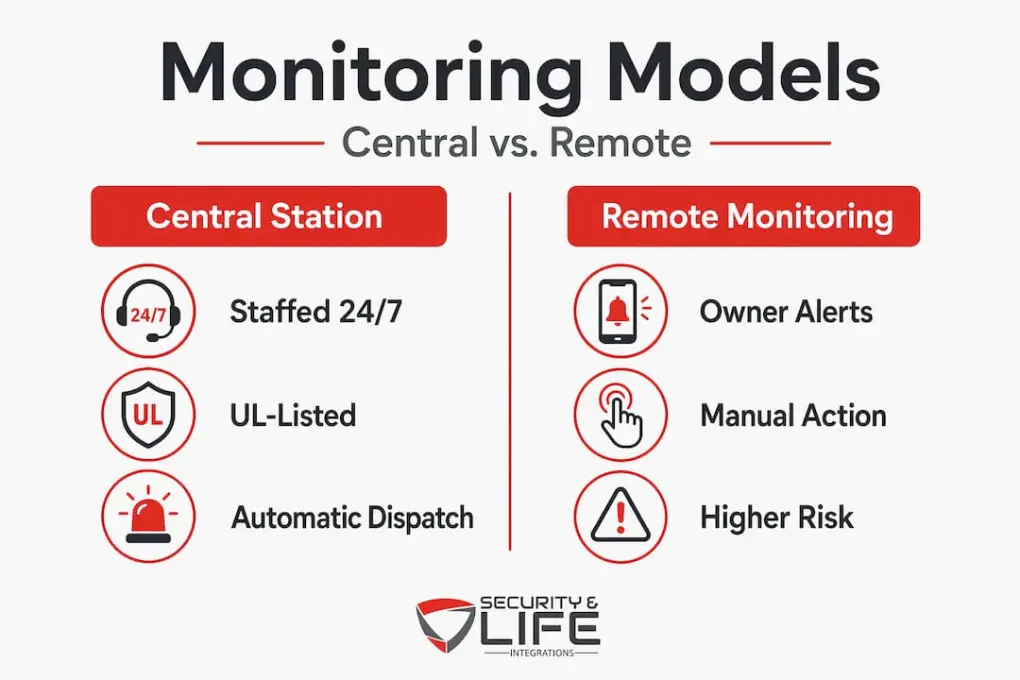
Central station service accounts for about 90% of commercial fire alarm monitoring. The reason is straightforward: trained dispatchers handle verification and notification 24 hours a day without any action required from the property owner or occupants. The responsibility for getting the fire department called shifts to the monitoring company.
Remote monitoring, which sends alarm notifications to an owner’s phone or email, works very differently. Remote monitoring carries higher liability and is often not code-compliant for larger or multi-tenant buildings. The owner receives the alert and is then responsible for calling emergency services. If the owner misses the notification or is unavailable, response is delayed with no backup. For commercial properties, that risk profile is typically unacceptable.
Pro Tip: If you manage multi-tenant residential or commercial property, verify that your current monitoring agreement specifies a UL-listed central station. Many basic service contracts do not meet this threshold.
Common pitfalls in managing fire alarm monitoring systems
Having a monitored fire alarm system does not guarantee it will perform correctly when needed. The way you manage that system between inspections determines whether it will work on the day it matters.
- Resetting trouble signals without calling a technician. Resetting the panel without technician intervention erases event logs that are critical for diagnosing faults. The correct response is to acknowledge the signal, document the time and device, and call a licensed technician to assess the root cause before any reset occurs.
- Skipping communication pathway tests. Annual inspections must include pathway testing where the monitoring station confirms it received the test signal. This step is frequently skipped or handled informally. If the pathway has failed between inspections, you may not discover it until an actual emergency.
- Outdated emergency contact lists. When a monitoring station cannot reach the correct person after an alarm, response protocols stall. Staff turnover is constant in property management, and contact lists need to be updated every time a primary or secondary contact changes.
- Missing or inaccurate floor plan data on file with the monitoring provider. Keeping current floor plans with monitoring providers directly reduces false alarm dispatches and helps responders navigate your building faster in a real event.
- Treating supervisory signals as low priority. Supervisory signals indicate that something in the system has changed from its normal state, such as a sprinkler valve partially closed. They do not mean the system is currently alarming. They do mean the system may not perform as designed if a fire occurs. Act on them within 24 hours.
The real benefits of professional fire alarm monitoring
Monitored systems reduce fire department response time by 1 to 3 minutes on average compared to properties where occupants must call 911 directly. That gap translates to a 40% reduction in property loss per incident. For a commercial building, that difference can mean the preservation of millions of dollars in assets and, more critically, the protection of occupant lives.
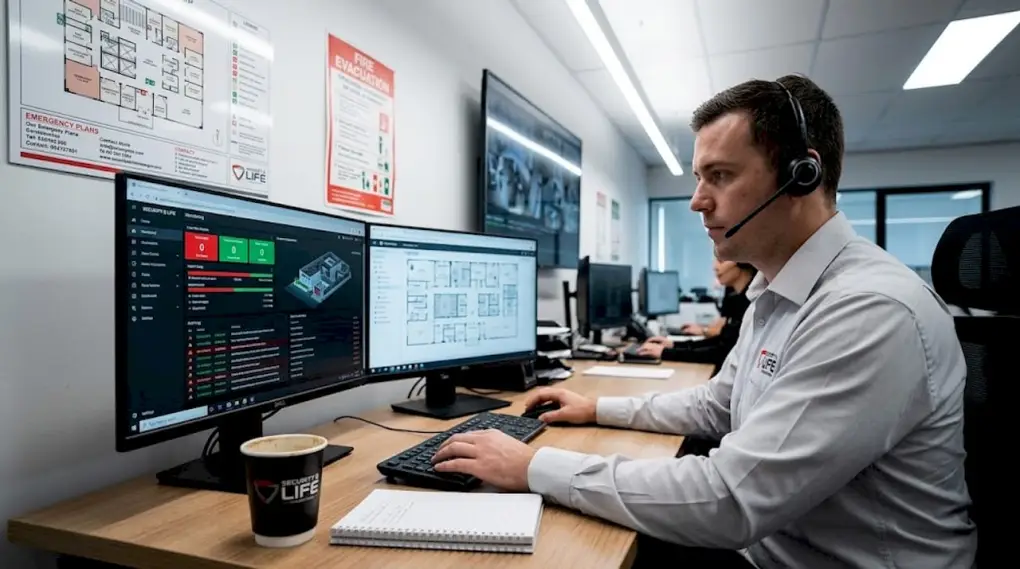
Beyond the emergency response advantage, professional fire alarm monitoring services provide 24/7 external oversight of your system. Your building does not need to be occupied for a response to occur. Overnight fires, weekend incidents, and holiday events are all covered without any action from your staff.
Properties using UL-listed monitoring also benefit from documented compliance with NFPA 72 monitoring provisions, which directly supports your position during insurance renewals, fire marshal inspections, and tenant safety reviews. For multi-tenant housing specifically, the ability to demonstrate active monitoring is often a requirement for certificate of occupancy. Security & Life Integrations builds systems with exactly these compliance needs in mind, particularly for multi-tenant residential properties where the stakes across multiple families or businesses are highest.
My take on what most properties get wrong
I’ve reviewed fire alarm monitoring setups across a range of commercial and multi-tenant properties, and the same pattern appears repeatedly. The hardware is correct. The monitoring contract exists. But the operational layer between the two is broken.
What I’ve found is that property managers underestimate the human side of monitoring. The technician who set up the system three years ago knew every device location. That knowledge is gone now. The monitoring station may have a contact list that includes two people who left the company 18 months ago. The floor plan on file with the monitoring center may reflect a renovation that happened before the current manager took over.
In my experience, the fastest way to degrade a correctly installed fire alarm monitoring system is simple neglect of the administrative details. I’ve seen cases where a trouble signal went unacknowledged for weeks because the panel was reset each time without calling anyone. When the annual inspection finally happened, the technician found three faults that had been accumulating for months. Any one of them could have caused a missed signal.
The other misconception I encounter is that annual fire alarm inspections are a checkbox exercise. They are not. A thorough inspection surfaces pathway failures, battery degradation, and device drift that would otherwise stay invisible until the system needs to perform. Treat the inspection as a system audit, not a visit from a contractor you need to get in and out quickly.
Up-to-date contacts, current floor plans, and a policy that supervisory signals get addressed the same day. Those three things, consistently practiced, improve your real-world system performance more than any equipment upgrade.
— Zachary
How Security & Life Integrations can help
Security & Life Integrations provides UL-certified fire alarm monitoring systems designed specifically for the compliance and operational demands that property managers, business owners, and facility operators face. Every system is built around NFPA 72 and UL 827 standards, so you have a clear compliance record from day one. Whether you manage a commercial office building, a multi-tenant residential complex, or a mixed-use facility, Security & Life Integrations offers monitoring solutions calibrated to your property’s specific layout, occupancy, and risk profile.
The service includes ongoing maintenance, scheduled testing, and full documentation support to keep your system inspection-ready year round. If you already have fire alarm equipment in place, Security & Life Integrations also handles system takeovers, bringing existing infrastructure up to current monitoring standards without requiring a full replacement. Explore the full range of fire alarm solutions available, or contact Security & Life Integrations directly to schedule a site assessment and see how professional monitoring fits into your overall safety program.
FAQ
What is fire alarm monitoring in simple terms?
Fire alarm monitoring is a service where your fire alarm system automatically transmits alerts to a staffed center that contacts emergency responders on your behalf, 24 hours a day.
Is fire alarm monitoring required by law?
Most commercial and multi-tenant properties in the U.S. are required to have monitored fire alarms under NFPA 72 and local fire codes. The specific requirement depends on building type, occupancy, and your local Authority Having Jurisdiction.
How often does a fire alarm system need to be inspected?
NFPA 72 requires monthly visual checks, quarterly functional tests, and a full annual inspection that includes all devices and communication pathway verification.
What is the difference between central station and remote monitoring?
Central station monitoring uses a third-party UL-listed facility with trained staff who automatically dispatch fire departments. Remote monitoring only sends a notification to the owner’s device, placing the responsibility for calling 911 on the owner.
Can fire alarm monitoring lower my insurance costs?
Yes. Properties using UL 827-listed monitoring stations can qualify for insurance premium reductions of 5 to 20%, depending on the insurer and the property type.