
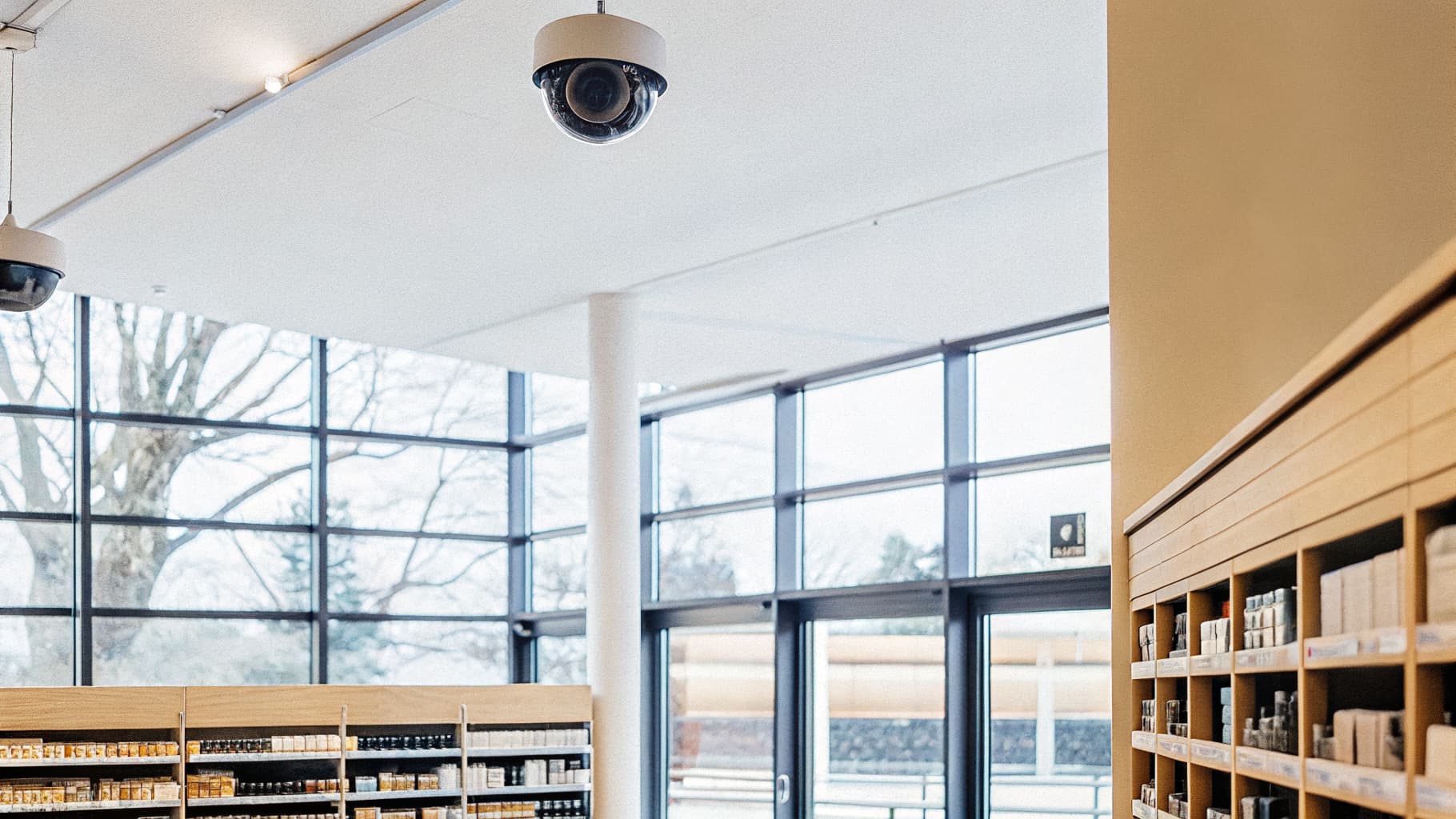
"How many cameras do I need" is the most common question in commercial video, and every answer you'll find online is either a dodge or a number invented to sell a package. Here's a method instead. Count the places where, after an incident, you'd need to answer a specific question, then put a camera wherever a question lives.
Start with questions, not square footage
Who came in? That's every public entrance. Who took it? That's the register, the stockroom door, the loading dock. Whose car was that? That's the lot and the gate, ideally with a plate-reading camera rather than a wide shot. What happened here? That's wherever people and property collide, lobbies, corridors, amenity spaces. A modest retail space generates six to eight questions. A multi-building apartment property generates dozens. The building tells you the count; the count shouldn't come first.
Identification cameras and awareness cameras are different jobs
One camera watching a wide area tells you something happened. It rarely tells you who. Identification needs a tighter view at a choke point, a door, a gate, a corridor neck, where faces pass close and predictably. The most common camera-count mistake isn't too few cameras, it's all-awareness and no-identification: a property that can prove a theft occurred and can't identify a single person involved. Our camera installation surveys mark both types on the plan explicitly so the trade-off is a decision, not an accident.
Where properties consistently under-count
Stairwells, because the cable run is annoying. Loading docks, because they feel internal. Dumpster areas, where illegal dumping and after-hours activity concentrate. Rooftop access. Parking structures, which need more positions than anyone budgets because concrete columns eat sightlines. If a spot is inconvenient to wire, assume that's exactly where the next incident report will come from.
Where properties over-count
Long empty corridors with one entrance already covered, redundant angles on the same open area, and interior spaces nobody disputes. Cameras that never answer a question still cost network capacity, storage, and money. Trimming five pointless positions often pays for the two difficult ones the property actually needed, and the storage math works out better too.
A worked example
A twelve-unit office building typically lands around: two entrance identification cameras, one lobby, one per floor corridor, two on the lot, one at the dumpster and service entrance, eight to ten total. A comparable retail space runs fewer positions but denser: entrance, register, stockroom, receiving, floor, lot. Numbers like these are starting points; the walkthrough adjusts them building by building, which is exactly what a site survey is for.
The budget version of the same method
If the full count exceeds the budget, cut by question priority, not by camera price. Keep every identification position at entrances and cash areas, they answer the questions with legal and insurance weight. Keep the lot. Defer the redundant awareness angles and the low-dispute interior spaces. A property covering eight high-value questions well is better protected than one covering twenty questions badly, and the installation plan can pre-wire deferred positions so phase two is cheap.
Revisit the count when the property changes
Camera plans age. A new tenant mix changes traffic patterns, a renovated amenity space creates a new gathering point, a rash of catalytic converter thefts moves the lot up the priority list. The properties that stay covered treat the camera map as a living document, reviewed when something changes, rather than a decision made once during construction and never touched again. It's a ten-minute conversation with whoever services your system, usually during a visit already scheduled.