
TL;DR:
- Outdated fire protection systems become liabilities as components corrode and parts become unsupported, risking failure during inspections or emergencies. Upgrading modern systems and complying with current codes improve detection accuracy, reduce false alarms, and lower long-term costs. Proactive maintenance, timely upgrades, and thorough documentation are essential to ensure safety, legal compliance, and insurance coverage.
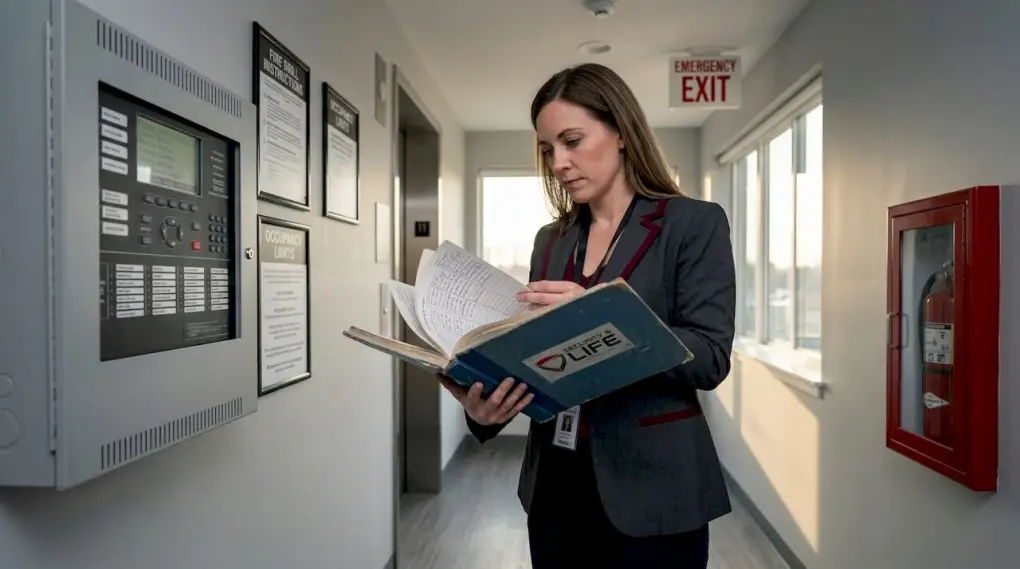
Outdated fire protection systems are a liability most property managers don’t discover until something goes wrong. If you’re responsible for a building’s safety, understanding why update fire protection systems matters is not optional. It directly affects occupant lives, your insurance standing, and your legal exposure. Modern fire codes are evolving faster than many building owners realize, and the gap between what your system does and what current standards require can be costly. This guide walks you through the real risks, the technology improvements, and the practical steps to make smart upgrade decisions.
Table of Contents
- Key Takeaways
- Why update fire protection systems: the real risks of waiting
- Modern fire protection technology and current code requirements
- When to update fire protection systems: practical decision criteria
- Balancing compliance and operational planning during upgrades
- Ongoing maintenance and documentation best practices
- My take on proactive fire system updates
- How Security & Life Integrations supports your upgrade decisions
- FAQ
Key Takeaways
| Point | Details |
|---|---|
| Outdated systems create liability | Old equipment fails inspections, raises insurance costs, and exposes you to legal risk. |
| Codes trigger mandatory upgrades | NFPA 25 and local fire codes set age and performance thresholds that require system updates. |
| Modern technology reduces false alarms | Upgraded sensors improve detection accuracy and reduce costly, disruptive false alerts. |
| Proactive updates save money | Planning upgrades before enforcement avoids rushed, expensive crisis-driven replacements. |
| Documentation protects property managers | Organized maintenance records satisfy fire marshals, insurers, and legal review. |
Why update fire protection systems: the real risks of waiting
Aging fire protection systems do not simply become less effective over time. They become active liabilities. Components corrode, control panels lose manufacturer support, and replacement parts for older models get discontinued. When a critical part fails mid-inspection or during an actual emergency, there is no acceptable fallback.
The scale of the problem is larger than most people realize. Non-residential electrical fires in 2023 alone caused over $354 million in property losses, with 7,400 fires recorded in that year. Many of those incidents were preventable with updated electrical and fire suppression infrastructure.
“An outdated fire alarm system that fails to detect smoke or heat in time is not just a code violation. It is a direct threat to the people inside your building.”
Beyond physical failure, consider what happens when your system cannot pass a routine inspection. You face citations, potential occupancy restrictions, and expensive emergency repairs done under pressure. Insurers pay close attention to inspection records. A pattern of failed tests or deferred maintenance can raise your premiums or, in some cases, affect your coverage terms.
Here are the most common consequences property managers face when fire systems are left too long without updates:
- Inability to source replacement parts for discontinued equipment
- Failed annual inspections leading to code violation notices
- Higher liability exposure in the event of an occupant injury or property loss
- Increased insurance premiums tied to documented system deficiencies
- Loss of warranty protection on connected life safety equipment
None of these outcomes are sudden. They accumulate over years of deferred attention, and by the time they surface, the cost to fix them is significantly higher than a planned upgrade would have been.
Modern fire protection technology and current code requirements
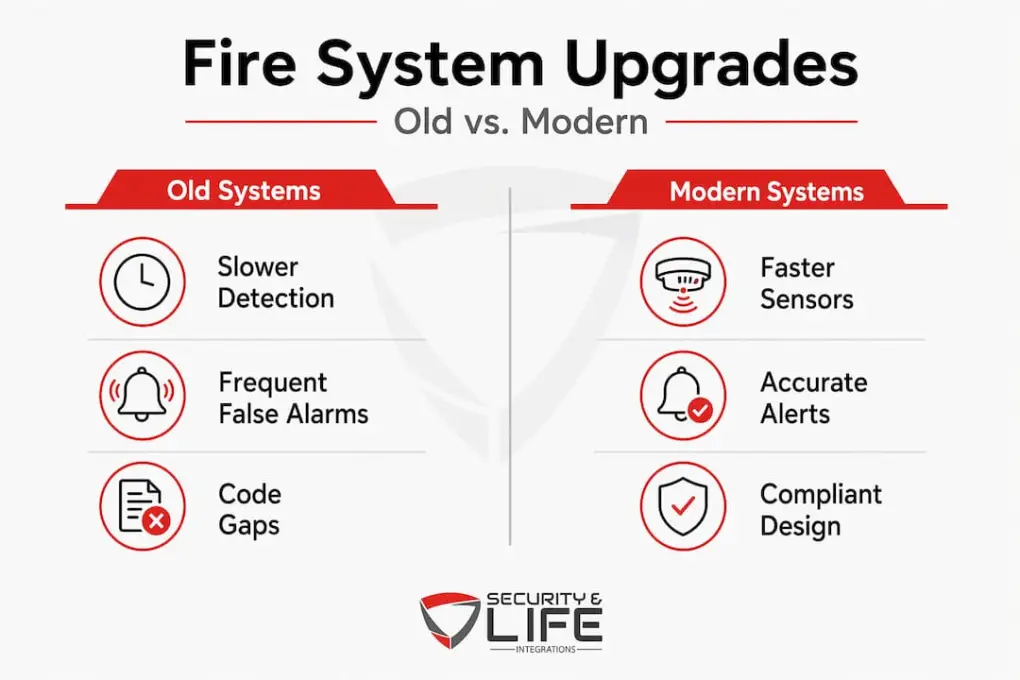
One of the clearest reasons for fire system upgrades is what current technology actually delivers compared to equipment installed ten or twenty years ago. The difference is not minor.
| Feature | Older systems | Modern systems |
|---|---|---|
| Smoke detection speed | Slower ionization sensors | Dual-sensor and photoelectric detectors |
| False alarm rate | High, frequent disruptions | Significantly reduced with smart filtering |
| Remote monitoring | Limited or unavailable | Real-time alerts and remote diagnostics |
| Code compliance | Often grandfathered | Built to current NFPA and local standards |
| Component availability | Discontinued parts common | Active manufacturer support |
Upgraded fire alarm systems reduce false alarms and improve detection accuracy. Modern sensors read smoke and heat patterns more precisely, which means fewer unnecessary evacuations and faster response to real threats. For a property manager overseeing a multi-tenant building, that reliability matters every single day.
On the code side, requirements are tightening. The NFPA 25 2026 edition now requires that sprinklers in 50-year-old buildings undergo testing or replacement to meet modern response time index standards. Buildings constructed in the 1960s and 1970s fall directly in this window, and many property owners are not aware the deadline applies to them.
Carbon monoxide detection requirements have also expanded. Updated fire code rules now apply to condominiums and multi-unit properties, mandating updated inspection, maintenance, and documentation standards for both smoke and CO alarms. If your property has not reviewed its detection coverage recently, there is a reasonable chance it no longer meets current requirements.
Pro Tip: When reviewing your system for code gaps, cross-reference your installed equipment against the current edition of NFPA 72 for alarm systems and NFPA 25 for suppression. Local jurisdictions often adopt newer editions faster than building owners expect.
When to update fire protection systems: practical decision criteria
Knowing when to act is as important as knowing why. The benefits of updating fire systems are clearest when upgrades are planned, not reactive. Here is a structured way to think through timing.
Start with age. The NFPA 25 benchmark is the most concrete trigger available. If your sprinkler system is approaching or has passed 50 years of service, testing or replacement is no longer optional. Fire alarm panels and detectors typically have a useful life of 10 to 20 years depending on environment and maintenance quality.
Watch for these indicators in your current system:
- Components that have failed two or more routine tests in the last inspection cycle
- Detector or panel models that are discontinued or no longer supported by the manufacturer
- Frequent false alarms that your technician cannot attribute to an environmental cause
- Repair invoices that are increasing year over year for the same aging equipment
- A documented gap between your current system configuration and your jurisdiction’s adopted fire code edition
Renovation projects are a natural trigger point. Partial renovations can trigger code upgrades in altered areas, even if grandfathering applies elsewhere in the building. Coordinating fire protection improvements with a planned renovation keeps disruption minimal and uses site access efficiently. Missing that window means scheduling separate work later at a higher cost.
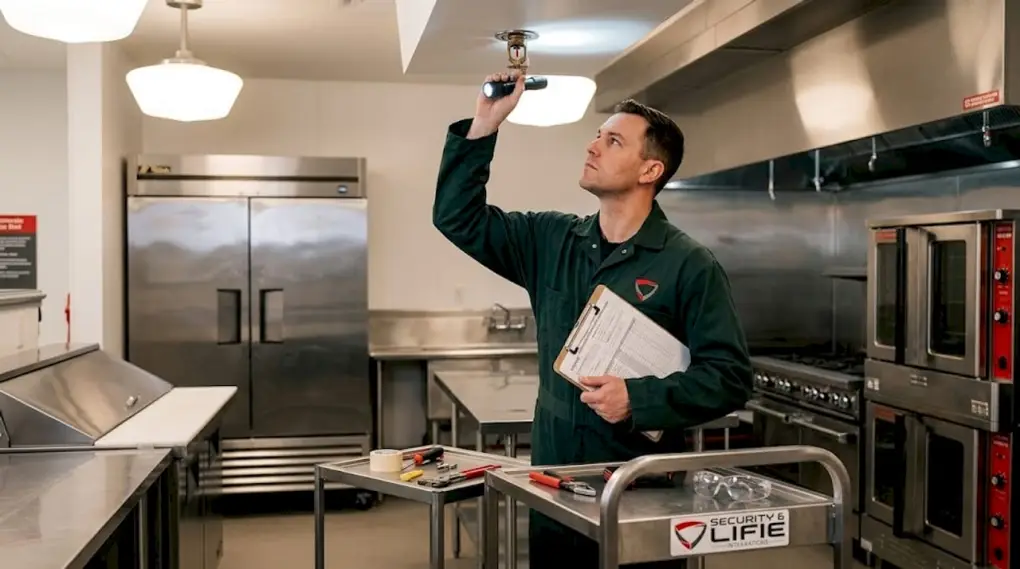
Professional inspections document the full picture. Without a licensed technician walking the system annually, you are operating on assumptions. NFPA 10 requires annual inspections by licensed technicians and sets hydrostatic testing intervals of 12 years for ABC extinguishers and 5 years for CO2 units. Those intervals exist because internal degradation is not visible without testing.
Balancing compliance and operational planning during upgrades
Regulatory compliance is not a single moment. It is an ongoing process, and how you manage it determines whether upgrades are orderly or disruptive.
The most practical insight from fire code experts is this: early adoption of NFPA updates consistently leads to smoother budget management and fewer implementation problems. When a new code edition is published, there is typically a lag before your jurisdiction formally adopts it. That window is your planning time. Property managers who use it avoid the scramble that happens when enforcement begins.
The cost difference between proactive and reactive upgrades is real. A planned replacement of aging sprinkler heads over two fiscal years looks very different from an emergency system overhaul following a failed inspection. The labor is the same. The urgency premium is not.
Qualified contractors make a direct difference here. Working with a licensed fire protection contractor who tracks code adoption in your jurisdiction means you receive advance notice of what is coming. They can sequence work to minimize tenant disruption, pull the correct permits on the first attempt, and provide documentation in the format your fire marshal will accept.
Pro Tip: Ask your fire protection contractor to provide a written gap analysis comparing your current system to the latest adopted edition of NFPA 25 and NFPA 72 in your jurisdiction. That single document gives you a defensible upgrade plan you can bring to ownership or board review.
The importance of fire protection updates also shows up in your relationship with insurers. Carriers increasingly request proof of current compliance as part of renewal underwriting. A documented, proactive upgrade plan is a stronger position than a stack of deferred maintenance notes.
Ongoing maintenance and documentation best practices
Upgrading a system is the beginning, not the end. Fire safety system maintenance is what keeps an updated system performing at the level it was designed to deliver.
A practical maintenance program covers several consistent requirements:
- Schedule annual inspections with a licensed technician and retain the signed inspection report for each visit
- Track hydrostatic testing dates for every extinguisher type and calendar the next due date immediately after each test
- Keep a current inventory of all installed devices, panel models, and software versions for your alarm system
- Document every service call, repair, and replacement in a central log accessible to your property management team
- Review your fire safety records before any property sale, major renovation permit application, or insurance renewal
Fire marshals and insurance auditors both look at documentation quality during reviews. A gap in inspection records, even for a system that is otherwise well-maintained, raises questions that take time and money to resolve. Organized records remove that friction.
For properties with multiple buildings or units, coordinating maintenance schedules across the portfolio is the most efficient approach. Group inspections by building age and system type, and schedule them in a sequence that allows your technician to identify systemic issues across the property rather than addressing each building in isolation.
My take on proactive fire system updates
I’ve spent years working alongside property managers who deferred fire system updates because the systems were “still passing inspection.” What I’ve learned is that passing an inspection and meeting current safety expectations are not always the same thing. A system can squeak through an annual check on a technicality while still operating well below modern detection and response standards.
In my experience, the property managers who handle fire safety best treat it the same way they treat roof replacement or elevator certification. It goes on a capital planning schedule. It gets reviewed annually. It does not wait for a problem to force the conversation. The ones who wait for enforcement notices or failed inspections consistently pay more, both in direct costs and in the time spent managing the fallout.
What I find most underappreciated is the role that code adoption timing plays in financial planning. Many building owners assume a new NFPA edition means immediate mandatory compliance. It does not. Jurisdictions adopt editions on their own schedules. That gap is a genuine planning opportunity, and treating updates as routine rather than emergencies is the difference between a manageable capital expense and a crisis. The property managers I’ve seen handle this well are the ones who build a relationship with a qualified contractor before they need one urgently.
— Zachary
How Security & Life Integrations supports your upgrade decisions
Security & Life Integrations works directly with property managers, building owners, and compliance officers to assess current fire protection systems and identify what needs to change.

Whether you manage a single commercial building or a portfolio of multi-tenant properties, the process starts with a clear-eyed look at what you have. Security & Life Integrations provides UL-certified fire alarm systems and suppression equipment, supports code compliance planning across NFPA 25 and NFPA 72, and provides certified inspections with documentation that satisfies fire marshal and insurer requirements. For multi-tenant housing communities, the team offers tailored solutions designed around the specific access, detection, and documentation challenges those properties present. The goal is a system that works correctly, meets current code, and stays that way with structured ongoing support. Reach out to Security & Life Integrations to schedule an assessment and get a clear plan in hand.
FAQ
Why should property managers update fire protection systems now?
Aging fire systems fail inspections, expose properties to liability, and fall short of current NFPA standards. Proactive updates reduce risk and cost significantly compared to emergency replacements after enforcement.
How often do fire protection systems need to be updated?
System age, inspection results, and code adoption in your jurisdiction all determine timing. Sprinkler systems approaching 50 years of service now require testing or replacement under the NFPA 25 2026 edition.
What are the signs that a fire system needs upgrading?
Repeated failed tests, discontinued components, frequent false alarms, and increasing repair costs are the clearest signals. A licensed technician inspection will identify deficiencies in writing.
Does a building renovation require fire system upgrades?
Partial renovations can trigger code upgrades in the areas being altered, even if the rest of the building retains grandfathered status. Coordinating fire protection work with planned renovations reduces cost and disruption.
How does fire safety system maintenance protect property managers legally?
Organized inspection records, documented service calls, and current hydrostatic test logs demonstrate due diligence to fire marshals, insurers, and courts. Missing records create legal exposure even when the system itself is functional.