Every controlled door is five parts: a reader, a lock, a power supply, a controller and the software that ties them together. Each fails in its own way, each has a price, and the hallway symptom usually tells you which one it is before anyone opens a panel. This is the repair side of commercial access control, written for the building manager who has a door that stopped behaving and wants to know what the call will cost before making it.
The reader: $250 to $600
Readers die from weather, sun and use. An exterior reader on a west-facing wall in Columbia takes ten summers of heat and a few hundred thunderstorms; a keypad at a warehouse personnel door gets pressed ten thousand times a year by people wearing gloves. The symptom is a reader that lights up and does nothing when a credential is presented, or one that works intermittently, or one whose keypad has two numbers that no longer register.
Replacement runs $250 to $600 installed, depending on the credential technology. A basic proximity reader is at the bottom; a multi-format smart card and mobile reader is at the top. If the building is still on a legacy credential format, the reader swap is a chance to move to an encrypted one at the doors that matter, and we say so when we see it. Key fob entry systems explains the formats.
The lock: $350 to $700
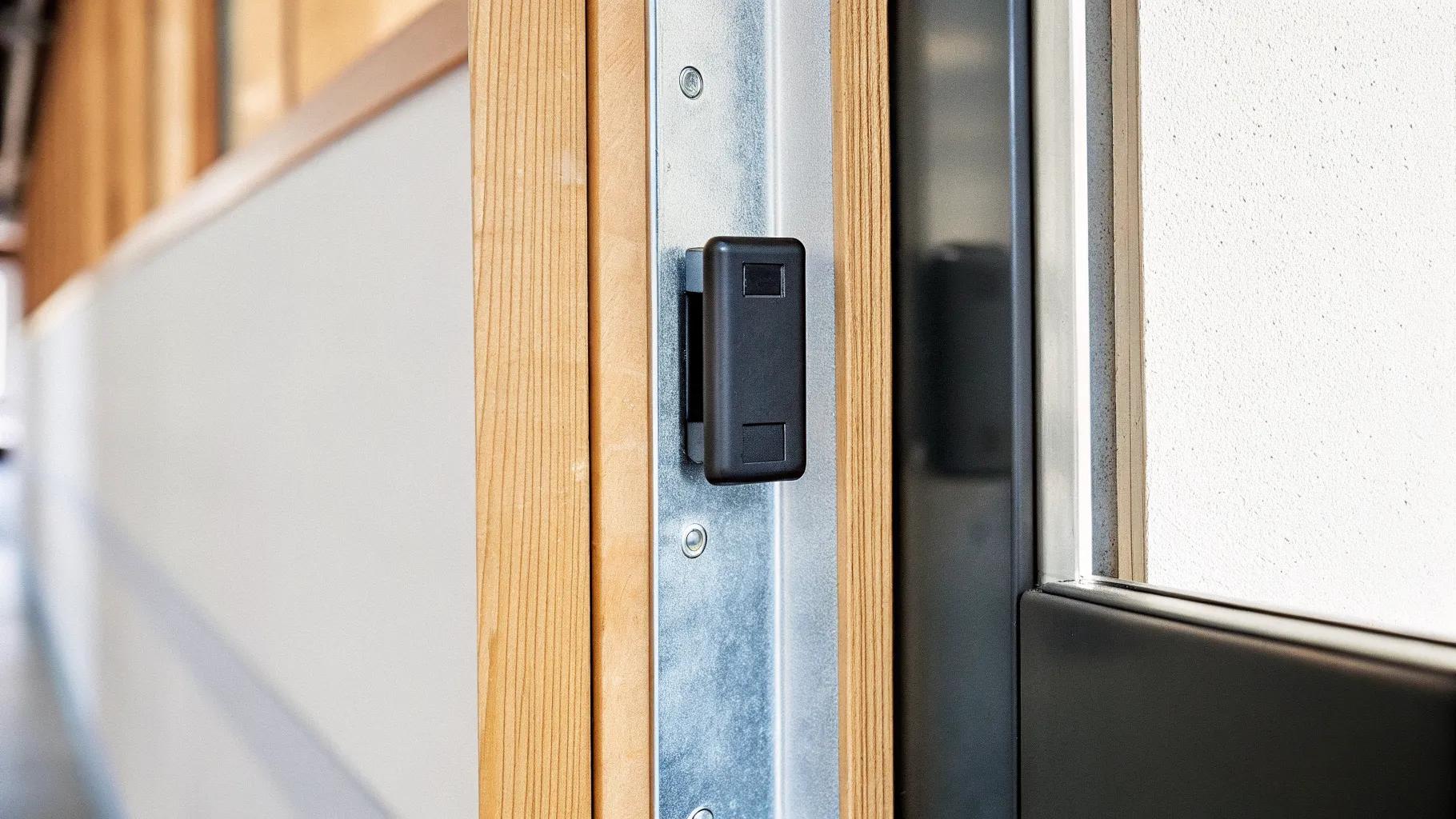
Electric strikes and maglocks do the physical work and wear accordingly. A strike on a lobby door cycles several hundred times a day. The symptom is a strike that buzzes but does not release, releases but does not re-latch, or a maglock that holds weakly enough that a firm pull opens the door. Misalignment is behind most strike failures: hinges sag, the closer drifts, and the latch no longer sits where the strike expects it.
A strike or maglock replacement is $350 to $700 installed. The part that keeps it from failing again in a month is the alignment check, which is why a repair visit that swaps the strike and leaves without touching the closer is incomplete. A maglock on an egress door also has to release on fire alarm, and that interface is tested before the technician leaves; fire alarm inspection and testing covers why the fire marshal cares about that relay.
The power supply: $300 to $500
Access control power supplies have a battery, and the battery lasts three to five years, less in a hot closet. The symptom is a door that works all day and fails during a power blink, or a supply that beeps, or several doors on one supply failing together. Battery replacement alone is a few hundred dollars; a supply with a new battery, properly sized for the doors it feeds, is $300 to $500. Undersized supplies feeding too many maglocks are a common finding on systems that grew one door at a time.
The controller: $600 to $1,800
The controller is the board that decides whether a credential opens a door. When one fails, every door on it fails together, which is the symptom: badges stop working on one side of the building while the other side is fine. Controller boards run $600 to $1,800 replaced and reprogrammed, and the range depends on how many doors it serves and whether the platform is current. A controller on a discontinued platform is the point where the repair conversation becomes a replacement conversation, which is covered below.
The software: quoted by the job
Software failures are the ones nobody budgets for. A server that was never updated and now will not start. A cloud account that lapsed when the invoices stopped. An admin password that left with an employee. A database full of people who have not worked there in years. These are repairs too, and often the fastest: recovering an admin account or migrating a database is usually a few hours. The exception is software held in a departed vendor's name, which is its own problem and is covered in can a new integrator take over your access control system.
The diagnostic visit
A diagnostic visit in the Carolinas and Georgia is $150 to $250 and is credited toward the repair if you proceed. The technician tests the door from the reader back to the controller: credential read, relay fire, lock voltage, door position switch, request-to-exit. Most single-door faults are isolated inside an hour, and for the common platforms the part is on the truck. Describing the symptom accurately on the phone is what gets the right part on the truck; "the door will not lock" and "the door will not unlock" send different parts. Access control repair lists the symptoms and the platforms we carry parts for, and the brands we service page is the full list.
When to stop repairing
Here is the arithmetic. A new door installed runs $1,500 to $3,500. A takeover that reuses the wiring and strikes and replaces only the controller and software runs about a third of that per door. When a single repair estimate reaches a third of the replacement cost, or when it is the second controller failure in a year, or when the parts are discontinued and the next failure cannot be repaired at all, we quote the replacement beside the repair so the decision is made on real numbers. Honestly, most buildings wait one failure too long. The sign is not the first repair; it is the second repair on the same system within twelve months.
What makes replacement cheaper than people expect is reuse. Cable runs, strikes, door contacts and most readers carry over. Taking over a building's security system instead of ripping it out and what access control costs per door have the numbers from both sides.
The agreement that makes most of this go away
Buildings with more than ten doors usually come out ahead on an access control service agreement at $15 to $25 per door per month. It covers two inspections a year, battery replacement on schedule, firmware, a credential audit and priority dispatch, and it removes the diagnostic fee. Two unscheduled calls on one door in a year cost more than that door's agreement, and batteries changed on schedule prevent the single most common failure outright. What an access control service agreement should cover lists the clauses that matter.
City pages with local pricing
Repair pricing is consistent across our offices, and the city pages carry the local detail: response times, the property types we see most, and the nearest office. Raleigh access control repair, Charlotte access control repair and Greensboro access control repair are live; South Carolina and Georgia buildings are served from the same crews. If a door is misbehaving now, describe the symptom and we will tell you which of the five parts it probably is before the truck leaves.