
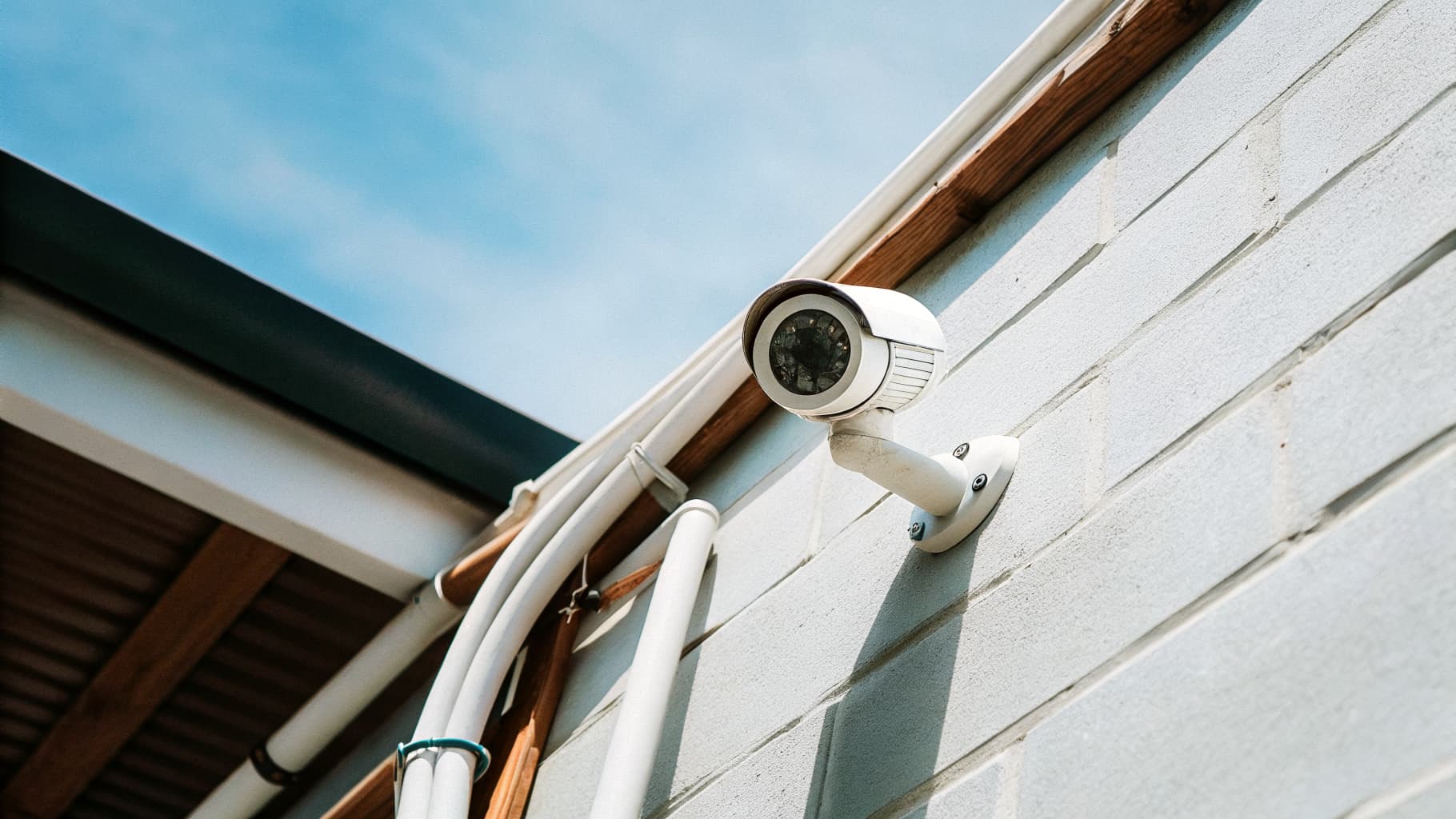
The phrase property managers search is "security camera installation cost," and the answer they usually find is a per-camera price that turns out to describe the hardware and nothing else. The camera is often the cheapest part of its own installation. What you're really buying is cable, labor, network capacity, and storage, and each one has a driver you can understand before anyone quotes you.
Cable runs are the real invoice
PoE cabling carries power and data on one line, which is why modern installs skip most electrical work. But every foot still has to be pulled, and the route matters: a drop ceiling is fast, a finished wall is slower, an exterior masonry wall to a parking-lot pole is a different job entirely. Two identical cameras can differ by hundreds of dollars installed purely on the path between camera and closet. This is the single biggest reason we walk properties before quoting, a floor plan doesn't show what's inside the walls.
The network has to carry what the cameras produce
Each camera is a permanent stream onto your network. A handful of cameras ride along on decent existing equipment; twenty cameras at high resolution need switches with enough ports and power budget, and sometimes a dedicated camera network. If an installer never asks about your network, they're either padding a surprise into the invoice or planning to leave the problem behind for you.
Storage is a retention decision, not a hardware spec
How many days of footage you keep decides how much storage you buy. Fourteen days at moderate resolution is a modest recorder; ninety days of high-resolution footage across a large property is a serious storage build, or a recurring cloud plan. The full video surveillance picture includes deciding retention deliberately instead of finding out after an incident that the footage you needed overwrote itself two weeks ago.
Where reusing what you have cuts the price
Old camera systems leave useful bones behind. Existing conduit and cable paths can carry new wire, and sometimes existing cable passes testing and stays. If the current cameras still work but nobody services them, a repair and takeover visit costs a fraction of a new install and tells you exactly what's worth keeping. Buildings with old analog systems in particular often need fewer new runs than owners fear.
Special positions cost more and are usually worth it
License plate capture at a gate needs a purpose-placed LPR camera, not a wide shot hoping to catch a plate at speed. Stairwells, docks, and rooftops add labor. These are also the positions that produce the footage people actually come asking for, skipping them is the classic false economy in camera budgets.
What a real quote looks like
Camera count, every mounting position, cable routes, network changes, storage sized to a stated retention period, and a number that doesn't move once the crew arrives. That's the standard we quote to after a walkthrough, and it's the standard worth demanding from anyone else you're comparing, anywhere in our service areas.
A worked example, so the variables feel real
Take a single-story office suite wanting six cameras: two entrances, reception, the server room door, and two on the parking side. Interior runs are short and travel drop ceiling, easy. The two parking cameras need exterior-rated cable and a masonry penetration, harder. The existing network switch has ports but not PoE power, so a small PoE switch joins the quote. Fourteen days of retention at moderate resolution fits a modest recorder. That project quotes tight and installs in a day or two. Now move the same six cameras to a three-story building with finished ceilings, no conduit, and a demand for ninety days of storage, and the identical camera count roughly doubles in installed cost. Same cameras, different building, that's the whole story of camera pricing.
When phased installation beats doing it all at once
Budgets are real, and cameras phase gracefully: the survey marks every position, but the first phase covers the entrances and highest-stakes areas while conduit and network capacity get sized for the full plan. Phase two costs less than it would as a fresh project because the infrastructure already anticipates it. What doesn't phase well is skipping the survey and improvising positions one purchase order at a time, that's how properties end up with eleven cameras and no shot of the one door that mattered.