

TL;DR:
- Monitoring connects detection systems to emergency response, ensuring faster action even when no one is present. Most property types legally require central station monitoring to meet fire safety codes and reduce liabilities. Properly managed monitored systems lower property damage, enhance occupant safety, and support insurance benefits.
A standard fire alarm does one thing: it makes noise. That’s useful when someone is in the building, but it does nothing when the office is empty at 2 a.m. or when a resident can’t reach a phone. Understanding why choose monitored fire alarms comes down to a single fact: properly installed alarm systems reduce fire deaths by 50% compared to buildings without them, and monitoring closes the gap between detection and response. This article explains exactly how monitored systems work, what they require under current codes, and what property owners gain by making the switch.
Table of Contents
- Key takeaways
- Why choose monitored fire alarms over standard systems
- Key benefits of monitored fire alarms for property safety
- Legal, code, and insurance requirements you need to know
- How monitoring centers actually work
- Practical steps for choosing and maintaining a monitored system
- My take on monitored alarms and what most property owners miss
- How Security & Life Integrations can help
- FAQ
Key takeaways
| Point | Details |
|---|---|
| Monitoring connects detection to response | A monitored system contacts emergency services automatically, even when no one is on site. |
| Faster response reduces property loss | Buildings with monitored alarms experience 40% less property damage per incident than unmonitored ones. |
| NFPA 72 sets firm signal deadlines | Signals must reach the monitoring station within 90 seconds by code, then be relayed immediately to dispatch. |
| Many property types require monitoring by law | Commercial, healthcare, and multi-tenant buildings are typically mandated to use central station monitoring. |
| Maintenance and documentation matter | Regular testing per NFPA 72 Chapter 14 and updated monitoring center records keep the system legally compliant. |
Why choose monitored fire alarms over standard systems
The core difference between a monitored and unmonitored alarm is what happens after the detector triggers. An unmonitored alarm sounds a local siren. That’s it. Someone on site has to notice, call 911, and describe the location. A monitored fire alarm system sends an electronic signal to a professional monitoring center, which verifies the alert and contacts emergency services directly.
There are three main types of monitoring setups:
- Central station monitoring: A third-party, UL-listed facility handles signals for multiple clients around the clock. This is the most common format for commercial properties and the one most codes require.
- Proprietary monitoring: The property owner operates their own monitoring center on site. This works for large campuses like universities or hospital networks but carries significant setup and staffing costs.
- Remote station monitoring: Signals go directly to a fire department or public safety answering point. This option is less flexible and often insufficient for commercial liability purposes.
Under NFPA 72 signal transmission rules, a commercial fire alarm signal must reach the monitoring station within 90 seconds of activation. The station must then retransmit the alert to local emergency services immediately. That 90-second window is not a guideline. It is a code requirement.
| Monitoring type | Who operates it | Best for | Liability level |
|---|---|---|---|
| Central station | Third-party UL facility | Commercial, multi-tenant, healthcare | Low |
| Proprietary | Property owner | Large campuses with resources | Moderate |
| Remote station | Fire department or PSAP | Small or low-risk facilities | Higher |
Key benefits of monitored fire alarms for property safety
Speed is the most direct benefit. Monitored systems cut fire department response times by one to three minutes compared to unmonitored alarms. In some scenarios, that reduction reaches 50%. Every minute a fire burns unchecked, it doubles in size. A three-minute head start for firefighters is not a minor detail. It is the difference between a contained incident and a total loss.
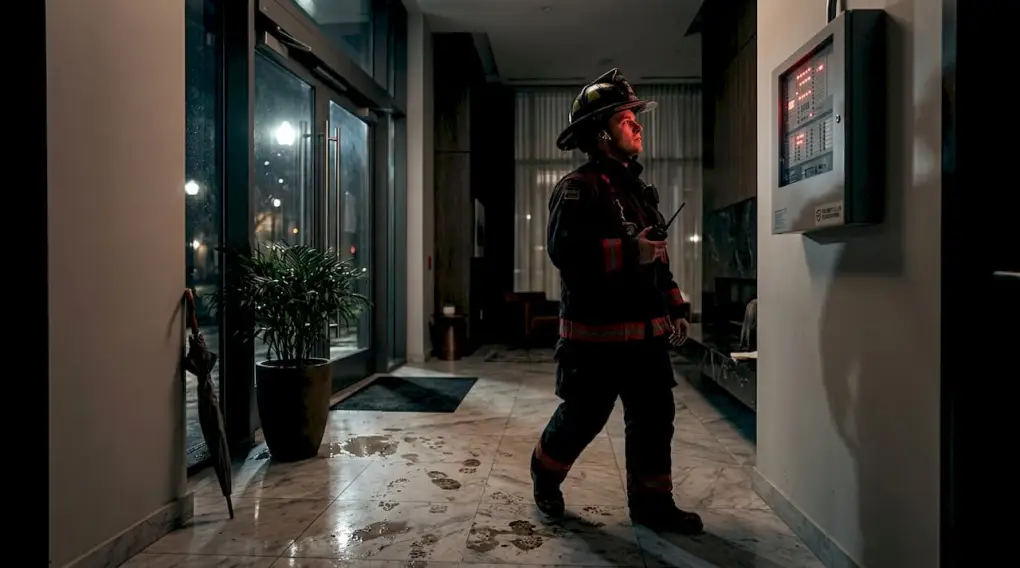
The financial case is just as clear. Buildings with monitored systems experience 40% lower property loss per fire incident. For a property manager responsible for a 200-unit apartment complex, that number translates directly into reduced insurance claims, faster recovery, and lower long-term liability exposure.
Beyond speed and money, the benefits of monitored fire alarms include:
- After-hours protection: Fires don’t follow business hours. A monitored system responds at 3 a.m. the same way it does at noon.
- Occupant safety: Residents and employees get faster notification and evacuation prompts because emergency services arrive sooner.
- False alarm management: Professional monitoring centers use verification protocols before dispatching, which reduces unnecessary fire department calls and keeps your property in good standing with local agencies.
- Insurance premium reductions: Many carriers offer lower premiums for properties with certified monitored systems, because the risk profile is measurably lower.
Pro Tip: Ask your insurance carrier specifically whether they offer a rate reduction for UL-listed central station monitoring. Some carriers apply discounts of 5% to 20% on commercial property policies, but only if you request documentation of your monitoring certification.
Legal, code, and insurance requirements you need to know
Monitoring is not optional for most property types. NFPA 72 requires approved monitoring stations for commercial fire alarm systems, and local fire codes often layer additional requirements on top. The following property categories almost universally require central station monitoring:
- Multi-tenant residential buildings (typically four or more units)
- Commercial office and retail buildings
- Healthcare facilities and assisted living communities
- Schools, universities, and assembly occupancies
- Industrial buildings with hazardous materials
Non-compliance carries real consequences. Local authorities can delay your certificate of occupancy, issue fines, or suspend the automatic fire department response to your address. That last consequence is particularly serious. A property flagged for non-compliance or excessive false alarms may find that fire units respond more slowly or with lower priority.
“Monitoring is not just a service add-on. Under NFPA 72, it is a core system component requiring approved, trained stations to meet code and insurance standards.”
Insurance carriers also track compliance. A lapse in monitoring coverage can void a fire-related claim or create grounds for the insurer to deny coverage on the grounds that the property failed to maintain agreed-upon safety standards. Property managers should treat monitoring contracts the same way they treat their building permits: non-negotiable and always current. For properties in specialized sectors, such as medical and assisted care facilities, compliance requirements are even more detailed and subject to state health department oversight on top of NFPA standards.
How monitoring centers actually work
A monitoring center, also called an Alarm Receiving Centre or ARC, is a staffed facility that receives signals from connected fire alarm systems 24 hours a day. When your panel sends an alert, a trained operator reviews the signal type, the zone location, and the time of day before taking action.
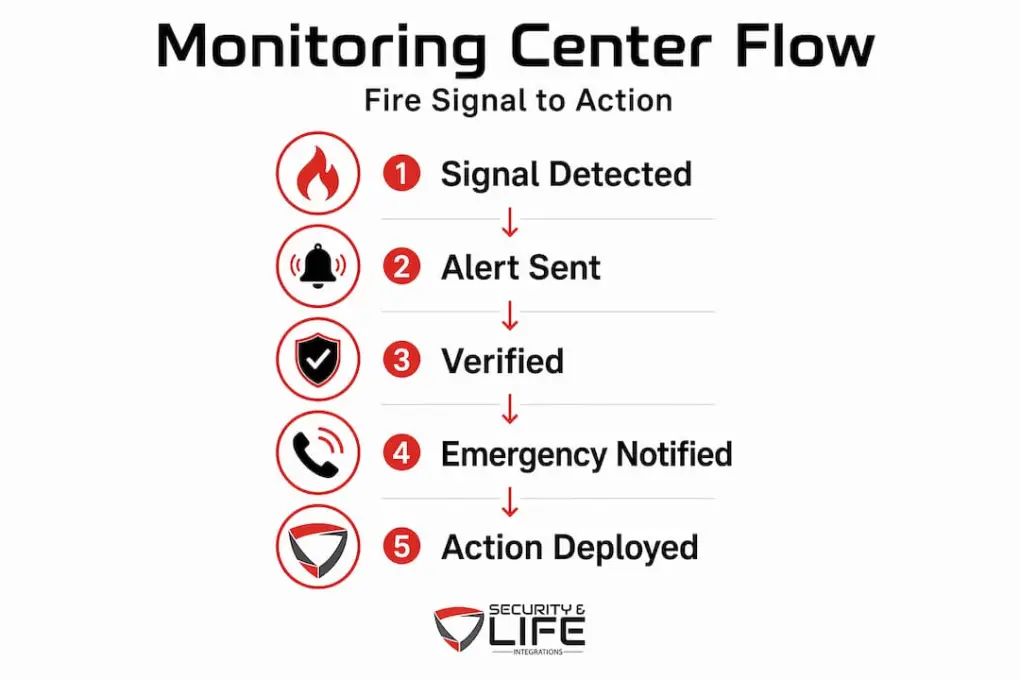
NFPA 72 requires monitoring stations to be continuously staffed and approved for operations. This means documented procedures, trained operators, backup power, and redundant communication paths. A monitoring center that does not meet these standards cannot be used for code-compliant monitoring, and your installation would not satisfy the requirements of NFPA 72 or most local fire codes.
ARCs also play a direct role in managing false alarms. Many jurisdictions now require confirmed fire protocols before an automatic dispatch is sent. This typically involves either two separate detection devices activating in sequence or a keyholder verification call before the fire department is notified. This process reduces nuisance dispatches, protects your property from blacklisting, and keeps firefighters available for genuine emergencies.
Pro Tip: Make sure your monitoring center has a current copy of your site’s action plan, including keyholders, access codes, and any known system quirks. An outdated action plan is one of the most common causes of delayed response or failed verification during a real alarm.
Key items your monitoring center needs from you:
- Current keyholder contact list with verified phone numbers
- Site access instructions and any entry codes
- A clear description of each alarm zone and what it covers
- Scheduled maintenance or test windows to avoid false dispatches
Practical steps for choosing and maintaining a monitored system
Selecting the right monitored fire alarm system starts with understanding your property’s size, occupancy type, and applicable codes. A single-story commercial unit has different requirements than a twelve-story mixed-use building. Working with a licensed fire alarm contractor from the start prevents costly retrofits later.
Once a system is installed, maintenance is not optional. NFPA 72 Chapter 14 specifies inspection, testing, and maintenance frequencies for every component in a fire alarm system. Smoke detectors require annual testing. Duct detectors and heat detectors follow specific schedules depending on their environment. Every test must be documented and records kept on site and available for inspection.
For property owners managing multiple buildings, monitored systems offer another practical advantage: they can integrate with access control and video surveillance. When a fire alarm triggers, the monitoring center can also flag camera feeds at the affected zone, giving dispatchers and arriving units better situational awareness. Security & Life Integrations builds this kind of integrated approach across its fire, access, and surveillance products.
Here are four steps for staying compliant after installation:
- Schedule annual testing with your licensed contractor and log every result.
- Review and update your monitoring center’s action plan at least once per year, or after any personnel or access changes.
- Confirm your monitoring contract specifies UL-listed or FM-approved central station service.
- Keep copies of all inspection reports accessible on site for fire marshal reviews.
For multi-tenant housing properties, tenant turnover means access plans and emergency contacts change frequently. Build the update process into your standard onboarding and offboarding procedures so it happens automatically, not reactively.
My take on monitored alarms and what most property owners miss
In my experience, the conversations that lead property owners to finally upgrade to monitored fire alarms almost never happen proactively. They happen after an incident: a small fire that grew larger than it should have because no one called it in, or a false alarm that triggered three fire trucks and a citation because the system wasn’t connected to anything.
What I’ve found is that most property owners understand the value of a fire alarm. What they underestimate is what happens in the gap between detection and suppression. That gap is where monitored systems earn their cost. A standard sounder does nothing when the building is empty. It does nothing when the occupant panics and forgets to call. It does nothing when the language barrier means a resident doesn’t know what number to dial.
I’ve also seen the false alarm problem go in the wrong direction. Properties that install unverified monitoring or use non-accredited centers end up getting flagged by their local fire department for excessive calls. That can result in slower response times when a real event happens. The 2026 compliance guide for monitored fire systems makes this point clearly: the quality of the monitoring center matters as much as the hardware itself.
My honest take is that monitoring is not the expensive add-on most people treat it as. It is the layer that makes everything else in your fire safety program work under real conditions, not just during inspections.
— Zachary
How Security & Life Integrations can help

Security & Life Integrations works with property managers and owners across commercial, residential, and institutional sectors to design, install, and maintain fire alarm systems that meet current code standards. Their fire alarm systems and monitoring services cover the full range of property types, from small commercial offices to large multi-tenant communities and medical facilities. Every installation is handled by licensed professionals and configured to meet NFPA 72 requirements, with documentation that holds up during inspections and insurance reviews.
If you are evaluating your current fire safety setup or starting from scratch, Security & Life Integrations offers property assessments to identify gaps and recommend the right monitoring solution. They also support equipment takeovers for properties with existing systems that need to be brought back into compliance. Contact Security & Life Integrations to schedule an assessment and find out what monitored protection looks like for your specific property.
FAQ
What does a monitored fire alarm system do differently?
A monitored fire alarm system sends an alert directly to a professional monitoring center when a detector triggers. The center verifies the signal and contacts emergency services automatically, without requiring anyone on site to make a call.
Are monitored fire alarms required by law?
Most commercial, multi-tenant, and healthcare properties are required by NFPA 72 and local fire codes to use approved central station monitoring. Failure to comply can result in fines, permit delays, or the loss of automatic fire department response.
How do monitored fire alarms reduce property damage?
Buildings with monitored systems experience 40% lower property loss per fire incident. Faster emergency response means fires are suppressed earlier, limiting structural damage and content loss.
What is a confirmed fire protocol?
A confirmed fire protocol requires the monitoring center to verify an alarm through a second activation or a keyholder check before dispatching the fire department. This process reduces false alarm dispatches and protects your property from being flagged for excessive calls.
How often does a monitored fire alarm system need to be tested?
NFPA 72 Chapter 14 requires annual inspection and testing for most fire alarm components, with detailed documentation kept on site. Some components have more frequent testing schedules depending on their type and location.