"We're taking over a building that already has cameras. Can you just service what's there?" We hear some version of that question almost every week, usually from a property manager who just inherited a building or an owner who's done being ghosted by their current vendor. It's a fair question, and it comes loaded with a real fear: that whoever they call next is going to walk the property, shake their head, and quote a full rip-and-replace whether the building needs it or not. That's not how a real takeover works, and it's worth explaining exactly what we're looking at when we show up to evaluate an existing system.
What a takeover call actually is
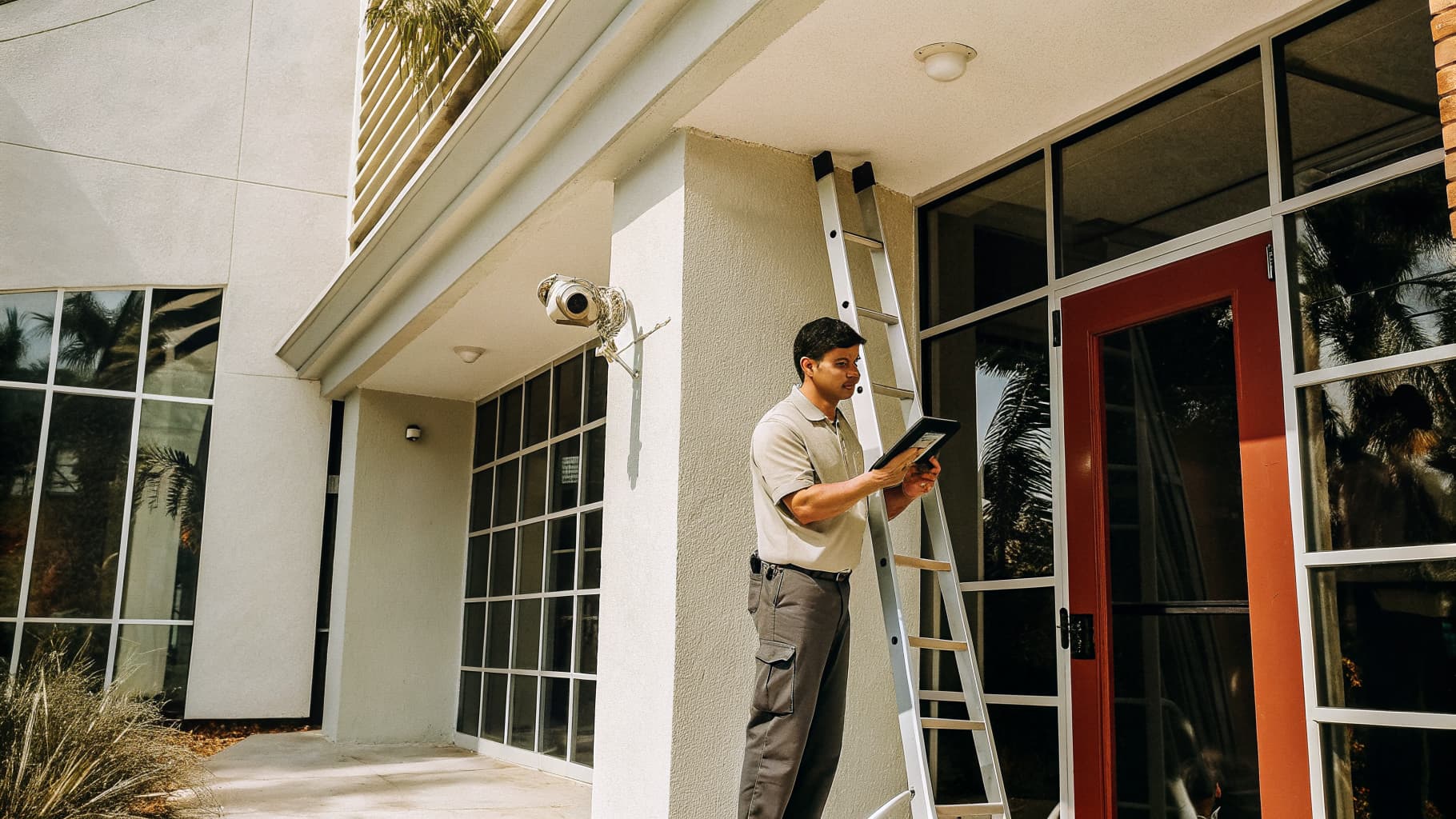
A takeover isn't a sales visit dressed up as an inspection. It's a walkthrough where a technician tests every camera, panel, and door controller already on the property and sorts it into three buckets: keep, repair, or replace. That means checking whether cameras are actually recording or just sitting there with a green light and no footage on the back end, whether the recorder or NVR has room and health left in it, whether access control panels are running firmware anyone can still support, and whether the wiring itself is sound or was never run correctly in the first place. Most of that gets answered in an afternoon, not a week, and you get a written breakdown, not a verbal "yeah, it's pretty old."
What's usually still good
Cabling is the first thing worth checking, because it's the most expensive thing to replace and often the least likely to actually need it. If a building has Cat6 or coax already run to every camera location, that's real value sitting in the walls regardless of what's plugged into it. Cameras themselves are a mixed bag. A three-year-old IP camera from a reputable manufacturer is frequently fine to keep and just needs to be added to a new recorder or platform. Mounting hardware, conduit, power runs, and door hardware on access control (the strikes, the mag locks, the readers themselves in a lot of cases) tend to outlast the software and panels driving them. We've taken over buildings where eighty percent of the physical camera positions stayed exactly as they were. The building didn't need new eyes. It needed a system that could actually talk to those eyes.
What's usually the problem
The failure almost never sits where owners expect. It's rarely the cameras. It's the recorder that's out of storage and silently overwriting footage after 48 hours instead of the 30 days everyone assumed. It's a cloud access control platform tied to a defunct installer's account, so nobody can add or remove a fob without calling a company that stopped answering. It's an alarm panel that never got reprogrammed after the last vendor left, so it isn't actually calling anyone when it trips. This is the gap between "the light is on" and "the system works," and it's exactly what a takeover walkthrough is built to find before it becomes a liability instead of a repair line item.
When replacement is genuinely the right call
Sometimes the honest answer is that a piece of equipment has to go, and we'll tell you that too. Analog cameras on a system with no upgrade path, panels from manufacturers that stopped issuing firmware updates years ago, or wiring that was never pulled to code are all real reasons to replace rather than patch. The difference is that it's a specific, itemized reason tied to something we actually found, not a blanket policy because it's easier to sell a full system than service a partial one. If a camera or a panel makes the cut, it stays. If it doesn't, you'll know exactly why.
Why this matters more when you're managing from off-site
If you're running a portfolio and can't drive over every time something looks off, a takeover is really about knowing what you own before something fails on you. An out-of-town owner or a regional property manager juggling several addresses doesn't have the luxury of finding out a camera's been offline for three weeks because nobody happened to check. Getting an honest inventory of what's reliable and what isn't, one system, one login, one bill going forward, means you're not stacking a new vendor on top of the same blind spots the old one left behind.
Start with a walkthrough, not a quote
If you're stepping into a building with existing cameras, access control, or an alarm panel and you just want an honest read on what's worth keeping, that's exactly what a service call is for.
Get an Honest Read on Your Existing System
Security & Life Integrations services and takes over existing security systems across North Carolina, South Carolina, and Georgia, evaluating what's reusable before recommending anything new.
Request a Service Walkthrough