
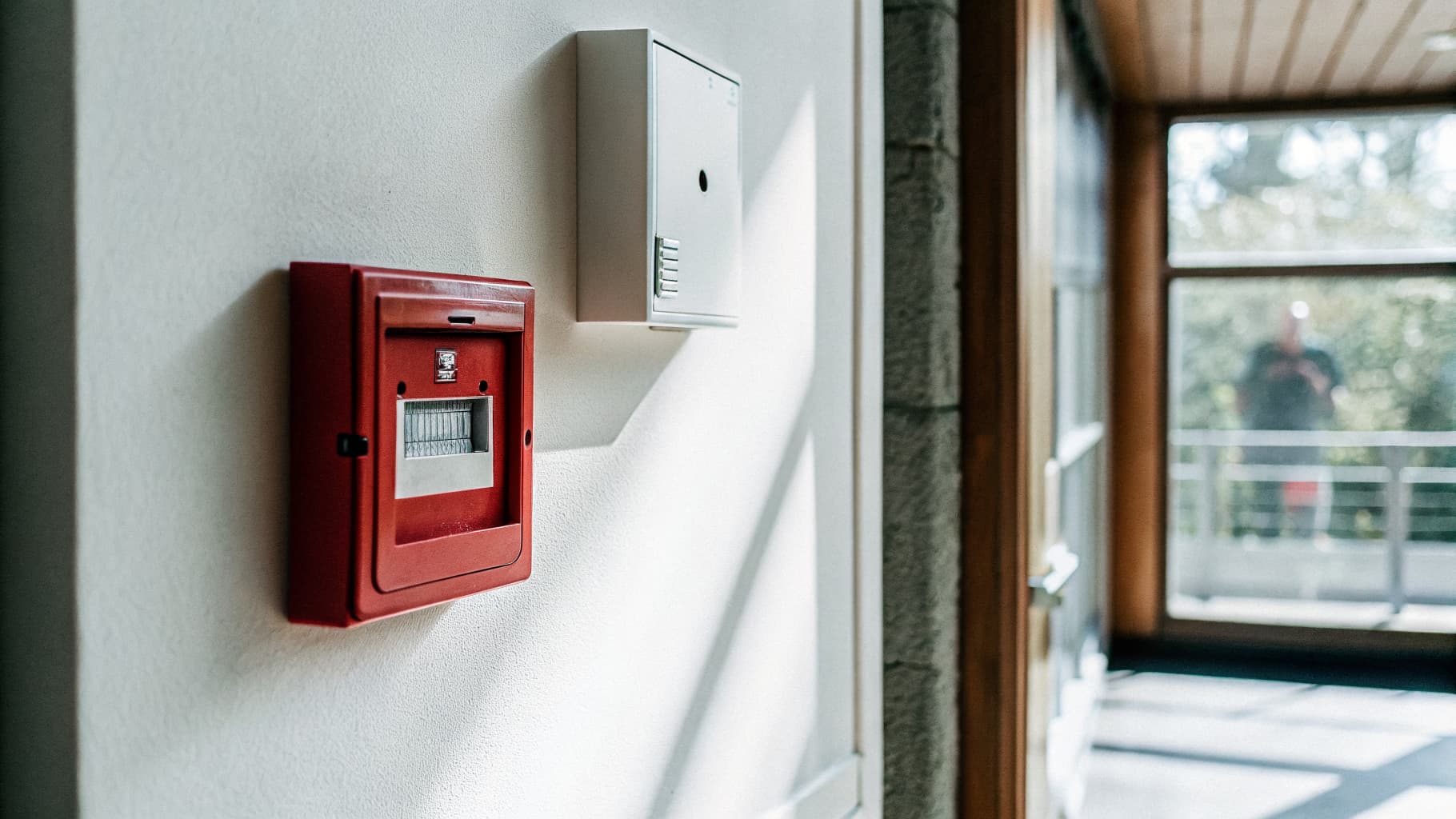
Fire alarm monitoring is the rare building expense that's both legally required and genuinely cheap, yet almost nobody who pays the invoice can say what it covers. The monthly fee buys a staffed central station answering every signal from your panel, around the clock, with the fire department dispatched the moment an alarm signal lands. Compared to what buildings spend on landscaping, it's a rounding error, and unlike landscaping, code requires it for most commercial occupancies.
The three signals your fee pays someone to answer
An alarm signal, a detector or pull station activating, gets the fire department, immediately and without a verification dance. A supervisory signal, say a sprinkler valve someone closed and forgot, gets your facility contact called before the condition becomes a disaster. A trouble signal, a failing battery or a communication fault, becomes a service ticket the hour it happens instead of a surprise at the next inspection. Most owners only ever think about the first kind; the second and third are where monitoring quietly earns its keep all year.
What moves the monthly number
Three things, mainly. Whether your panel can communicate at all, older systems still tied to vanishing phone lines usually need a cellular communicator upgrade, a one-time cost that ends the recurring phone-line bills forever. Whether the building has sprinkler and suppression supervisory points that need coverage. And whether you bundle fire with security monitoring, one central station watching intrusion detection and fire together costs less than two vendors billing separately for two connections to the same building.
The upgrade conversation worth having this year
Copper phone lines are being retired region by region, and fire panels still transmitting over them are on borrowed time. A panel that loses its communication path is a code violation the fire marshal will eventually notice, usually at the least convenient moment. Swapping to a cellular communicator is a modest, one-visit job on most panels, our fire alarm repair team does them routinely without replacing the panel itself.
Monitoring is half the compliance picture
The monitored connection gets tested as part of your NFPA 72 inspection, and an unmonitored or lapsed connection shows up in that record. The two services travel together: testing proves the devices work, monitoring makes sure a working device reaches a human. Buildings that bundle both with one provider keep one schedule and one file of documentation, which is exactly what you want handed over when the fire marshal or your insurer asks.
Getting an actual price
Any provider quoting fire monitoring sight unseen is guessing about your panel. The honest sequence is a look at the panel, confirmation the communicator works or a quote to fix it, then a monthly rate, which we provide across North Carolina, South Carolina, and Georgia. If your current invoice has been climbing quietly for years, it's worth the fifteen minutes to compare.
What switching providers actually involves
Owners stay with overpriced monitoring for years because switching sounds disruptive. It isn't. The panel stays, the devices stay, and the cutover is account programming plus, at most, a communicator swap, typically one visit. The sequence: new provider audits the panel, confirms signal paths, coordinates the changeover so the building is never unmonitored, and issues the certificate your insurer wants. The takeover process is the same one used for any inherited system: audit first, replace only what's failed.
Signals worth asking your current provider about
Two questions expose a weak monitoring setup fast. Ask when your panel last transmitted a test signal and whether anyone would notice if it stopped, supervised connections send scheduled check-ins, and a provider who can't answer isn't watching yours. Then ask what happens to a supervisory signal at 2 a.m., if the answer is "it goes on a report," a closed sprinkler valve waits until morning, which defeats the point of monitoring the sprinkler side at all. Good answers to both cost the same monthly fee as bad ones.