

TL;DR:
- Compliance with NFPA 101, 25, and 13 is essential for fire safety in properties.
- Regular inspections, testing, and proper documentation are critical to maintaining fire protection systems.
- Combining active and passive systems with owner engagement enhances overall fire safety and reduces risks.
Fire protection is one of the most regulated and consequential responsibilities a property manager or business owner carries. A single lapse in compliance can trigger fines, void insurance coverage, and create serious liability exposure. Beyond the legal dimension, inadequate fire safety puts tenants, employees, and visitors at real risk. This article walks through the core strategies that property managers and business owners need to know, from foundational code requirements and inspection routines to active and passive system layering, edge cases, and how integrated security solutions can simplify the entire process.
Table of Contents
- Understanding key codes and compliance obligations
- Inspection, testing, and maintenance: Building a proactive routine
- Active and passive fire protection: Building comprehensive layers
- Edge cases, evolving risks, and special facility needs
- Why owner engagement beyond compliance changes fire outcomes
- Enhance your fire protection strategy with integrated solutions
- Frequently asked questions
Key Takeaways
| Point | Details |
|---|---|
| Know the codes | Compliance with NFPA 101, 25, and 13 is essential for legal and safety reasons. |
| Routine inspections matter | Scheduled inspection, testing, and maintenance routines ensure systems work when needed most. |
| Layer your defenses | Combining active and passive protection delivers maximum coverage against fire threats. |
| Address complex risks | Special building materials, hot work, and emerging hazards demand specific fire strategies. |
| Owner action is critical | Engaged, proactive owner involvement—beyond the minimum rules—creates safer outcomes for all. |
Understanding key codes and compliance obligations
Every effective fire protection strategy starts with knowing which regulations apply to your property. In the United States, three NFPA codes form the foundation of fire safety compliance for most commercial and residential properties.
Core fire protection strategies for property managers include compliance with NFPA 101 Life Safety Code, NFPA 25, and NFPA 13. Each code addresses a distinct layer of protection:
- NFPA 101 (Life Safety Code): Governs means of egress, fire barriers, alarm systems, and sprinkler requirements. It defines how people can safely exit a building during a fire.
- NFPA 25: Covers inspection, testing, and maintenance (ITM) of water-based fire protection systems. It places direct, documented responsibility on the property owner.
- NFPA 13: Establishes installation standards for sprinkler systems, including design, coverage, and component specifications.
Understanding these codes is not optional. As of 2026, 43 states require NFPA 101 as the baseline life safety standard. That number reflects how broadly these requirements reach across property types and jurisdictions.
| Code | Scope | Owner obligation |
|---|---|---|
| NFPA 101 | Egress, alarms, barriers | Design and maintain safe exit paths |
| NFPA 25 | ITM of water-based systems | Document all inspections and maintenance |
| NFPA 13 | Sprinkler installation | Ensure proper design and installation |
Non-compliance carries real consequences. Fines, increased liability exposure, and insurance complications are common outcomes. Insurers often require proof of ITM records before renewing or issuing coverage. If documentation is missing, that alone can be treated as a compliance failure.
For property managers who want a clear starting point, reviewing fire protection terms explained can help decode the language used in code documents and inspection reports. Codes also evolve, so staying current with NFPA updates and your state’s adoption status is part of the ongoing job. Understanding the system types guide is equally useful when evaluating what your property currently has versus what it may need.
Key takeaway: Compliance is not a one-time event. NFPA 25 requires documented proof of ongoing ITM, and NFPA 25 requirements place that responsibility directly on the property owner, with no exceptions for older buildings.
Inspection, testing, and maintenance: Building a proactive routine
Once you understand the codes, the next step is building a structured routine that keeps systems functional and documentation current. NFPA 25 defines specific intervals for different types of inspections and tests.
Here is a practical sequence for maintaining compliance:
- Weekly and monthly visual checks: Look for obstructions near sprinkler heads, signs of corrosion on pipes, and any physical damage to alarm components.
- Quarterly functional tests: Test valves, pumps, and alarm notification devices. Confirm that water flow indicators and tamper switches are working correctly.
- Annual inspections: A certified fire protection contractor must conduct a full system inspection, including alarm testing, suppression system checks, and documentation review.
- Five-year internal pipe inspection: NFPA 25 requires an internal inspection of piping to check for obstructions, corrosion, and buildup that could reduce water flow.
- Sprinkler head evaluation: Sprinklers older than 50 years must be tested or replaced. Fast-response sprinklers have their own testing timelines under NFPA 25.
Key methodologies under NFPA 25 include visual inspections, functional testing of valves and pumps, preventative maintenance such as flushing pipes, staff and tenant training, fire drills, and documented risk assessments. Each of these plays a role in a system that works when it is needed most.
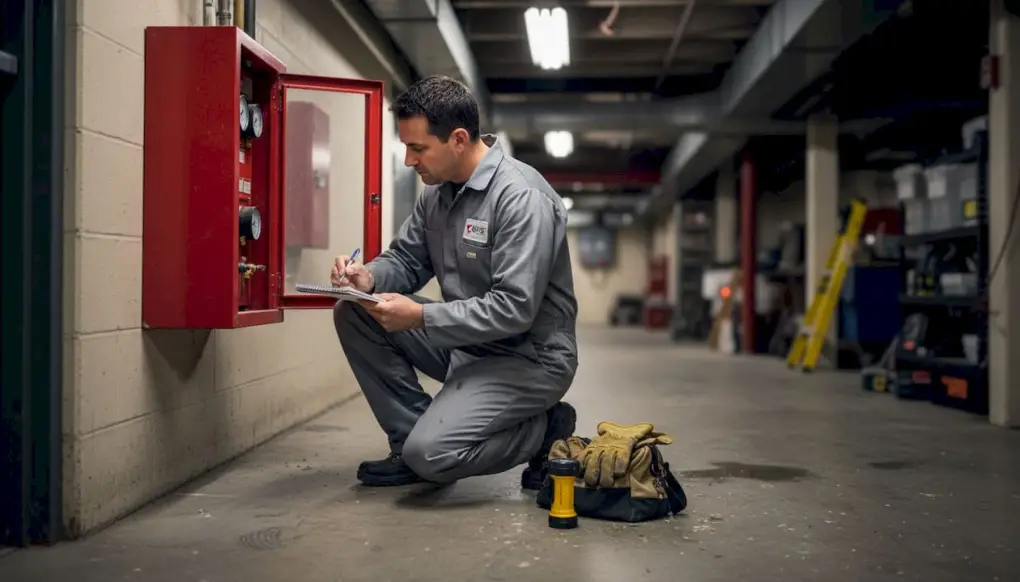
For multi-tenant housing protection, staff training and tenant communication are especially important. Residents need to know evacuation routes and what to do when an alarm sounds. Fire drills should be documented, including who participated and any issues identified.
Pro Tip: Keep a centralized log of every inspection, test, and maintenance activity. Date, technician name, findings, and corrective actions taken should all be recorded. This log is your primary defense in the event of an insurance claim or code enforcement review.
For suppression system repairs, always use licensed contractors and confirm that repair records are added to your ITM log immediately. Gaps in documentation are treated the same as gaps in maintenance under most fire codes overview.
Active and passive fire protection: Building comprehensive layers
Fire protection works best when multiple systems operate together. The two primary categories are active and passive protection, and both are necessary for a complete strategy.
Active systems require a trigger or action to operate. These include:
- Automatic sprinkler systems
- Fire alarm and detection systems
- Suppression systems (clean agent, foam, or dry chemical)
- Emergency notification systems
Passive systems are built into the structure itself and do not require activation. These include:
- Fire-rated walls, floors, and doors
- Compartmentation to contain fire spread
- Protected egress corridors
- Fire-rated glazing and seals around penetrations
The combination of both layers is what creates genuine resilience. Passive protection buys critical time for evacuation. Active systems suppress or contain the fire itself. Neither category alone is sufficient.
Sprinkler systems are among the most effective active tools available. Sprinklers confine 88% of fires to the room or object of origin, with an overall reliability rate of approximately 89%. That level of performance directly reduces property damage, fatalities, and insurance costs.
| Protection type | Examples | Primary benefit |
|---|---|---|
| Active | Sprinklers, alarms, suppression | Suppress or signal fire events |
| Passive | Fire walls, rated doors, egress paths | Contain spread and protect exit routes |
Modern monitored fire systems add another layer by connecting detection and suppression systems to a central monitoring station. When an alarm triggers, the monitoring center notifies emergency services immediately, reducing response time. This integration is particularly valuable for properties that are not staffed around the clock.
For additional context on how sprinkler performance is measured, sprinkler performance data from recent research provides useful benchmarks for evaluating system adequacy.
Edge cases, evolving risks, and special facility needs
Standard protocols cover most situations, but property managers need to be prepared for scenarios where typical approaches fall short. These edge cases are where compliance gaps and serious incidents are most likely to occur.
Fire watch requirements: When a suppression system is taken offline for repairs, or during hot work such as welding or cutting, a fire watch is required. Under NFPA 51B, dedicated personnel must actively monitor the affected area for the duration of the impairment and for a set period afterward. Fire watch protocols are a legal requirement, not a precaution.
Building material considerations: Not all fires respond the same way to water. Certain metals, including aluminum used in cladding, can react unpredictably when water is applied to high-intensity fires. Properties with non-standard materials need specialized suppression assessments.
Thick smoke and high-intensity fires: Dense smoke reduces visibility and limits the effectiveness of portable extinguishers. In these conditions, evacuation takes priority over manual suppression attempts.
Pro Tip: If your property uses lithium battery storage or hosts e-bike charging stations, consult a fire protection specialist immediately. Lithium battery fires require specific suppression agents and cannot be effectively managed with standard water-based systems.
Key edge cases to address in your fire protection plan:
- Older sprinklers over 50 years must be tested or replaced under NFPA 25 2026 requirements
- E-bike and lithium battery storage areas require customized risk assessments
- Hot work permits and fire watch logs must be maintained for every applicable job
- Properties with aluminum or composite cladding need suppression systems reviewed by a specialist
For property managers looking to manage these risks without absorbing excessive costs, reviewing property management cost savings strategies can help prioritize spending on the areas of highest risk.
Why owner engagement beyond compliance changes fire outcomes
Compliance checklists matter. But they are not the same as genuine fire safety. The most effective fire protection strategies we have seen involve active, ongoing owner engagement, not just paperwork filed once a year.
Behavioral factors drive real outcomes. Regular fire drills, for example, do more than satisfy a code requirement. They reveal gaps in evacuation procedures, identify staff who need additional training, and build the kind of muscle memory that saves lives under pressure. Properties that run drills consistently tend to have better outcomes during actual incidents.
Documented ITM per NFPA 25 places owner responsibility at the center of fire safety. That is not just a legal structure. It is a signal that the system works best when owners treat fire protection as an operational priority, not a background task.
Partnering with certified fire protection providers also changes the risk profile of a property. Providers who understand both fire safety and behavioral compliance strategies can help build programs that go beyond minimum standards. The result is lower liability exposure, better insurance terms, and a property where tenants and staff actually know what to do in an emergency. That combination is worth more than any single system upgrade.
Enhance your fire protection strategy with integrated solutions
Fire protection performs best when it is part of a coordinated safety system. Alarms, access control, and suppression systems that share data and trigger coordinated responses reduce response times and limit damage.

Security & Life Integrations provides customized fire and life safety solutions for commercial properties, multifamily housing, and HOA communities. From fire alarm solutions to complete multi-tenant housing fire protection programs, the team works with property managers to design systems that meet current codes and scale with your needs. If you are evaluating your current setup, the guide to choosing systems is a practical starting point for identifying gaps and next steps.
Frequently asked questions
What are the most important fire protection regulations for property managers in 2026?
NFPA 101, NFPA 25, and NFPA 13 are the most critical codes, covering life safety, system maintenance, and sprinkler installation. Most states require documented compliance with all three, including ongoing ITM records.
How often should fire protection systems be inspected in commercial properties?
Visual checks may be required weekly or monthly, major system tests are typically annual, and NFPA 25 requires at least one five-year internal pipe inspection to check for obstructions and corrosion.
How effective are sprinkler systems at stopping fire damage?
Modern sprinklers confine 88% of fires to the room or object of origin, with an overall reliability rate near 89%, significantly reducing fatalities and structural damage.
What should property managers do if their fire suppression system is offline during repairs?
A fire watch is required under NFPA 51B. Dedicated personnel must actively monitor the affected area whenever systems are impaired, especially during hot work or extended repairs.
Are property owners responsible for fire protection compliance, even in older buildings?
Yes. Under NFPA 25, owner responsibility is absolute and there is no grandfathering for outdated systems. Regular upgrades and documented ITM are required regardless of building age.