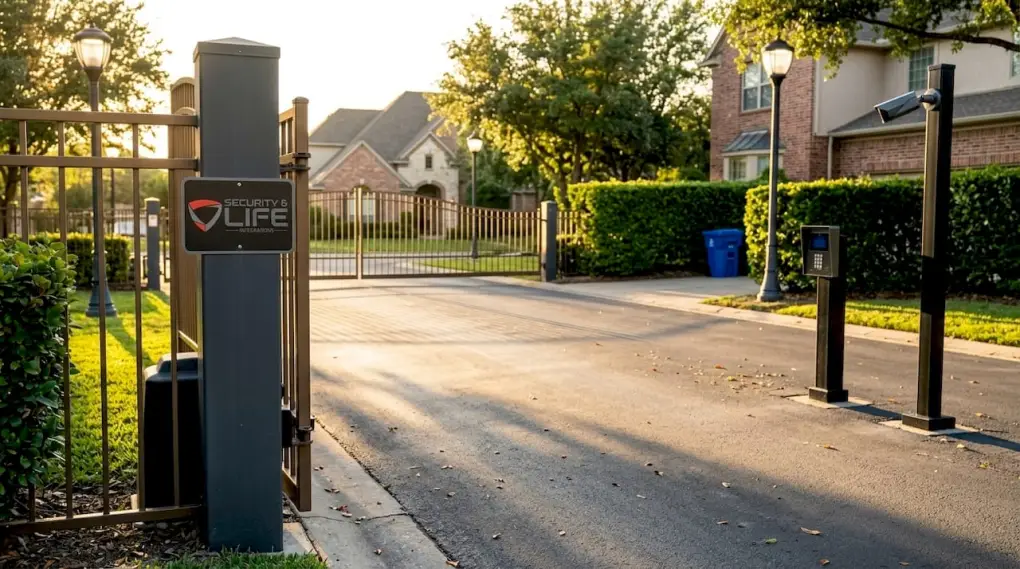
TL;DR:
- Effective HOA security relies on layered strategies that include annual assessments, active credential management, clear surveillance policies, and proper lighting and landscaping. Residents’ participation and understanding of policies greatly enhance overall safety and incident reporting. Incorporating cybersecurity practices for networked devices and deploying layered package theft controls further strengthen community security.
HOA security tips are practical measures homeowners associations use to protect shared property, control access, and reduce crime through a combination of technology, policy, and resident participation. The most effective community security programs do not rely on a single tool or system. They layer access control, video surveillance, lighting, landscaping, and resident engagement into one coordinated strategy. This article breaks down each component with specific implementation steps so your board and neighbors can act on them directly.
1. How to conduct annual HOA security assessments
Effective HOA security starts with a thorough assessment that informs clear objectives, not solely investing in technology. Before your board purchases a single camera or upgrades a gate, you need a clear picture of where your current setup fails. An annual security assessment gives you that picture.
The assessment process works best when it combines two inputs: a physical walkthrough of all shared infrastructure and a resident survey. The walkthrough covers gates, fencing, camera coverage, lighting, landscaping, and emergency access points. The survey captures what residents actually experience, including blind spots, poorly lit walkways, or delivery theft patterns that a board member might miss on a Saturday morning walk.
Focus your assessment on these areas:
- Entry and exit gates, including mechanical condition and credential accuracy
- Camera coverage gaps in parking lots, mailrooms, and common areas
- Lighting failures or dark zones along pathways and near entrances
- Overgrown landscaping that creates concealment near walkways
- Existing emergency notification and incident reporting procedures
RealManage recommends combining resident surveys with physical checks in annual reviews to identify security issues. This dual approach catches both technical failures and lived-experience gaps that technology audits alone miss.
Pro Tip: Use your assessment findings to write three to five specific security objectives for the coming year. Vague goals like “improve safety” produce no results. Objectives like “replace all failed parking lot fixtures within 30 days” produce measurable outcomes.
You can also reference HOA outdoor maintenance tips to align your security review with broader property upkeep cycles, since lighting and landscaping issues often surface in both contexts.
2. Best practices for access control and credential management
Access control is the first physical barrier between your community and unauthorized entry. Gated entries, key fobs, PIN codes, and license plate readers each serve a specific function, and managing them correctly is as important as installing them. A gate that accepts 200 active credentials when only 120 units are occupied is not a security asset. It is a liability.

ManageCasa emphasizes credential management to prevent unauthorized access through stagnant or outdated codes. The operational discipline around credentials determines whether your access control system actually works.
Follow these steps to maintain tight credential control:
- Deactivate all credentials immediately when a resident moves out, not at the end of the month.
- Conduct a full credential audit at least once per year, comparing active credentials against current resident records.
- Integrate your access system with a visitor management platform so guests receive temporary, time-limited credentials.
- Use license plate readers at vehicle entry points to log all entries and flag unregistered plates automatically.
- Assign unique credentials to each resident rather than shared codes so deactivation affects only the departing resident.
Periodic rotation and immediate deactivation of access codes prevent the accumulation of stale credentials and improve physical security. This is the “set-and-forget” trap most HOA boards fall into. They install a system, hand out codes, and never revisit the credential list until a security incident forces the issue.
Pro Tip: Schedule credential audits on the same calendar date each year and tie them to your annual assessment. Combining both tasks reduces administrative burden and keeps your access records current.
3. Strategic camera placement and surveillance policy
Security cameras reduce crime by about 13% in monitored areas when placed strategically and managed well. That number reflects deterrence, not just detection. Cameras change behavior before an incident occurs, which is why placement and visibility both matter.
Strategic placement covers these locations:
- All vehicle and pedestrian entry and exit points
- Parking lots and garages, with coverage of every row
- Package delivery areas, mailrooms, and parcel lockers
- Pool areas, clubhouses, and other shared amenity spaces
- Elevator lobbies and stairwells in multi-story buildings
Before installation, your board needs a written surveillance policy. A clear HOA video surveillance policy outlining camera placement, footage access, retention, and privacy protection is necessary before installation. Without a policy, you face disputes over who can view footage, how long it is stored, and whether cameras are placed in areas that violate resident privacy.
| Policy element | What it should define |
|---|---|
| Camera locations | Approved placement zones and excluded private areas |
| Footage retention | Standard retention period, typically 30 to 90 days |
| Access permissions | Who can request and review footage, and under what conditions |
| Privacy safeguards | Prohibition on cameras in private spaces such as unit interiors or restrooms |
| Cybersecurity standards | Password requirements and update schedules for networked devices |
Transparent communication and resident involvement build trust and increase the effectiveness of surveillance measures. Post your policy in the community portal, distribute it at annual meetings, and update it whenever you add new cameras or change retention periods.
You should also treat your camera network as a cybersecurity asset. HOA networked cameras and access control systems require strong access controls and multi-factor authentication to avoid vulnerabilities. A camera with a default password is an open door for remote access by unauthorized parties.
Pro Tip: Publish a one-page summary of your surveillance policy in your community newsletter each year. Residents who understand the policy are more likely to report incidents and cooperate with investigations.
4. Lighting and landscaping as crime deterrents
Lighting is one of the most cost-effective neighborhood safety tools available to any HOA. Well-lit parking lots, pathways, and common areas remove the concealment that opportunistic criminals depend on. Motion-activated fixtures add a secondary deterrent effect by drawing attention to movement in low-traffic areas after dark.
Monthly inspection and prompt replacement of failed security lighting fixtures within 48 hours is the standard for maintaining effective illumination. A single dark corner in a parking lot or along a walking path is enough to create risk. Inspection cycles catch failures before residents notice them or before an incident occurs.
Landscaping maintenance works alongside lighting. Overgrown bushes near entrances, mailboxes, or walkways create hiding spots that lighting cannot fully address. Trim shrubs to below window height and keep tree canopies high enough that they do not obstruct sightlines from the street or from cameras. The real role of seasonal maintenance for HOAs includes these visibility-focused landscaping tasks as part of a broader property management cycle.
Key lighting and landscaping actions to prioritize:
- Replace failed fixtures within 48 hours of identification
- Install motion-activated lights in low-traffic areas such as side gates and storage areas
- Trim all shrubs near entrances, walkways, and camera fields of view monthly
- Maintain clear sightlines from guard stations or entry points to parking areas
- Use energy-efficient LED fixtures to reduce operating costs without reducing coverage
Pro Tip: Switch to LED lighting across all common areas. LED fixtures last significantly longer than traditional bulbs, reduce your monthly energy costs, and produce consistent light output that improves camera image quality at night.
5. Reducing package theft with layered controls
Package theft is one of the most reported security concerns in HOA communities, and it is also one of the most preventable. A layered approach using secure parcel lockers plus lighting and cameras at delivery areas effectively reduces package theft. No single measure solves the problem on its own.
Packages left unattended for more than two hours are more likely to be stolen than those picked up within 30 minutes. This means operational speed matters as much as physical infrastructure. Smart locker systems address this directly by sending automatic pickup notifications to residents the moment a package is deposited, cutting unattended time to minutes rather than hours.
Practical steps to reduce package theft in your community:
- Install secure parcel lockers in a covered, well-lit, camera-monitored location
- Place dedicated cameras at all delivery entry points with clear coverage of drop zones
- Establish a written package policy that defines where carriers may leave parcels and how residents retrieve them
- Coordinate with major carriers such as UPS, FedEx, and USPS to direct deliveries to the secure locker area
- Notify residents and delivery personnel of the policy through posted signage and community communications
Pro Tip: Educate delivery personnel by posting clear, laminated instructions at every building entrance. Carriers follow the path of least resistance. If your locker instructions are clear and visible, compliance rates increase without any additional enforcement effort.
For communities with gated multi-tenant housing, controlled delivery access adds another layer by requiring carriers to check in before entering the property.
Key takeaways
Effective HOA security requires layered controls across access, surveillance, lighting, and resident engagement, supported by annual assessments and written policies.
| Point | Details |
|---|---|
| Start with an assessment | Combine resident surveys and physical walkthroughs to identify gaps before spending on technology. |
| Manage credentials actively | Deactivate credentials immediately on move-out and audit the full list at least once per year. |
| Write a surveillance policy first | Define camera placement, retention periods, and access permissions before installing any cameras. |
| Maintain lighting on a schedule | Inspect fixtures monthly and replace failures within 48 hours to eliminate dark zones. |
| Layer package theft controls | Combine parcel lockers, focused cameras, and carrier coordination to reduce unattended delivery time. |
What I’ve learned about HOA security after years in the field
Most HOA boards approach security the same way: they react to an incident, buy a product, and move on. A car gets broken into, so they add a camera. A gate code gets shared, so they change it once. The problem is that this reactive pattern never builds an actual security program. It builds a collection of disconnected tools with no policy holding them together.
The boards that run genuinely safe communities do two things differently. First, they treat the annual assessment as a non-negotiable calendar event, not something they get to when time allows. Second, they involve residents in the process. When residents know what cameras are installed, where they point, and how footage is used, they trust the system and report incidents faster. That reporting speed is often the difference between catching a pattern early and discovering it after significant damage.
The cybersecurity angle is one most HOA boards overlook entirely. Your camera network and access control platform are networked devices. They have IP addresses, login credentials, and firmware that needs updating. Treating them as physical-only systems and ignoring the digital layer is a real vulnerability. I have seen communities with excellent physical infrastructure get compromised because a camera was running default credentials from the day it was installed.
Security is a community responsibility, not a board responsibility. The technology and policies your board puts in place create the conditions for safety. Residents who understand those conditions and participate in them are what make the system work.
— Zachary
How Security & Life Integrations supports HOA communities

Security & Life Integrations designs and installs security systems built specifically for HOA and multi-tenant communities. The team at Security & Life Integrations works with boards and property managers to assess existing infrastructure, identify gaps, and deploy access control systems and video surveillance solutions that match the specific layout and needs of each property. Every system is backed by 24/7 support and ongoing maintenance to keep credentials current, cameras operational, and firmware updated. If your community is ready to move from reactive fixes to a structured security program, Security & Life Integrations provides the consultation, installation, and long-term support to make that happen.
FAQ
What are the most important HOA security tips?
The most effective HOA security tips combine annual assessments, active credential management, strategic camera placement, consistent lighting maintenance, and resident communication. No single measure works in isolation.
How often should HOA access credentials be updated?
Credentials should be deactivated immediately when a resident moves out and reviewed for all active users at least once per year, according to ManageCasa’s guidance on credential lifecycle management.
Do security cameras actually reduce crime in HOA communities?
Research cited by ManageCasa confirms that cameras reduce crime by approximately 13% in monitored areas when placed strategically and supported by a written surveillance policy.
What should an HOA surveillance policy include?
A written policy should define approved camera locations, footage retention periods, who can access recordings, privacy protections for residents, and cybersecurity requirements for networked devices.
How can HOAs reduce package theft effectively?
The most effective approach combines secure parcel lockers, focused cameras at delivery areas, improved lighting, and coordination with carriers to direct all deliveries to a controlled drop zone.